Drying a home after water damage
Water damage · homeAfter water damage, the moisture content of the walls and floor build-up was sharply raised, with a real risk of permanent damage to the finishes and plasterwork. Vernast tackled this in a targeted way with construction dehumidifiers, ventilation and continuous moisture measurement, bringing the indoor climate back to a stable level.
The situation on arrival
When we arrived on site, the home had been hit by water damage. The moisture had spread through the floor build-up and the lower sections of the walls, right down into the crawl space. Without fast, targeted drying, the plasterwork faced permanent damage and the indoor climate risked becoming clammy and unhealthy.
- Sharply raised moisture content in walls and floor build-up after water damage
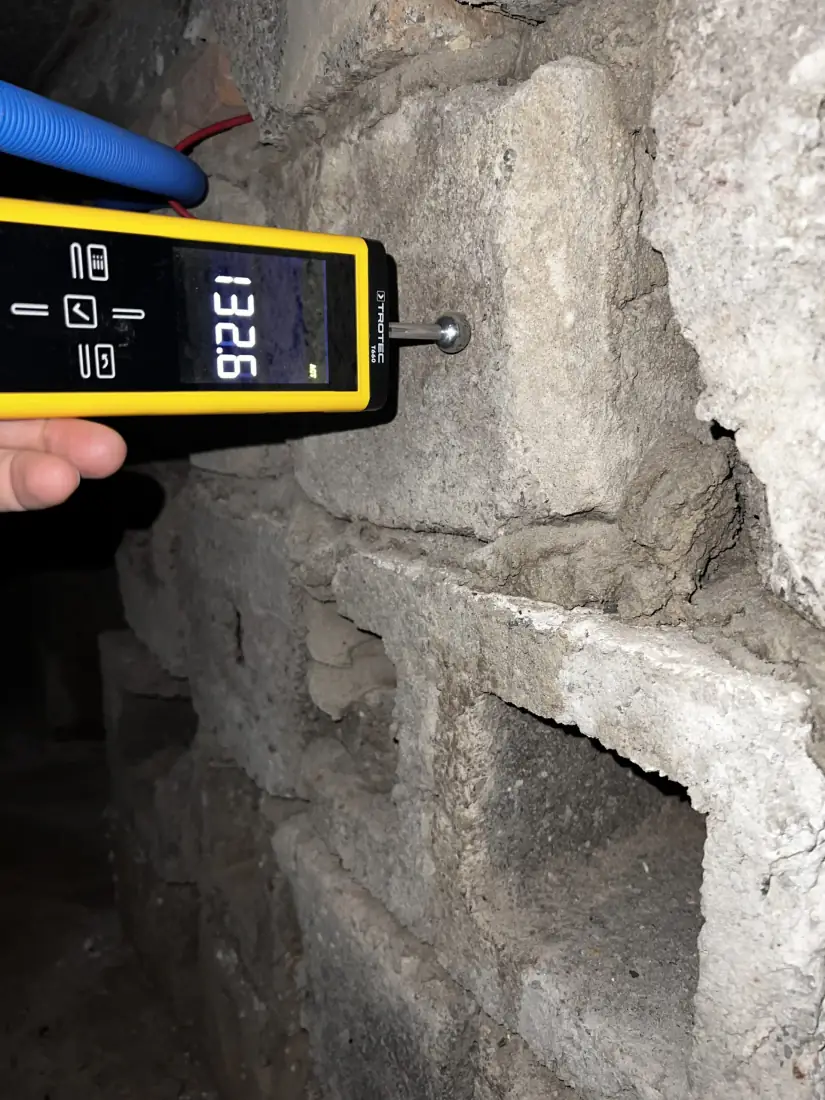
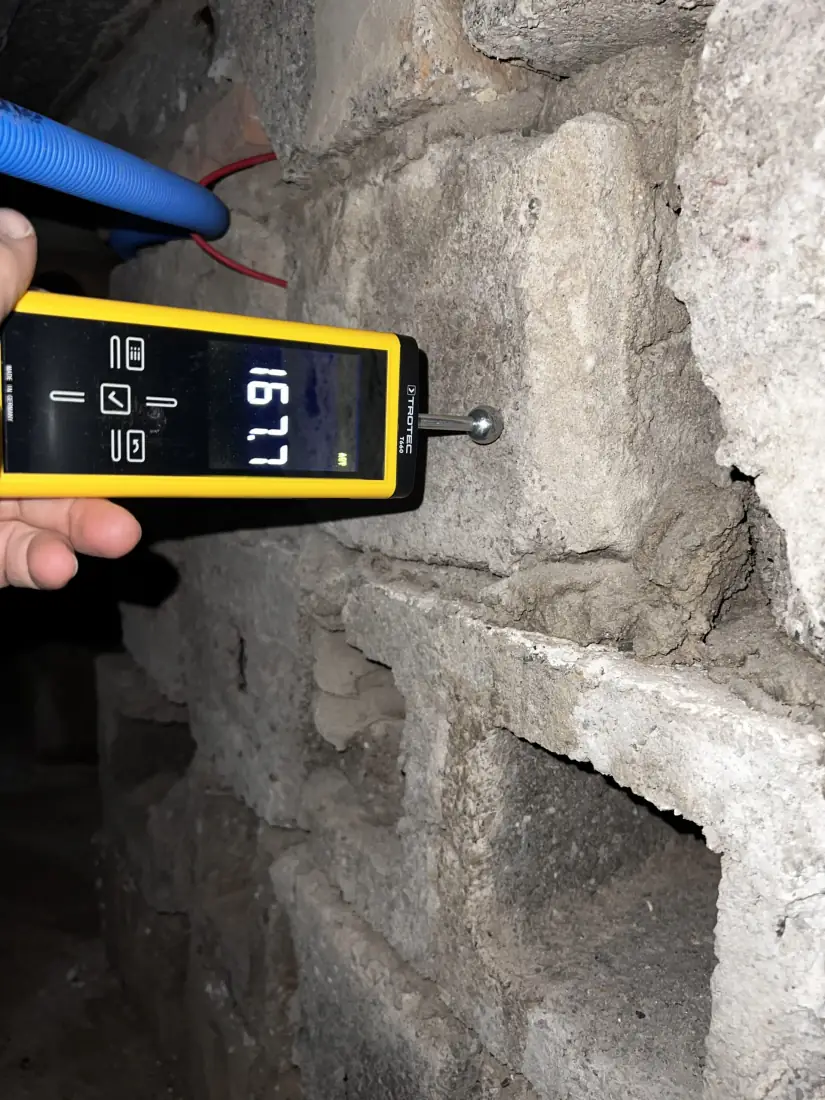
- Raised moisture levels reaching into the crawl space and the masonry below
- Risk of damage to wall finishes and plasterwork
- Clammy indoor climate with a chance of mould growth
Our diagnosis
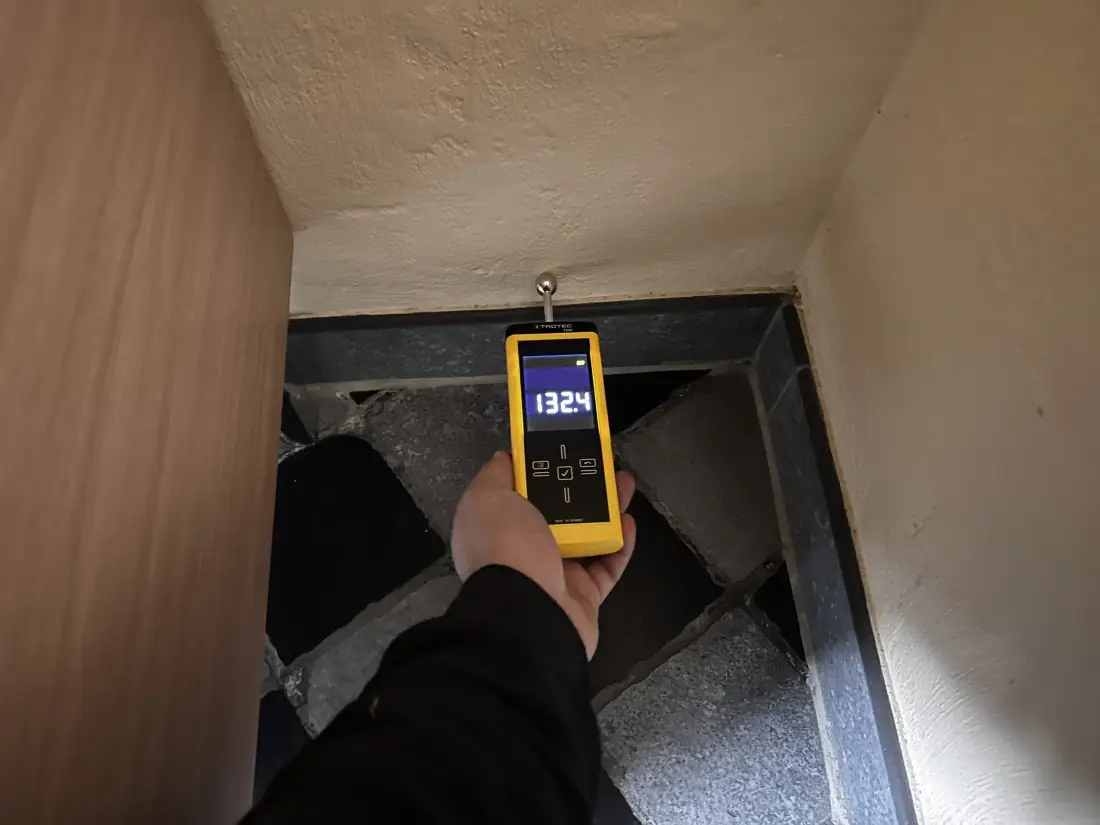
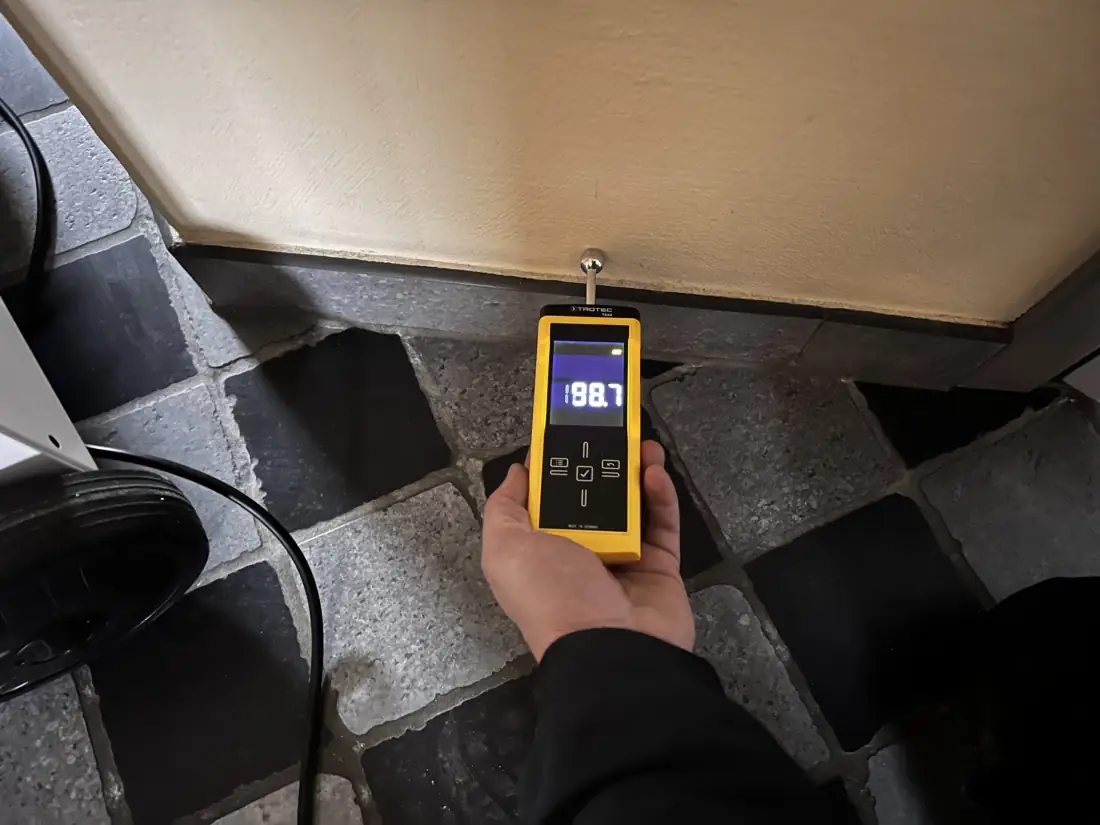
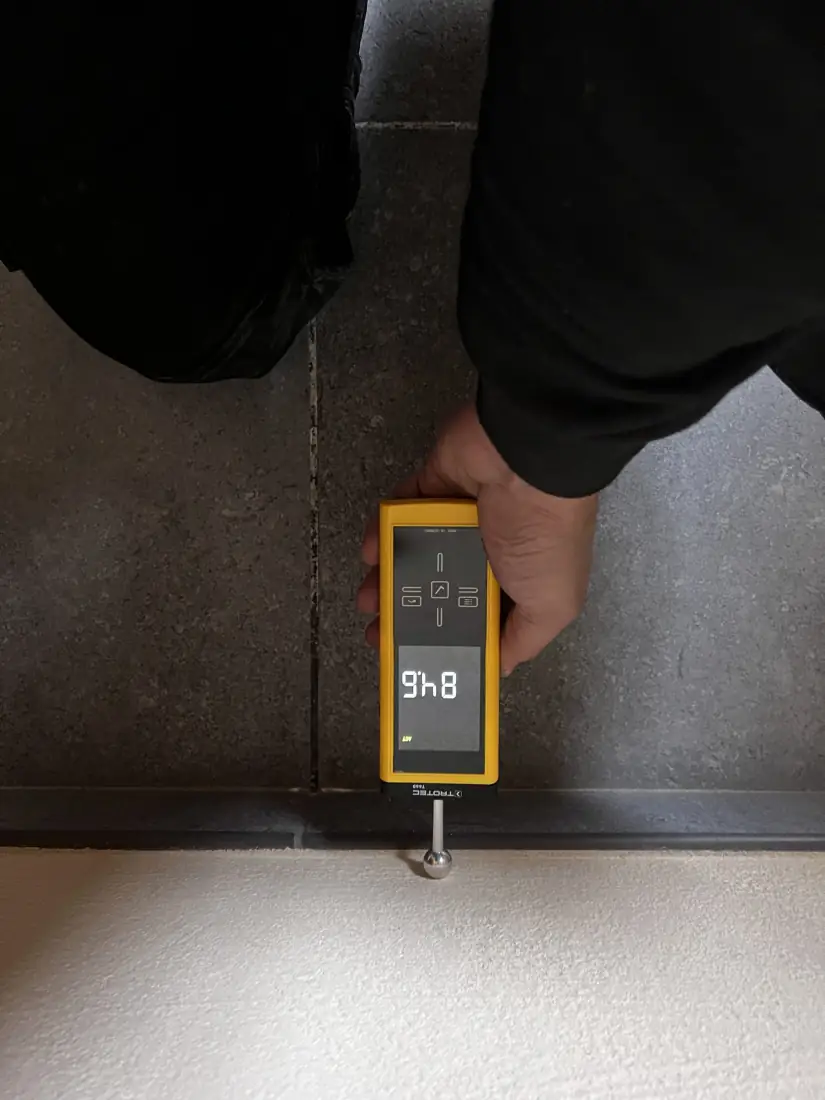
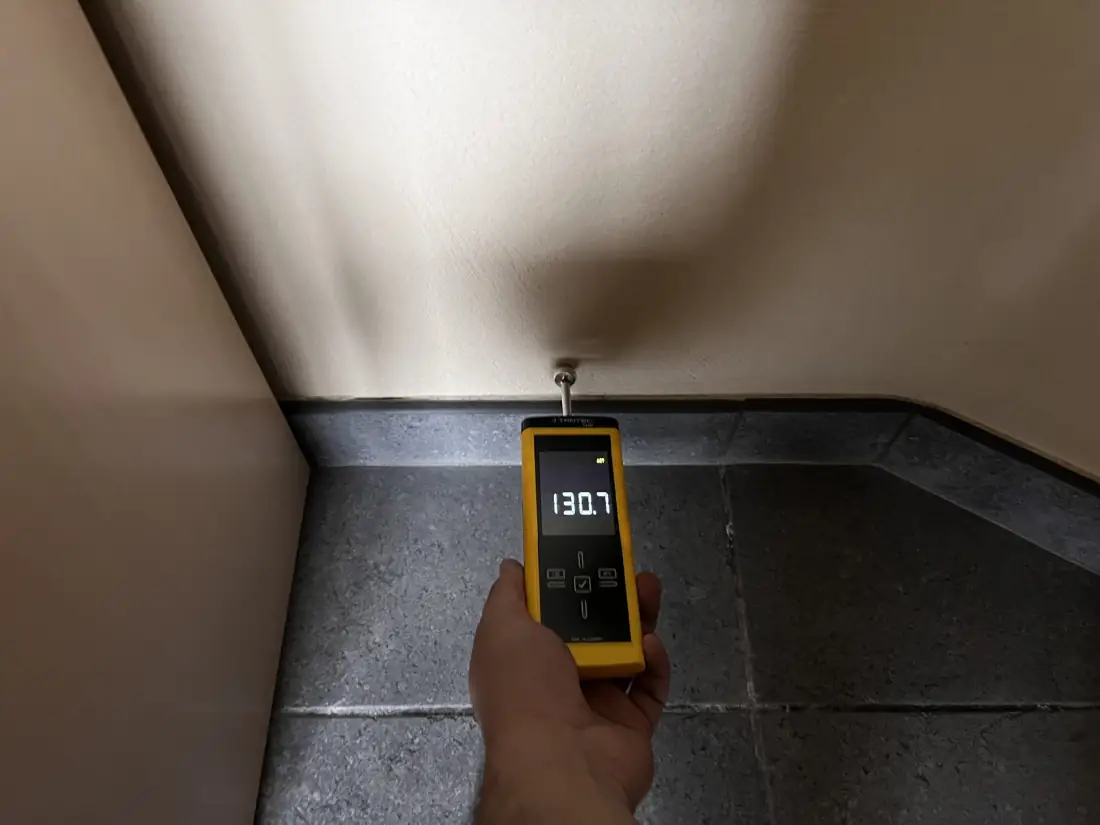
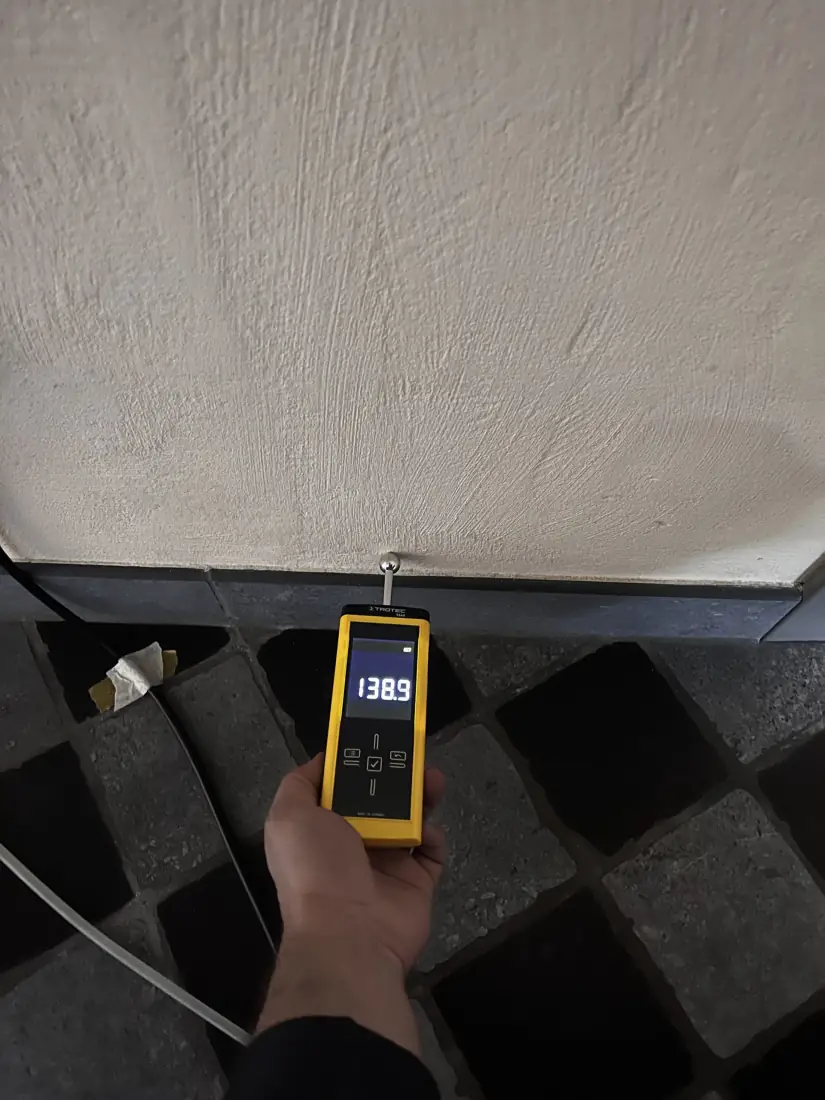
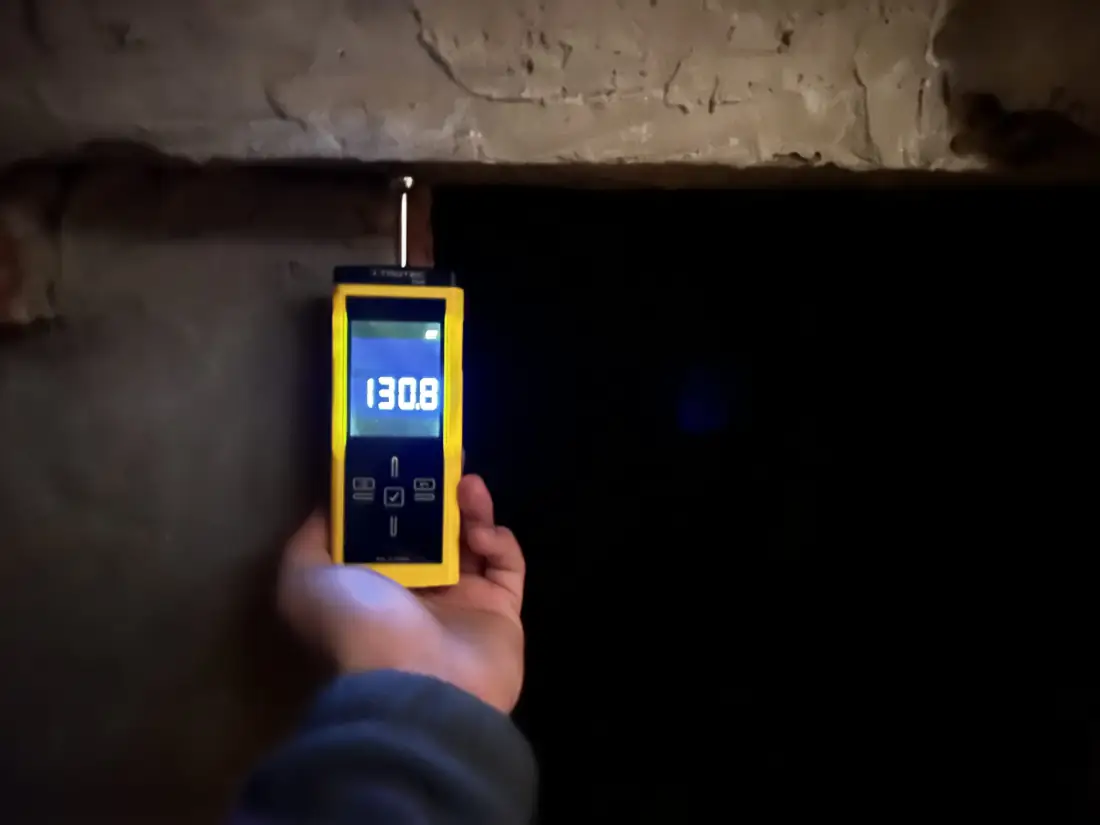
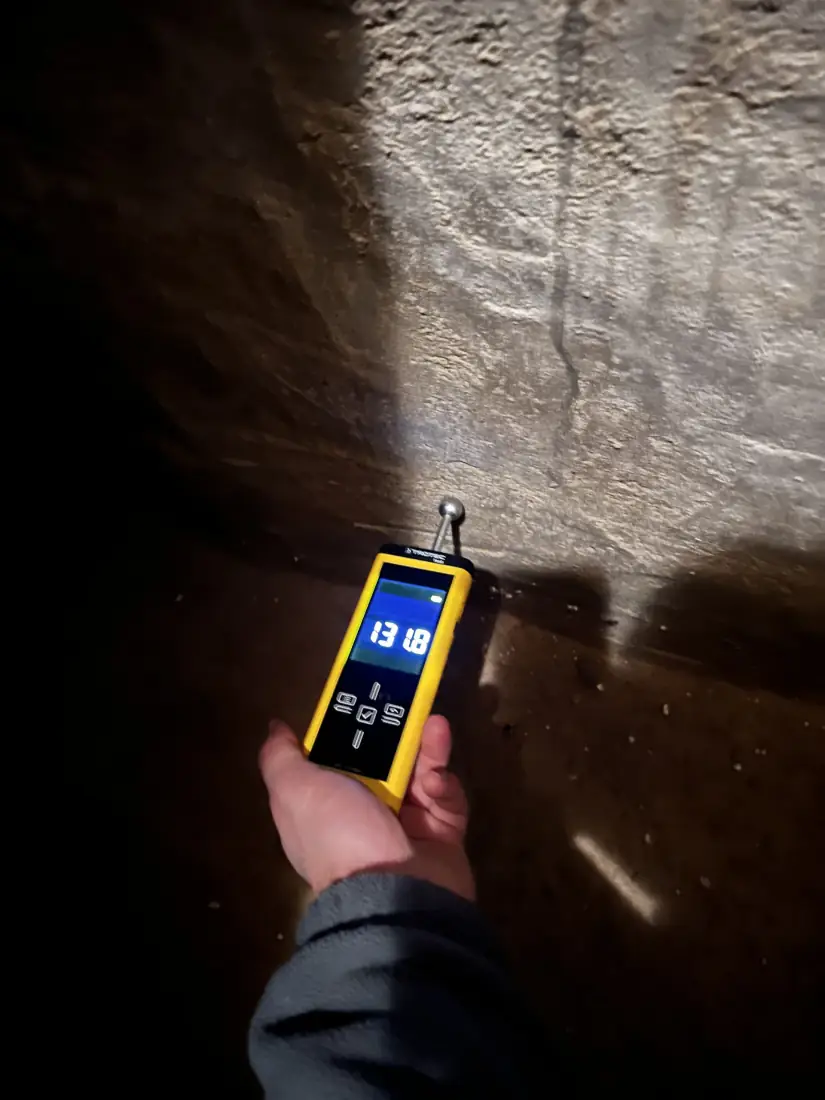
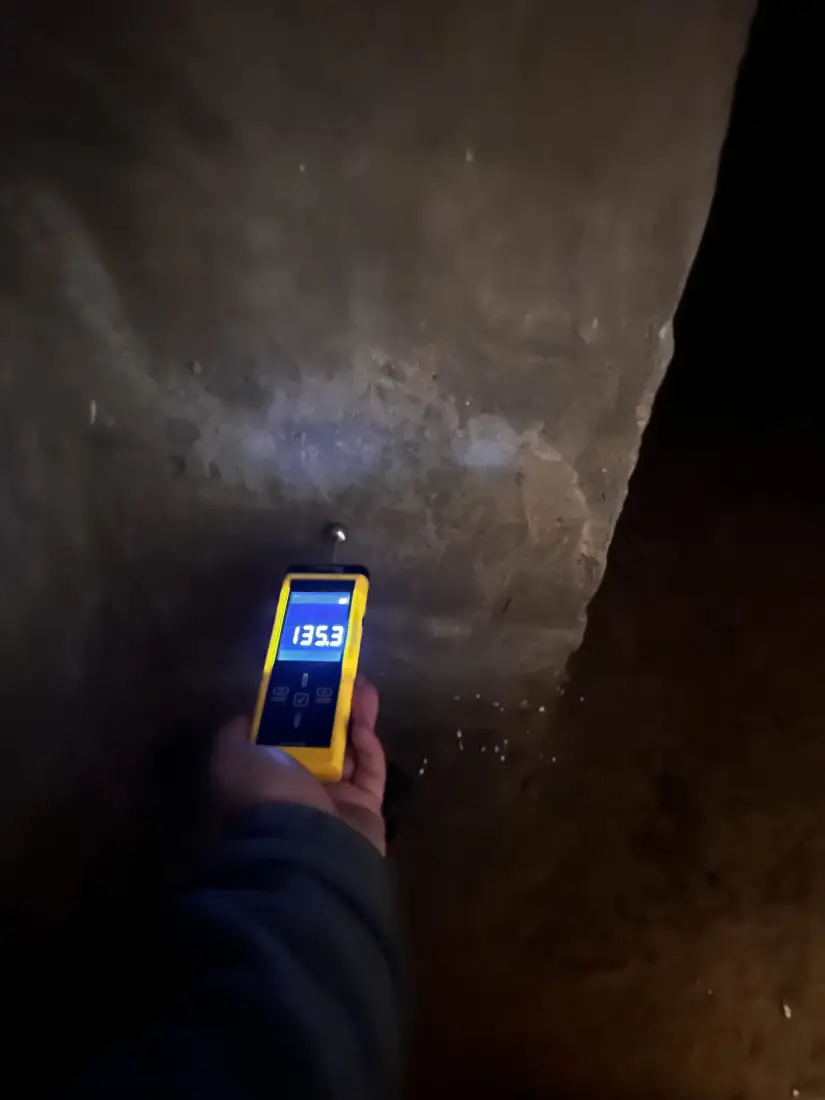
We started with a thorough analysis: moisture readings were taken at different heights and in different places, from the junction between wall and floor to deep inside the crawl space. The picture was clear: the water damage had pushed up the moisture content of the building fabric considerably. As long as that moisture stays in the structure, damage and mould remain a threat, however dry the room looks on the surface.
The work, step by step
Analysis and solution, within 24 hours. Acting quickly is crucial with water damage. Within a day, our moisture readings mapped the full extent of the problem and we drew up the drying plan for the walls, floor and crawl space.
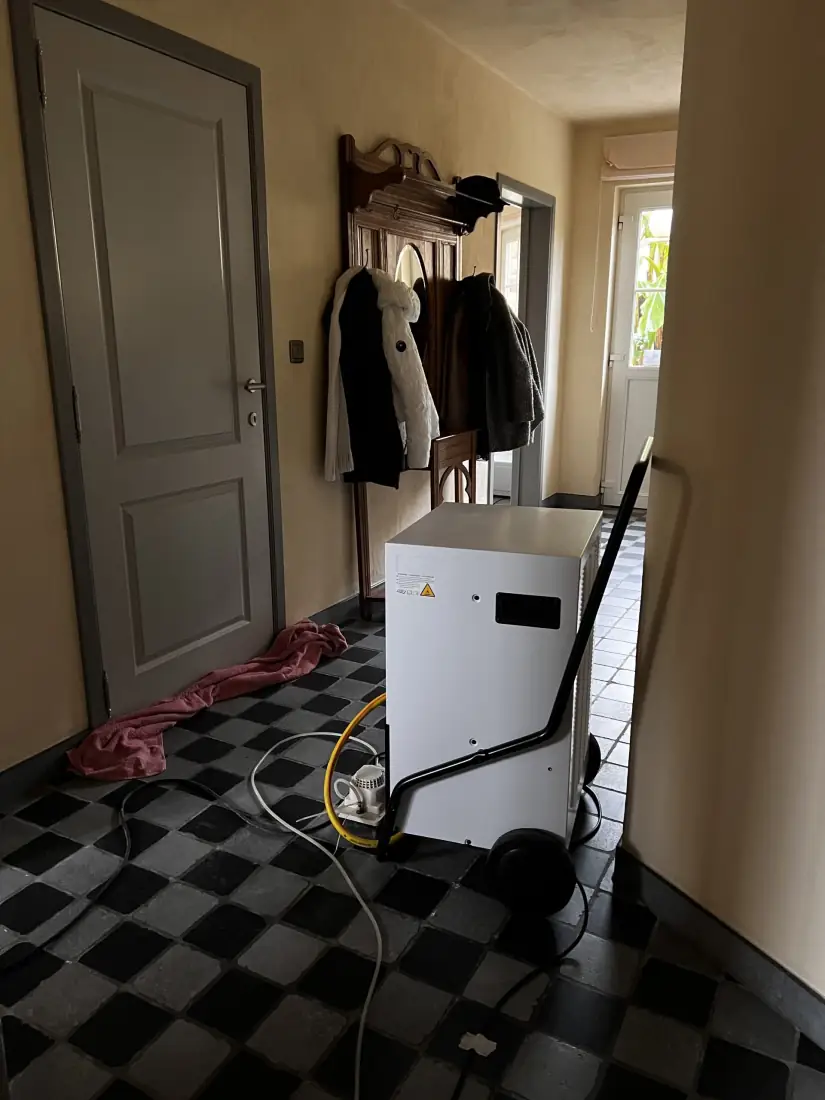
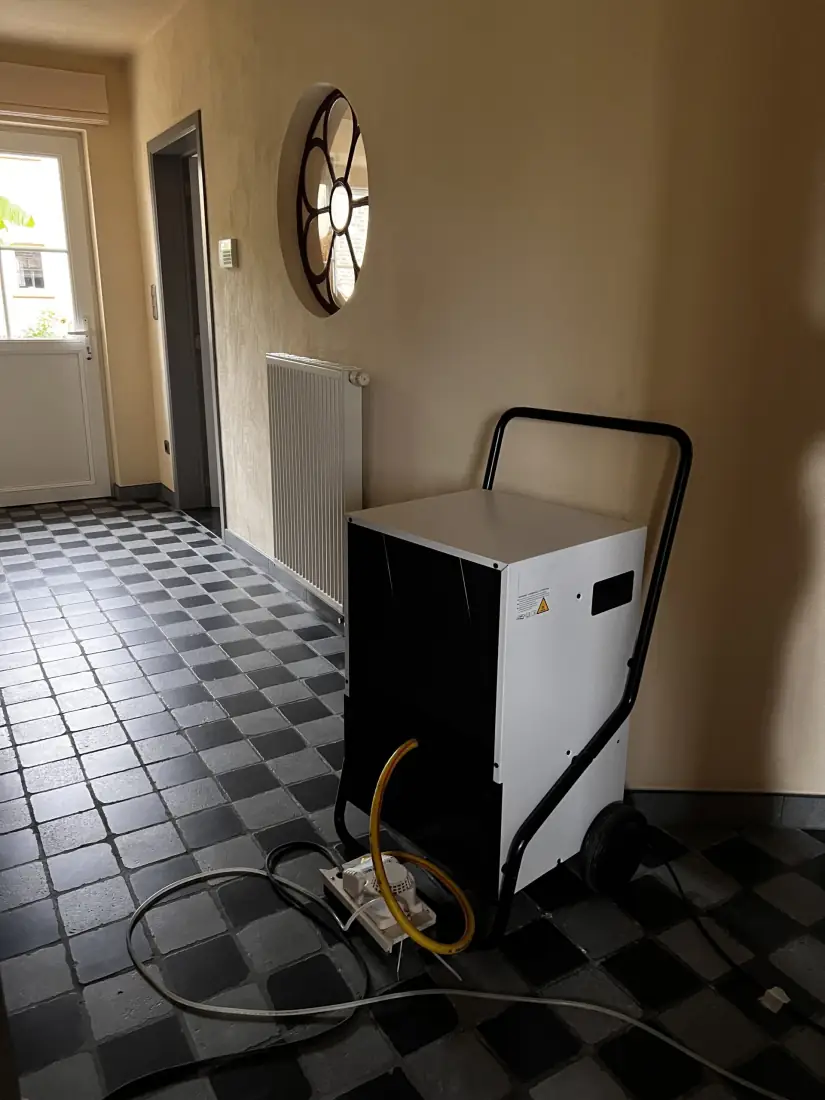
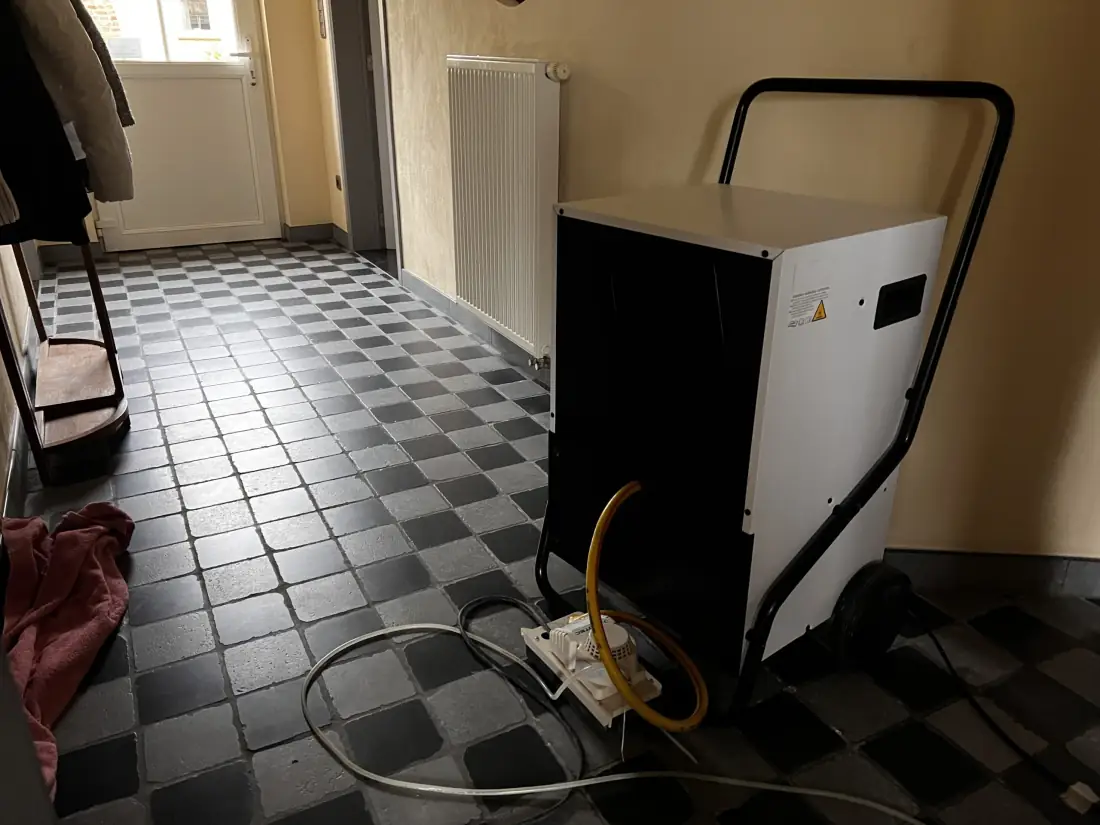
Placing the construction dehumidifiers. Construction dehumidifiers were positioned strategically in the entrance hall and the corridor. By placing the units carefully and combining them with air circulation, the moisture was drawn out of the structure efficiently, without disturbing the occupants unnecessarily.
Ventilation and mould treatment. In addition, targeted ventilation provided a constant supply of fresh air, while a three-day preventive mould treatment nipped any risk of mould in the bud.
Climate recovery and follow-up. Over a period of four days, Vernast dried the home in a controlled way, each step backed up by repeated moisture readings. This stabilised the indoor climate and left the home dry and safe, ready for further finishing.
The project in pictures
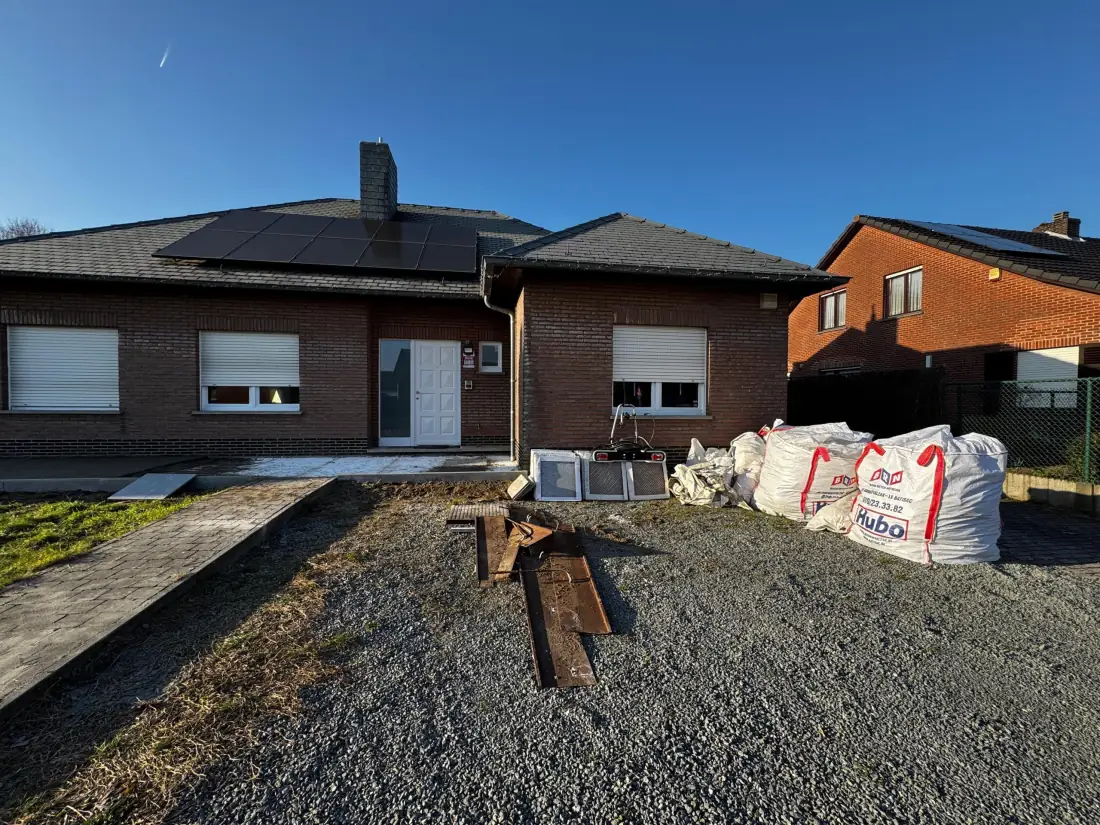
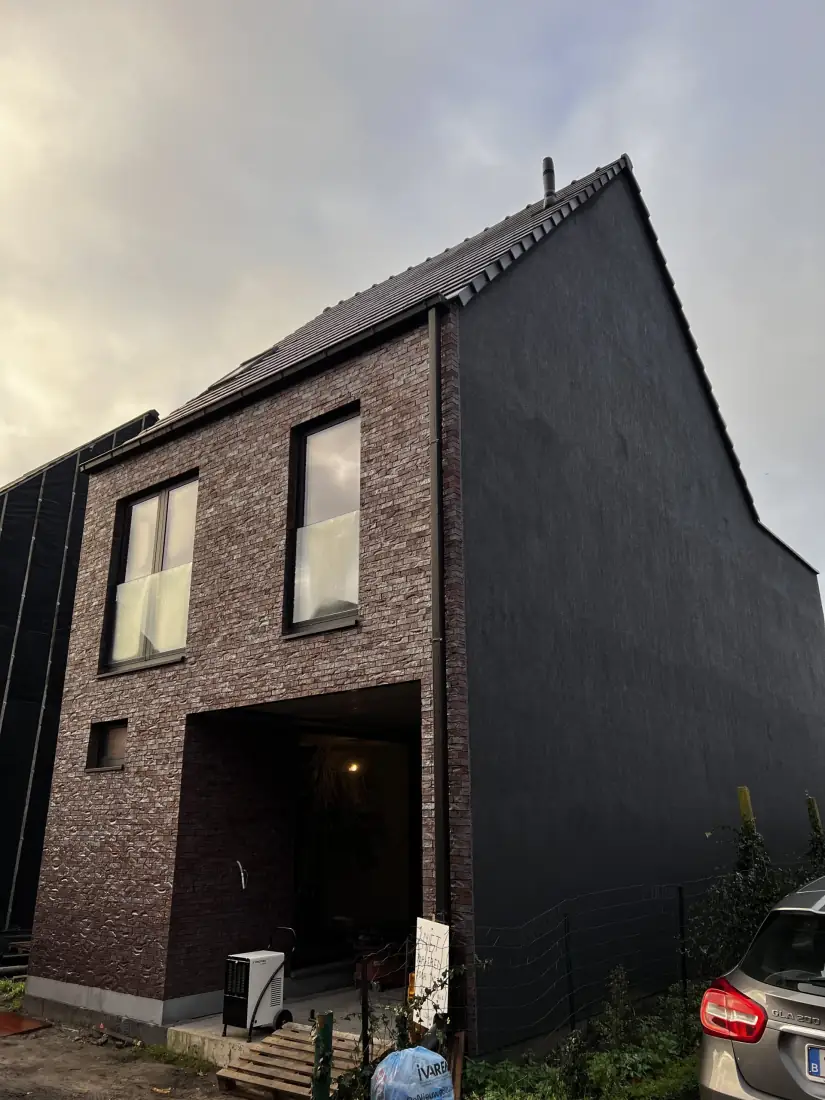
From the construction dehumidifiers in place to the moisture readings right down in the crawl space. Browse with the arrows or pick an image below.
From water damage to a dry, stable home
Fast action and thorough measurement
With water damage, every day counts. Within 24 hours Vernast had mapped the full extent of the moisture and deployed the right construction dehumidifiers straight away, carried out by our own team of certified moisture experts, with readings that leave no corner unchecked.
Dry and ready for finishing
With the moisture content back to normal and the crawl space checked, the home is dry and healthy again. This project shows how a fast diagnosis and a targeted drying approach prevent permanent damage and lay a safe foundation for further finishing.
Take a look at these projects too
Every home is different, see how we tackled similar damp problems elsewhere.