
Hire construction dehumidifiers, fans and heaters.
Eight machines, chosen from what is built around the world and not from whatever a Belgian supplier happened to have in stock. The dehumidifier takes the moisture out of the air, the fan carries that dry air to the wet material, and the heater keeps the room warm enough for the moisture to come out. Below is the whole range, each machine with its daily rate.

Every machine we hire out, at a glance.
Eight machines, no more. Every machine below is in our depot, has its own page with its full specifications and can be hired today at the price shown. What we do not install and maintain ourselves is not listed.
Construction dehumidifiers
Our eco line uses up to 40 % less energy than traditional industrial dehumidifiers, which shows on your electricity bill for a machine that runs day and night for weeks. The Revolution sits alongside them as a desiccant dehumidifier: it dries in a targeted way inside a floor build-up or a cold cellar.
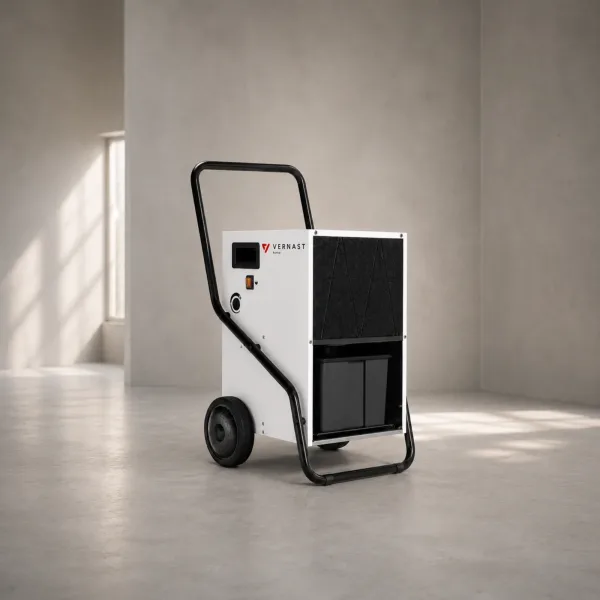
Boost construction dehumidifier
Condensation dehumidifierCompact condensation dehumidifier on wheels. The right choice for a single room, a flat or a smaller renovation.
 Eco50 litres a dayup to 250 m³0.75 kW
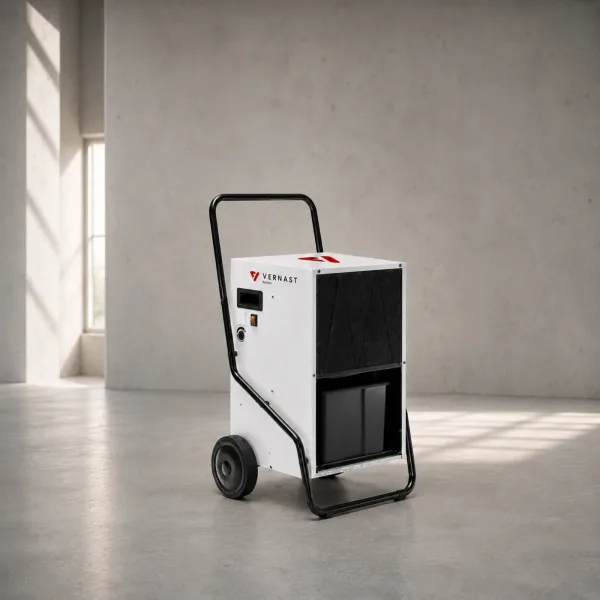
Performance construction dehumidifier
Condensation dehumidifierOur most hired unit and the standard for new builds. Dries screed and plaster reliably within a few days.
Eco70 litres a dayup to 400 m³1.1 kW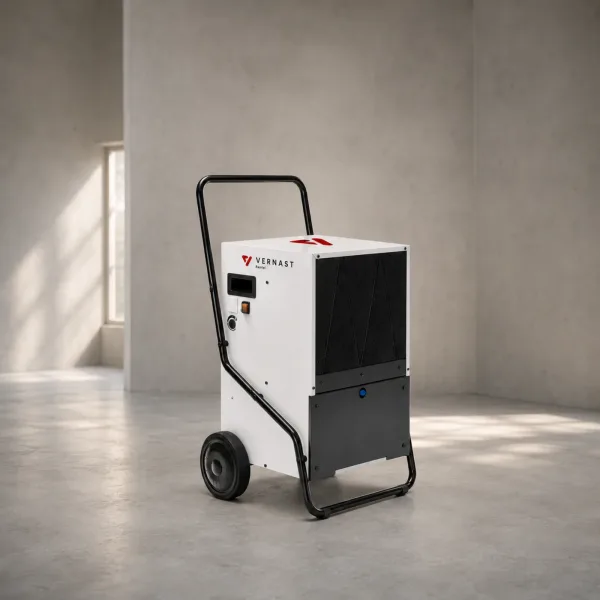
Ultimate construction dehumidifier
Condensation dehumidifierThe most powerful unit in the range. For large sites, cellars and water damage where every day counts.
Eco110 litres a dayup to 600 m³1.4 kW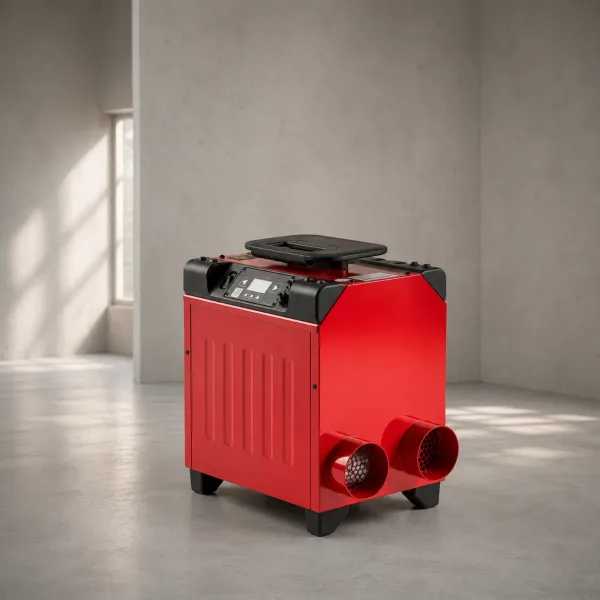
Revolution desiccant dehumidifier
Desiccant dehumidifier · targeted dryingDries in a targeted way through hoses: under floors, inside walls and in hard-to-reach places. Also works at low temperatures.
Fans
Air movement speeds up drying noticeably. An axial fan sets the whole room in motion, a radial fan blows flat across a wet floor. With water damage, there should always be one.
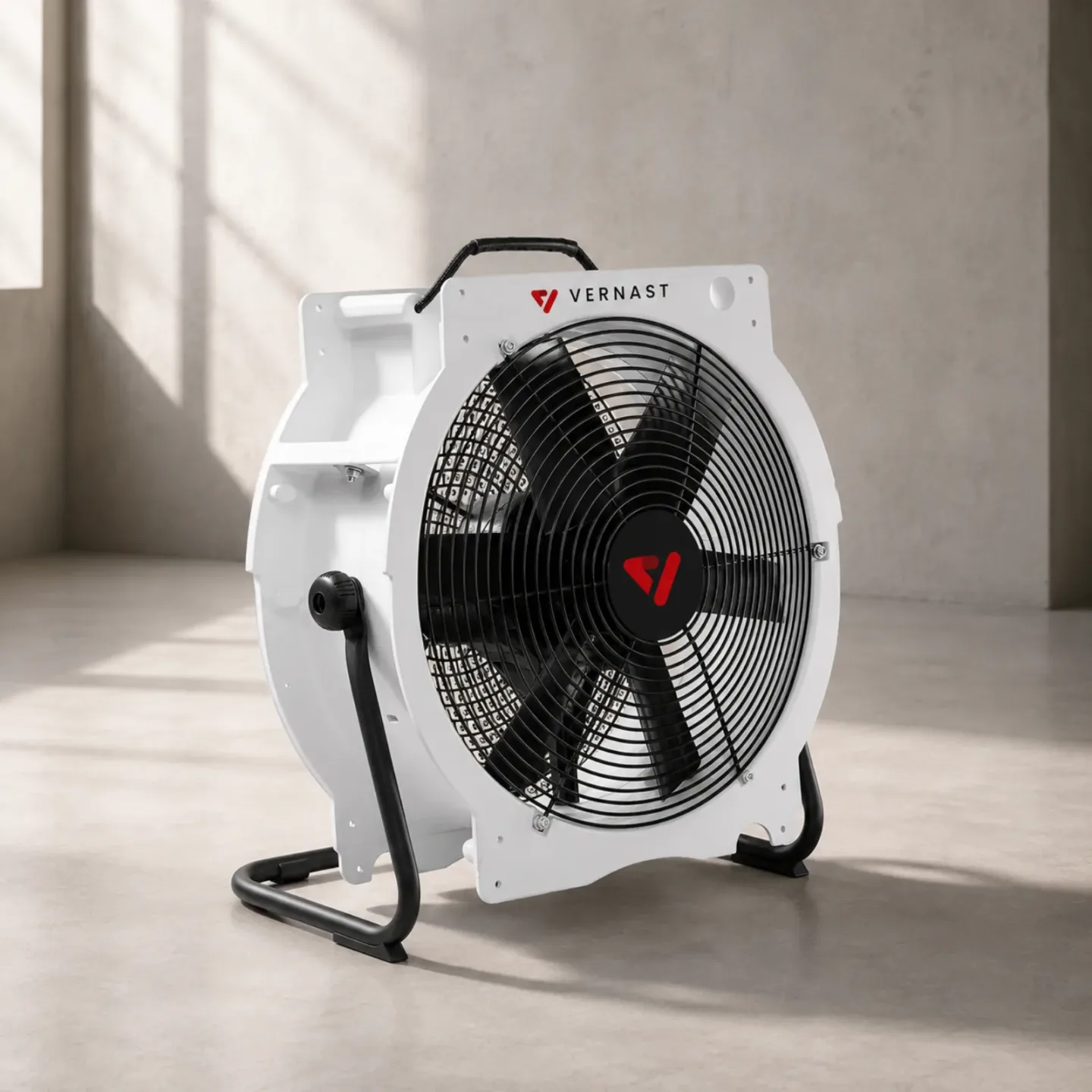
Highflow axial fan
Site fan · air circulationPowerful site fan moving 4,500 m³/h of air. Makes sure the dry air actually sweeps along walls and floors.
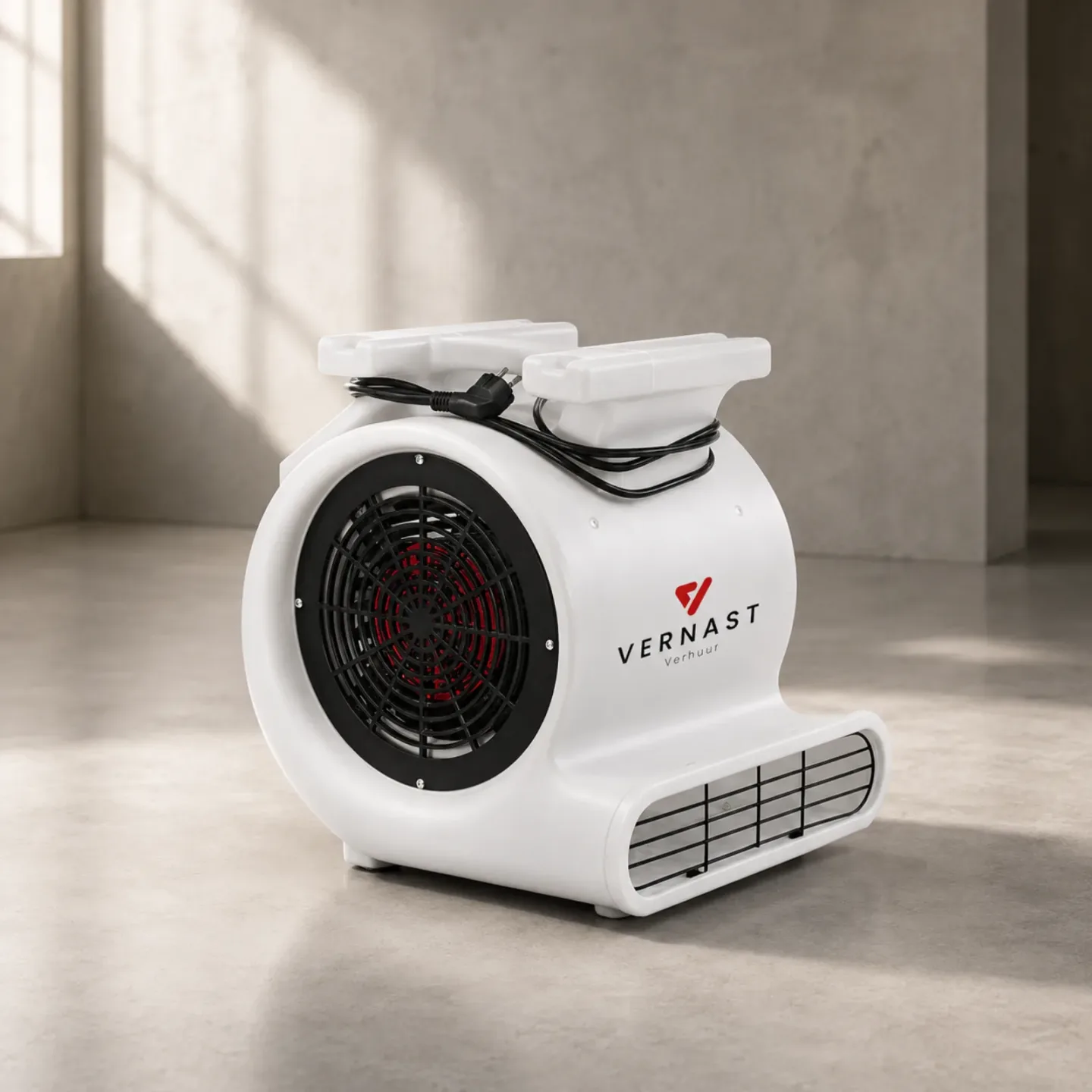
Turboflow radial fan
Site fan · targeted dryingBlows air precisely across floors and screed, including under cabinets and into corners. The regular partner of a dehumidifier for floor drying.
Heating
Below 15 °C a condensation dehumidifier dries slowly: cold air takes up little moisture. Two electric site heaters with a thermostat, both on 400 V three-phase power.
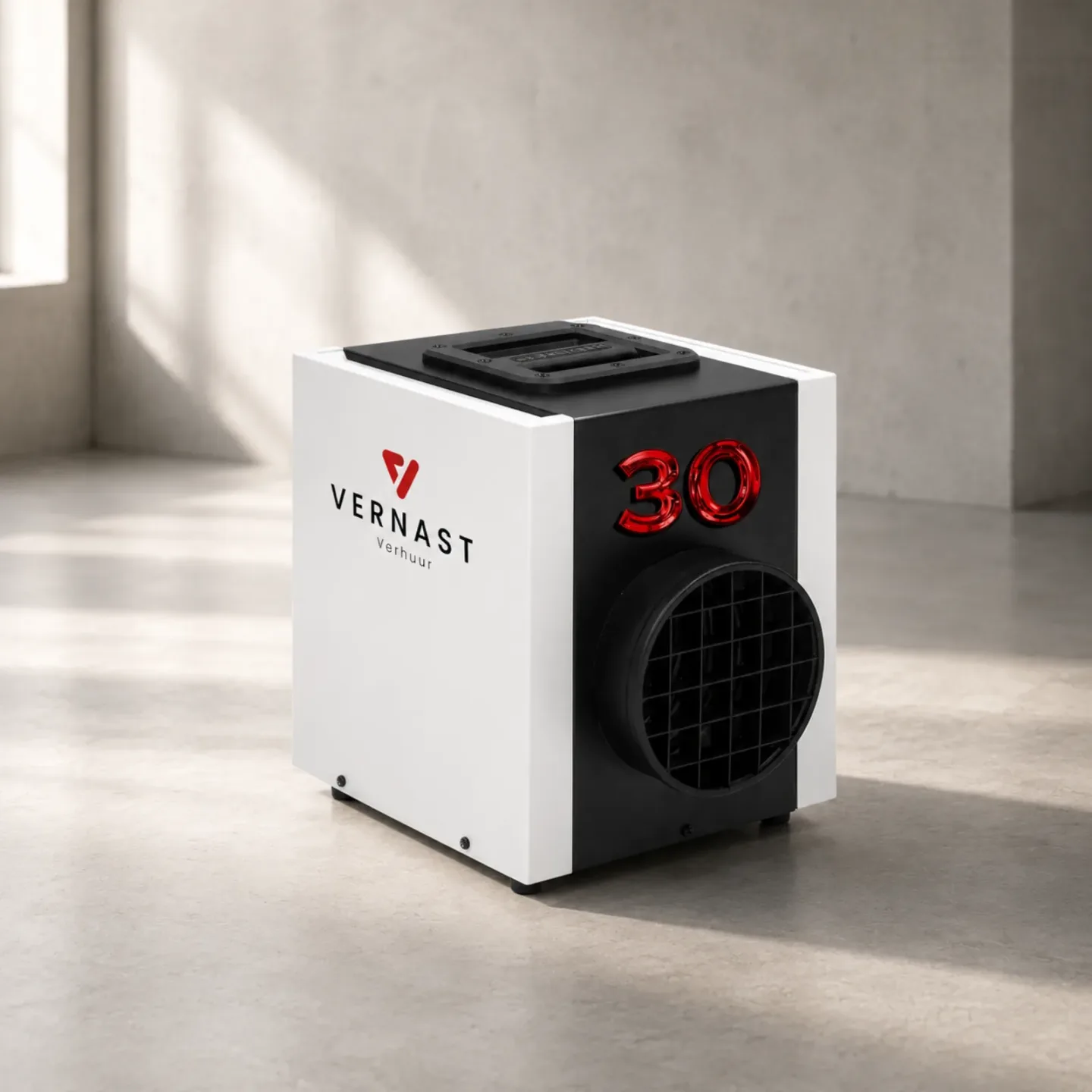
Heatpower 30 electric heater
Electric site heater30 kW electric site heater with built-in thermostat. Brings cold rooms up to temperature so drying becomes effective.
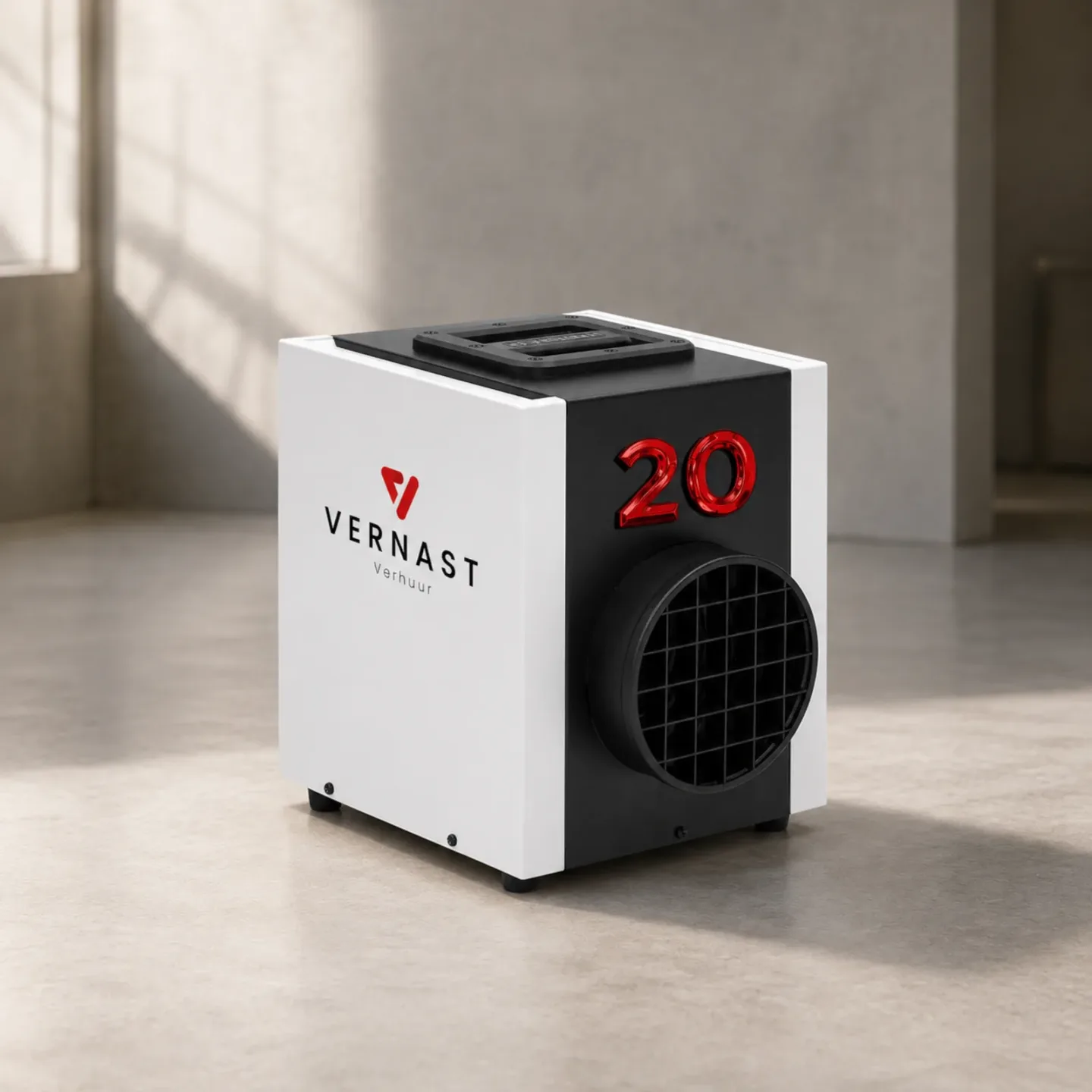
Heatboost 20 electric heater
Electric site heater20 kW electric site heater with thermostat. Brings smaller cold rooms up to temperature so the drying keeps going.
We look for the best machine in the world, not the best machine in Belgium.
Most hire companies buy whatever their Belgian supplier has in the catalogue that month. We do it the other way round. Our product research covers the whole world: we follow manufacturers and trade fairs in Europe, Asia and North America, bring in candidate machines and put them on our own sites first. A machine is here because it dries best for us, not because it happened to be for sale here.
The world market, not one catalogue
What is available for hire in Belgium is only a fraction of what gets built. We follow manufacturers and trade fairs in Europe, Asia and North America and request machines that nobody hires out here. Only if such a machine is better than what we have does it come into consideration.
Weeks on our own site first
A candidate first runs with us, next to the machine it would replace. We look at the litres per kilowatt-hour, the noise in an occupied home, the weight on a staircase and whether the machine gets through a night unattended. A brochure tells you nothing about that.
If it doesn't make the grade, it doesn't get in
If a machine does not reach its stated figures, or its parts cannot be here within the week, we do not take it on. Better eight machines we know inside out than a list full of names we have never seen on a site ourselves.
What does each machine do?
In most situations you work with a combination: a dehumidifier that removes the moisture, and a fan that carries the dry air to the walls and the floor. What each type of machine does, and when to choose it.
Performance construction dehumidifier
The standard for construction moisture, screed, plaster and most water damage in a heated or temperate space. It cools the air until the moisture condenses and drains the water through a hose or tank. Below roughly 15 °C its efficiency drops sharply.
View the PerformanceRevolution desiccant dehumidifier
For cold spaces and targeted drying: it blows dry air through hoses into a floor build-up, a wall or insulation. Choose it when the moisture sits where an ordinary dehumidifier cannot reach, for example under a floating screed after water damage.
View the RevolutionHighflow axial fan
Sets the whole room in motion. Otherwise a thin layer of saturated air hangs against a wet wall or floor and the drying stops. Does not remove any moisture itself: for construction moisture, use it together with a dehumidifier.
View the HighflowTurboflow radial fan
Blows a narrow jet flat across the floor, even under cupboards and against skirting boards. The better choice when the moisture is in the screed or the floor; with water damage, often together with an axial fan.
View the TurboflowHeatpower 30 electric heater
For cellars, winter sites and unheated new builds. Heat releases the moisture and lets the condensation dehumidifier work at full capacity, but removes nothing itself. The Heatpower and Heatboost hired on their own need a 400 V three-phase connection; the heater in a drying package runs on 230 V.
View the Heatpower 30What does a dehumidifier's capacity tell you?
A dehumidifier lists two figures. The moisture extraction in litres per day is the maximum amount of water the machine takes out of the air, measured at 30 °C / 80 % RH. In a cooler or drier room no dehumidifier reaches that figure: it is a way to compare machines, not a promise for your site.
The range in cubic metres is the volume the machine is suited to. Work out your volume as floor area times ceiling height: 100 m² at 2.5 m high is 250 m³. If there is a lot of wet material in the room, such as fresh screed or recent water damage, go for the larger machine or a second dehumidifier.
| Dehumidifier | Litres per day | Range | Power use | Per day |
|---|---|---|---|---|
| BoostSmall rooms | 50 L | up to 250 m³ | 0.75 kW | €10.89 |
| PerformanceMost hired | 70 L | up to 400 m³ | 1.1 kW | €14.52 |
| UltimateLarge volumes | 110 L | up to 600 m³ | 1.4 kW | €19.36 |
Prices incl. VAT. More on how the prices are built up on the prices page, and what these machines cost per day in electricity in the guide to the power consumption of a construction dehumidifier.
- Boost with Highflow axial fan
- Performance with Highflow axial fan and Turboflow radial fan
- Ultimate with Highflow axial fan and Heatpower 30 electric heater
What comes as standard, and what you can add.
10 m extension lead
Comes free with every construction dehumidifier. Feel free to ask for a second one if the socket is far away.
FreeCollection tray
Also free with every dehumidifier. Rather not empty anything? Then take a condensate pump.
FreeAir conditioner
Available on request, for example for a server room or a site in summer.
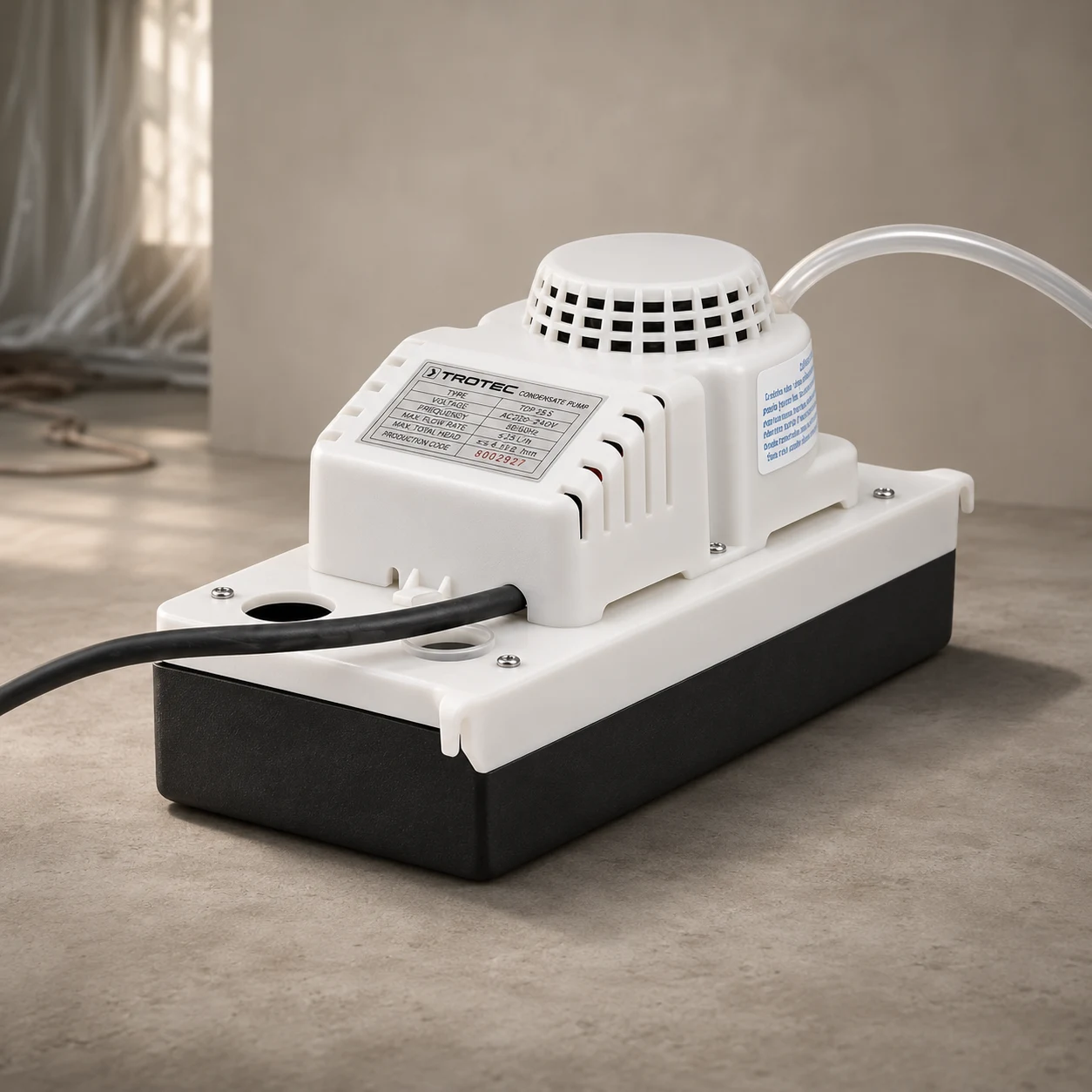
Condensate pump, €2.42 incl. VAT per dehumidifier per day
Drains the condensate continuously to a washbasin, shower or floor drain, up to 3.90 m higher than the machine. That way you never have to empty a tray and the dehumidifier keeps running day and night.
View the condensate pumpFrequently asked questions about the equipment.
Is your question not listed?
Our drying experts will help you straight away, with advice tailored to your situation.
First work out the volume of the room: floor area times ceiling height. Our smallest dehumidifier, the Boost, is intended for spaces up to 250 m³; the Ultimate goes up to 600 m³. A lot of wet material, such as a thick screed or fresh water damage, needs more capacity than the volume alone would suggest. If in doubt, take the larger machine or let the Calculator do the sums.
A condensation dehumidifier cools the air until the moisture condenses and works best above roughly 15 °C. A desiccant dehumidifier takes the moisture out of the air with a moisture-absorbing material, loses little capacity in the cold and can blow dry air through hoses into a floor or wall in a targeted way.
In a new build it is strongly recommended; with water damage we consider it essential. A dehumidifier dries the air; a fan makes sure that dry air also passes along the wet walls and floors.
You don't have to choose the machine yourself.
Give us your floor area and your situation, and the Calculator works out the complete package: dehumidifier, fan and heater in the right proportions. Or call us and we will do it over the phone.

Further reading about the equipment
How we use the machines
Choosing and calculating
Delivery in your region
Not sure which machine suits your site?
Briefly describe the room and what needs drying. A drying specialist will tell you within one working day which machine or combination you need.