Drying plasterwork in Woluwe-Saint-Pierre
Construction drying · Woluwe-Saint-Pierre · Construction dehumidifier hire in BrusselsAfter the plastering work, the moisture content in this town house in Woluwe-Saint-Pierre was too high to continue finishing without risk. Vernast set up construction dehumidifiers and air circulation and tracked the drying process with precise readings, so the home dried in a controlled way to a stable base ready for painting.
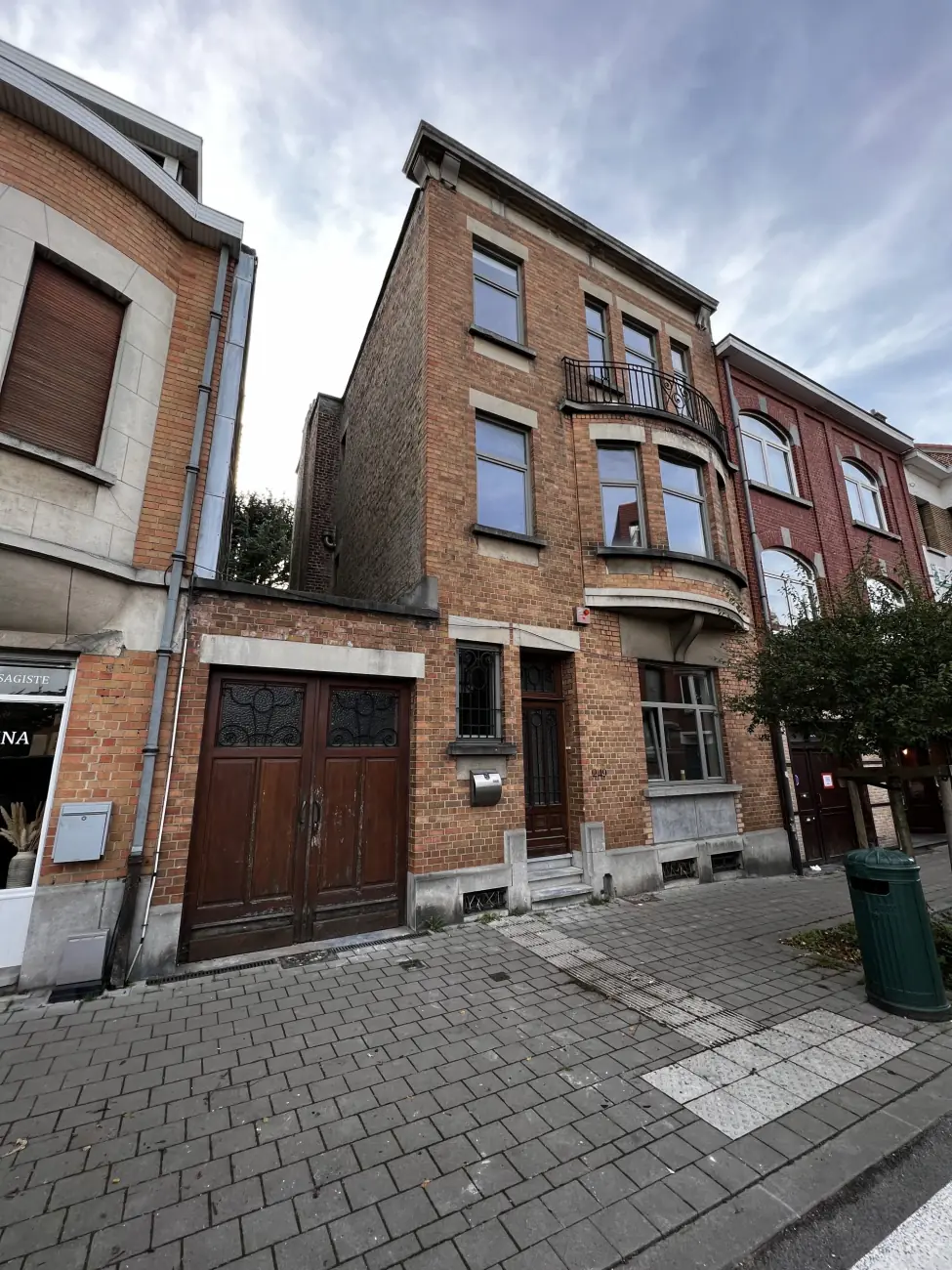
The situation on arrival
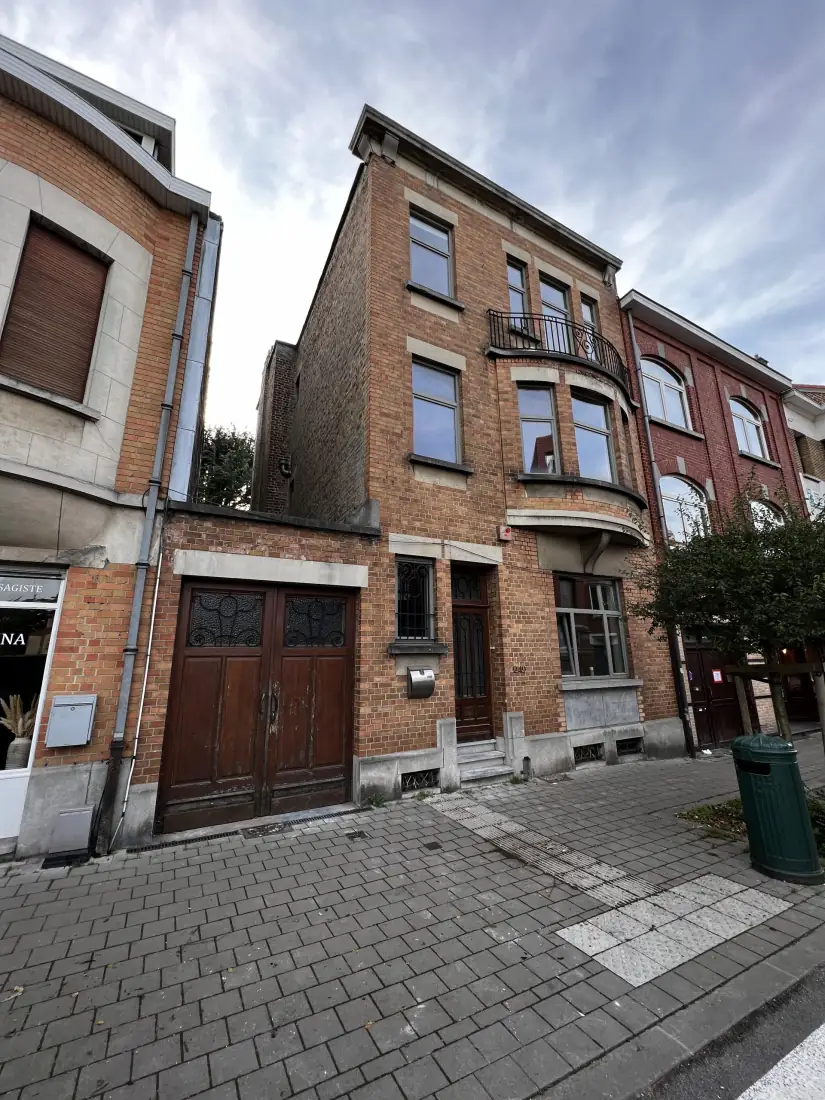
In this characterful town house in Woluwe-Saint-Pierre, the shell had just been given new plasterwork. A check showed that the moisture content in the walls and ceilings was still clearly too high: the fresh plaster was releasing its mixing water only slowly, and natural drying was too slow for the painting and flooring to start safely.
- Raised moisture content in walls and ceilings after plastering
- Slow natural drying in the closed-up town house
- Risk of cracks and damp patches if finished too early
- Painting and flooring could not yet start safely
Our diagnosis
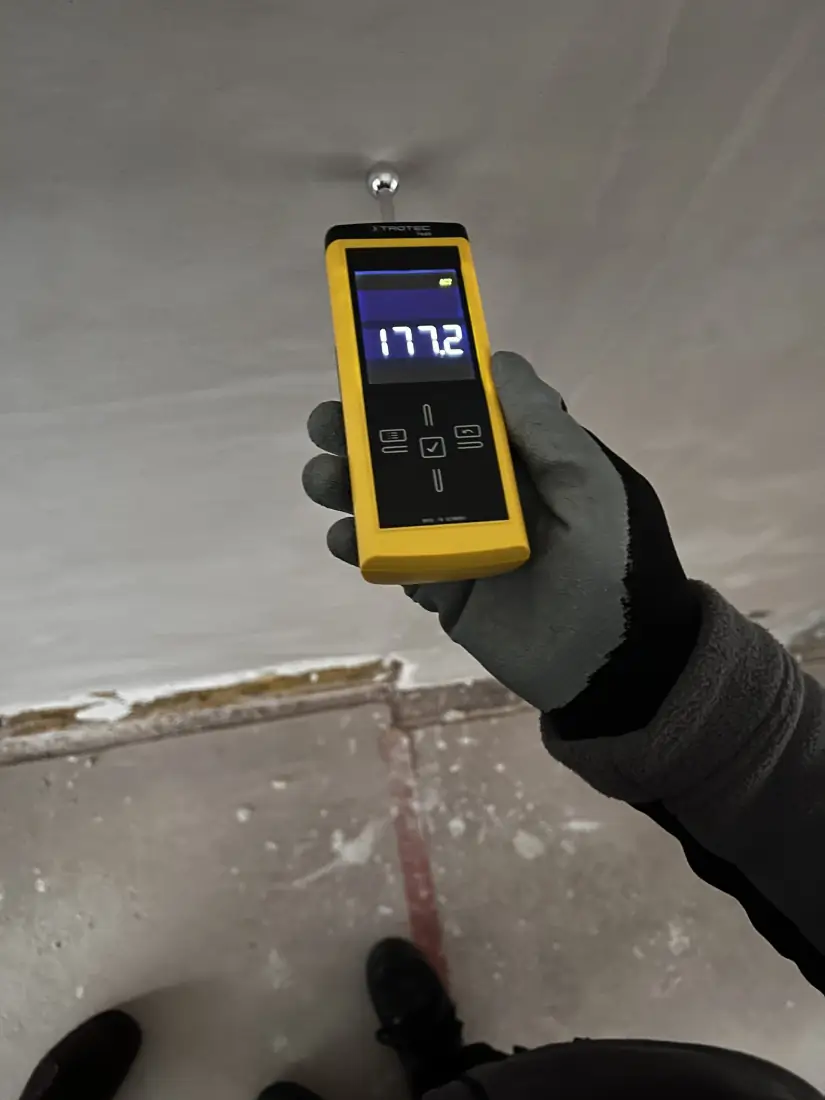
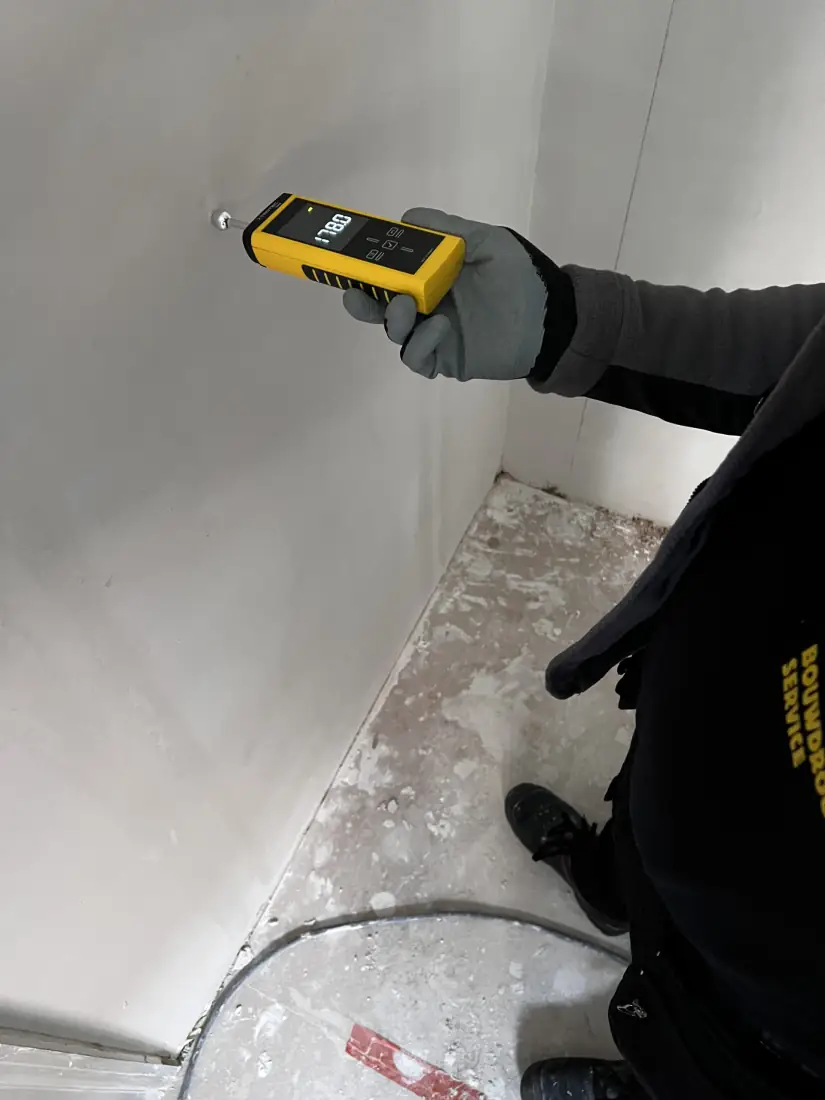
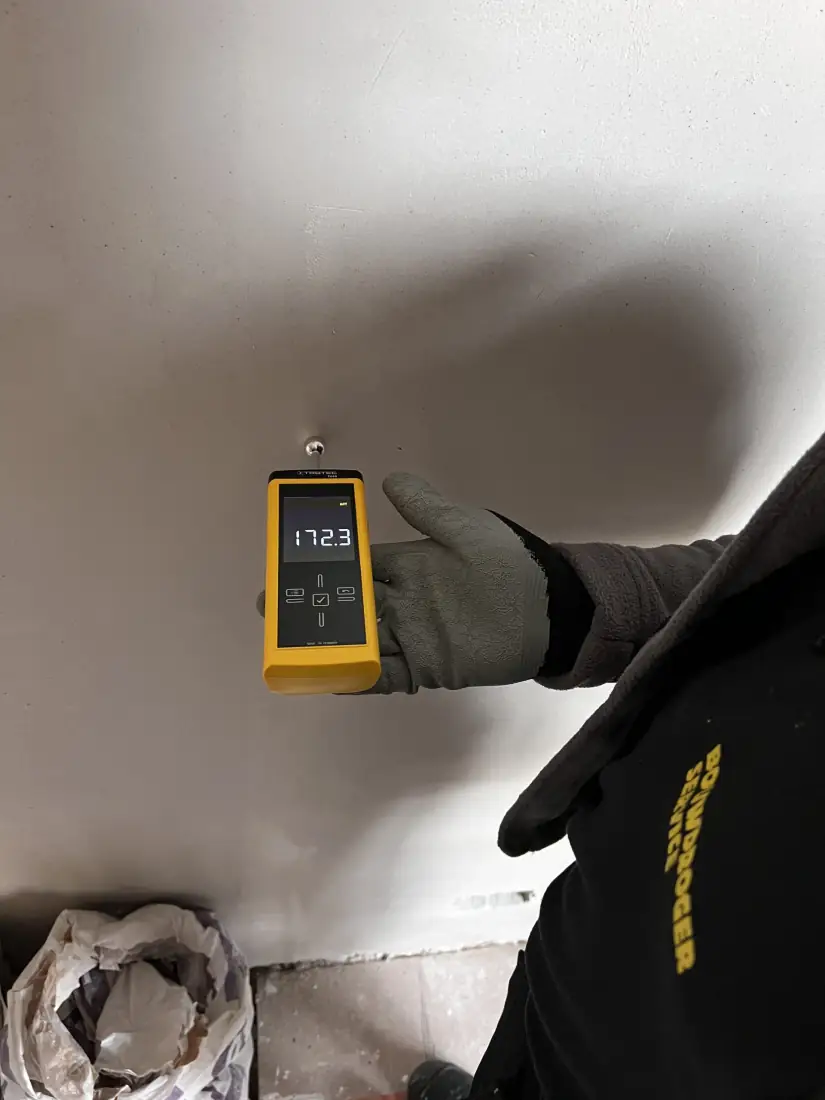
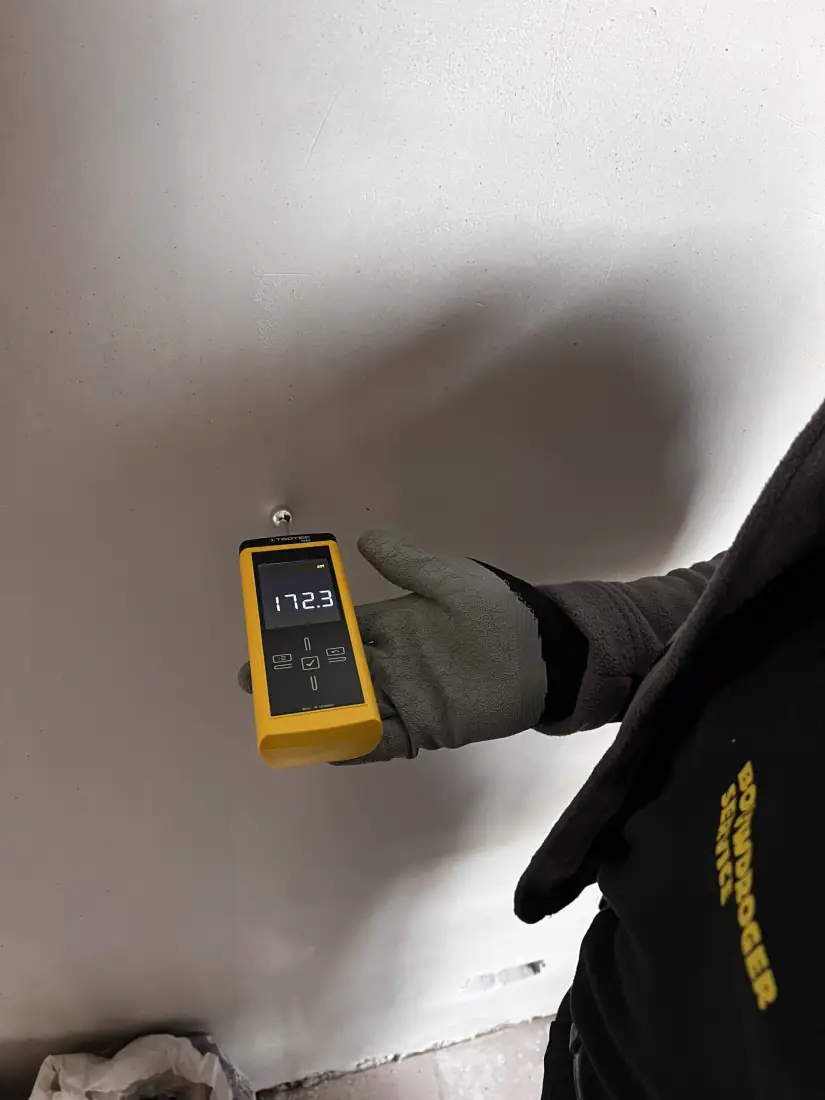
Readings were taken with a calibrated Trotec moisture meter at different heights and in every room. The values stayed high, between roughly 172 and 177 on the meter scale, pointing to residual moisture from the fresh plasterwork rather than a structural damp problem. The cause was therefore temporary, but without intervention the home would dry too slowly and the rest of the schedule would be put at risk.
The work, step by step
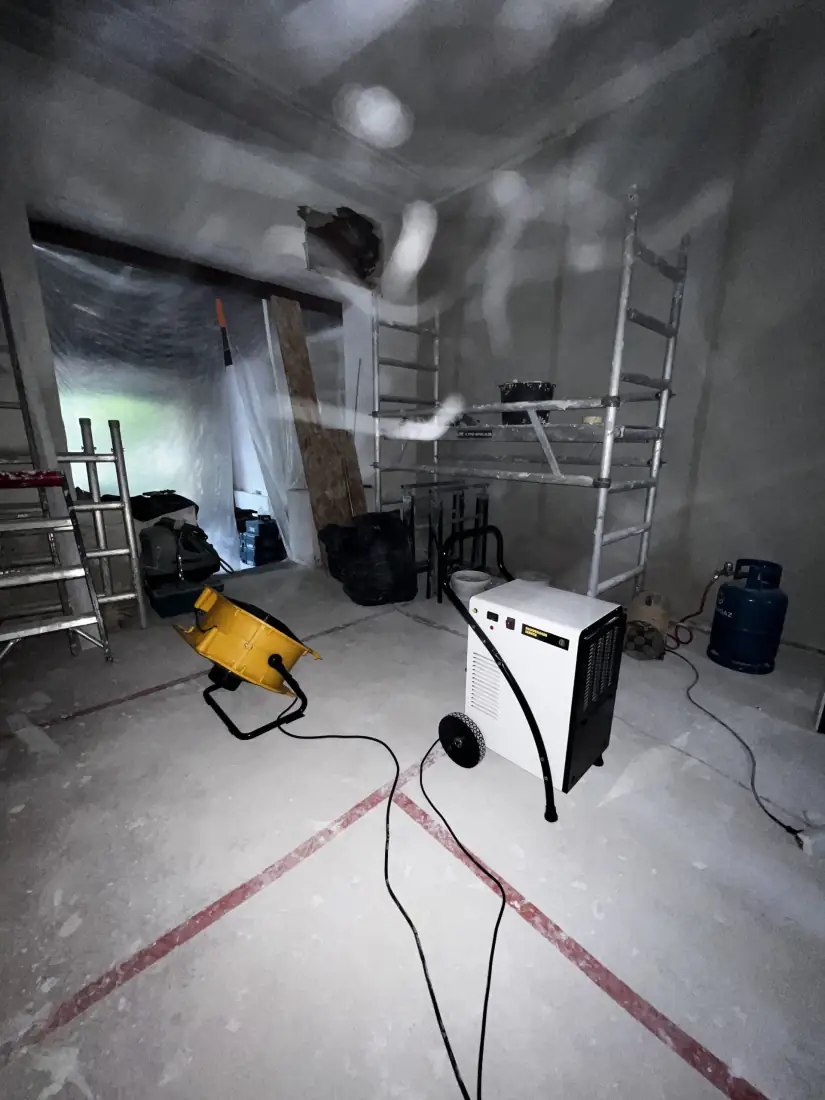
Day 1, analysis and set-up. Within the first 24 hours, the moisture levels were mapped and the construction dehumidifiers placed strategically, supported by fans for even air circulation throughout all the rooms.
Controlled drying. The condensation dehumidifiers continuously extracted moisture from the air, while the fans kept drawing the moisture out of the plasterwork. Openings were screened off with sheeting so the drying capacity was used where it was needed.
Follow-up with readings. During the drying phase, the moisture content was checked repeatedly until the values were at a healthy, stable level throughout the home.
A base ready for painting. After about four days of active drying, the substrate was ready for the painting and flooring to begin safely, without the risk of moisture damage.
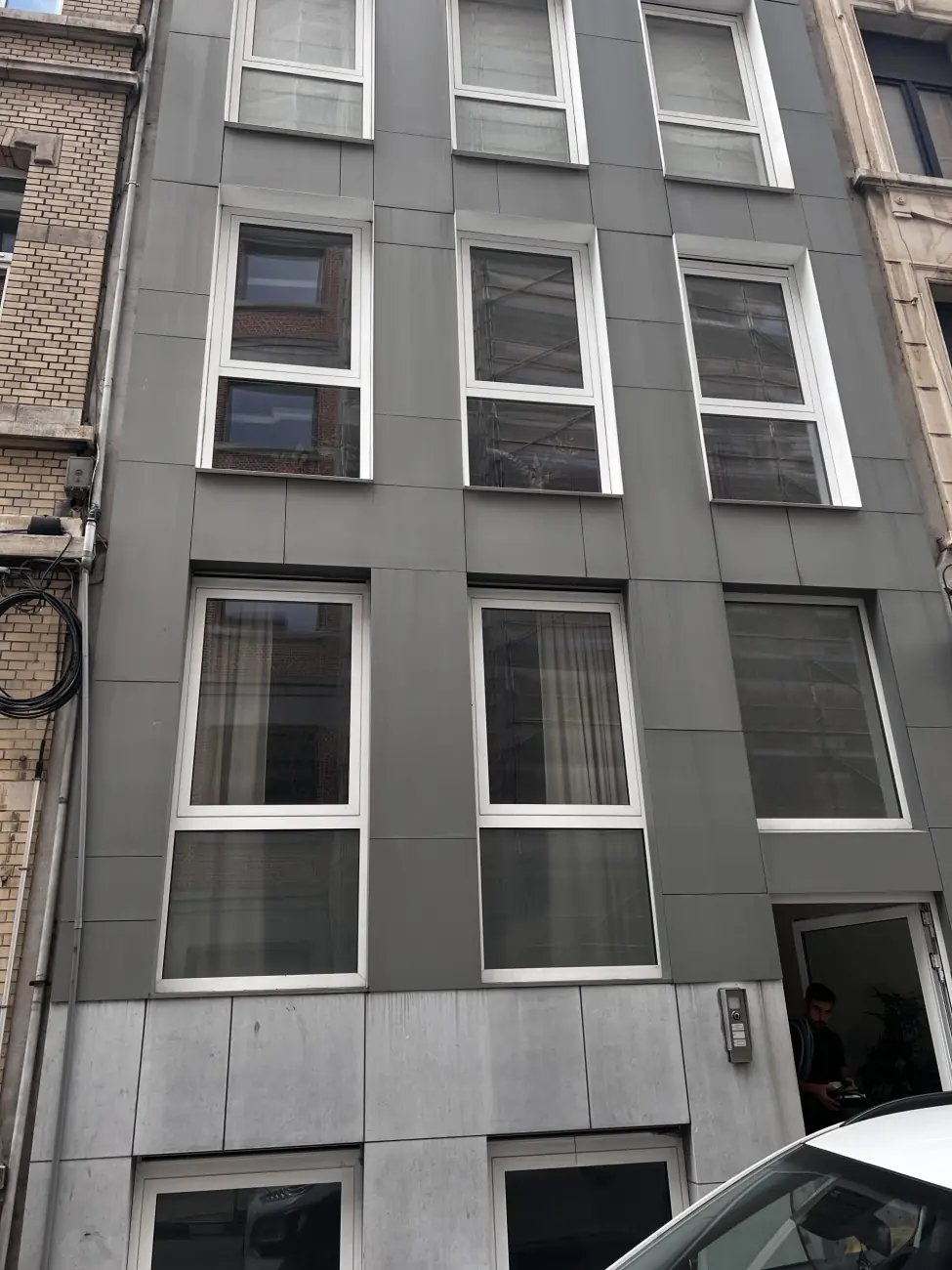
The project in pictures
From the drying set-up to the follow-up moisture readings in Woluwe-Saint-Pierre. Browse with the arrows or pick an image below.
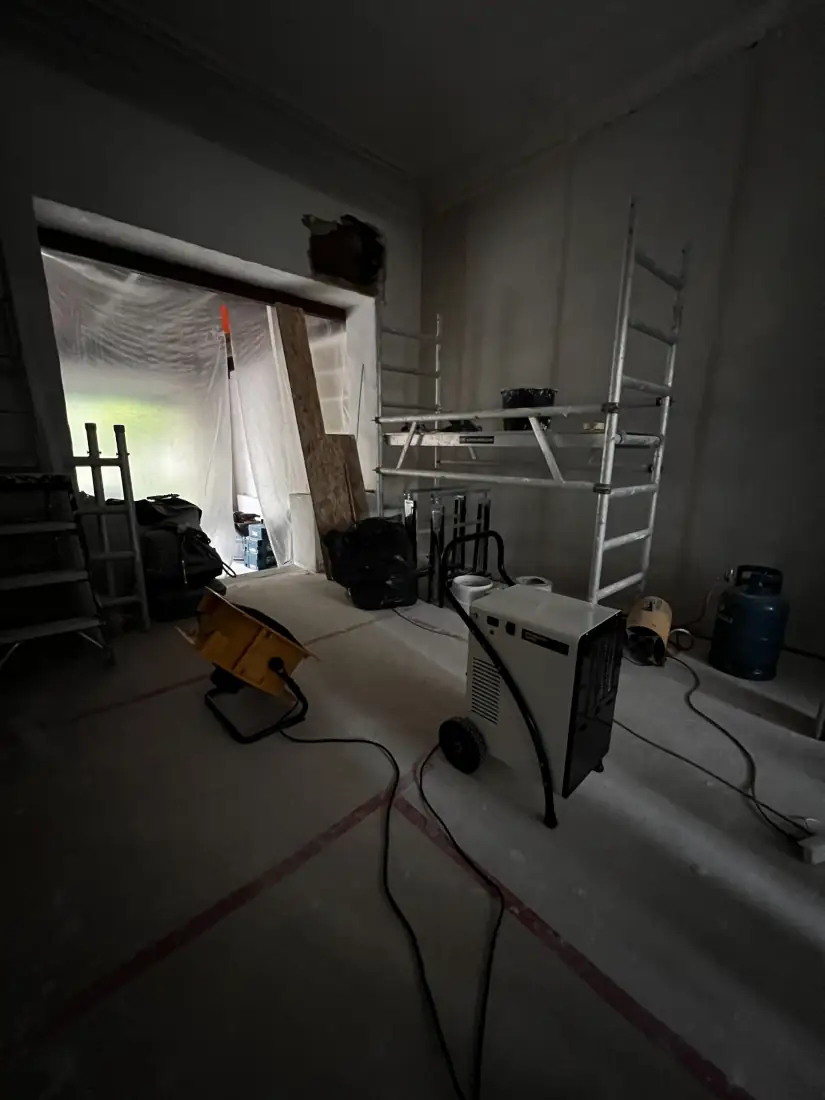
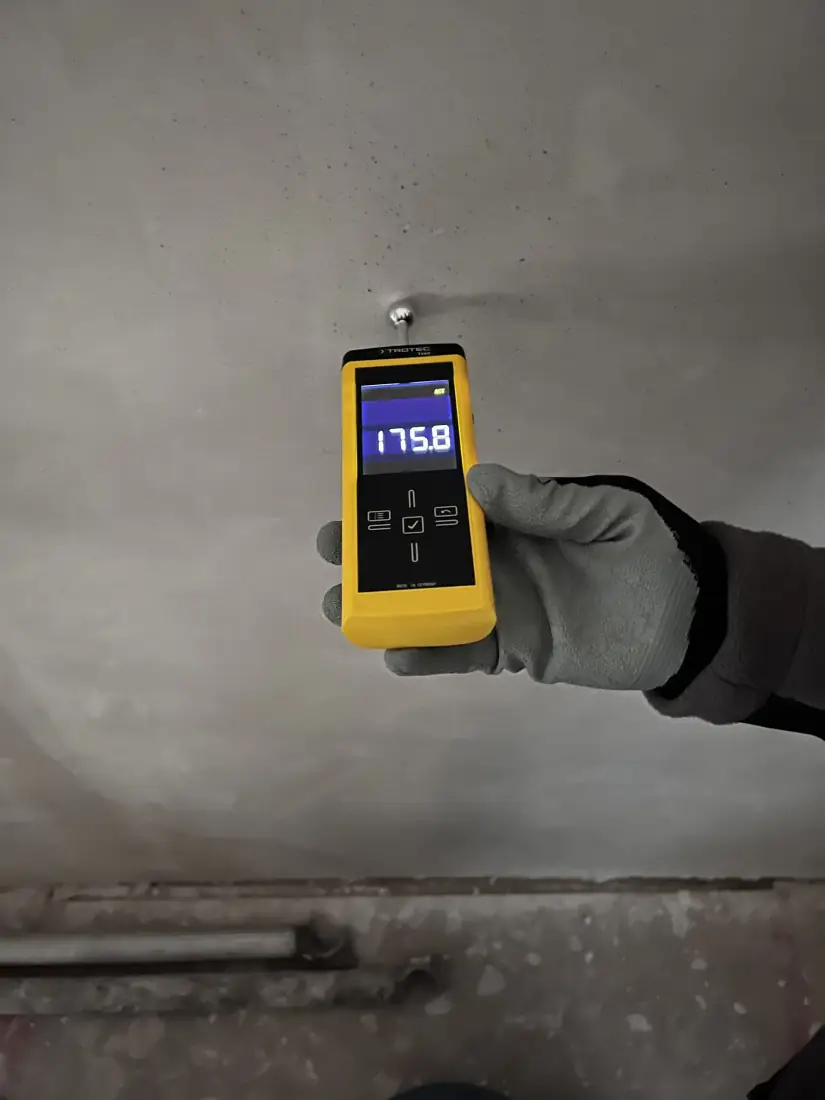
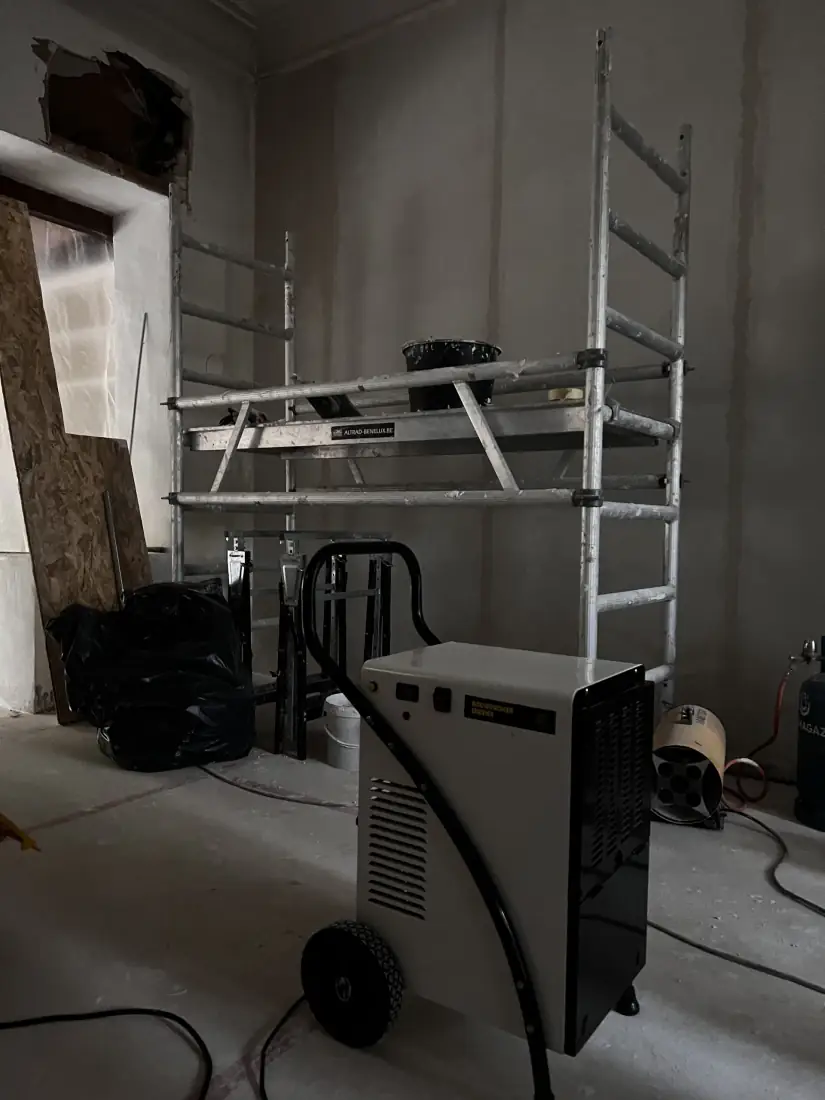
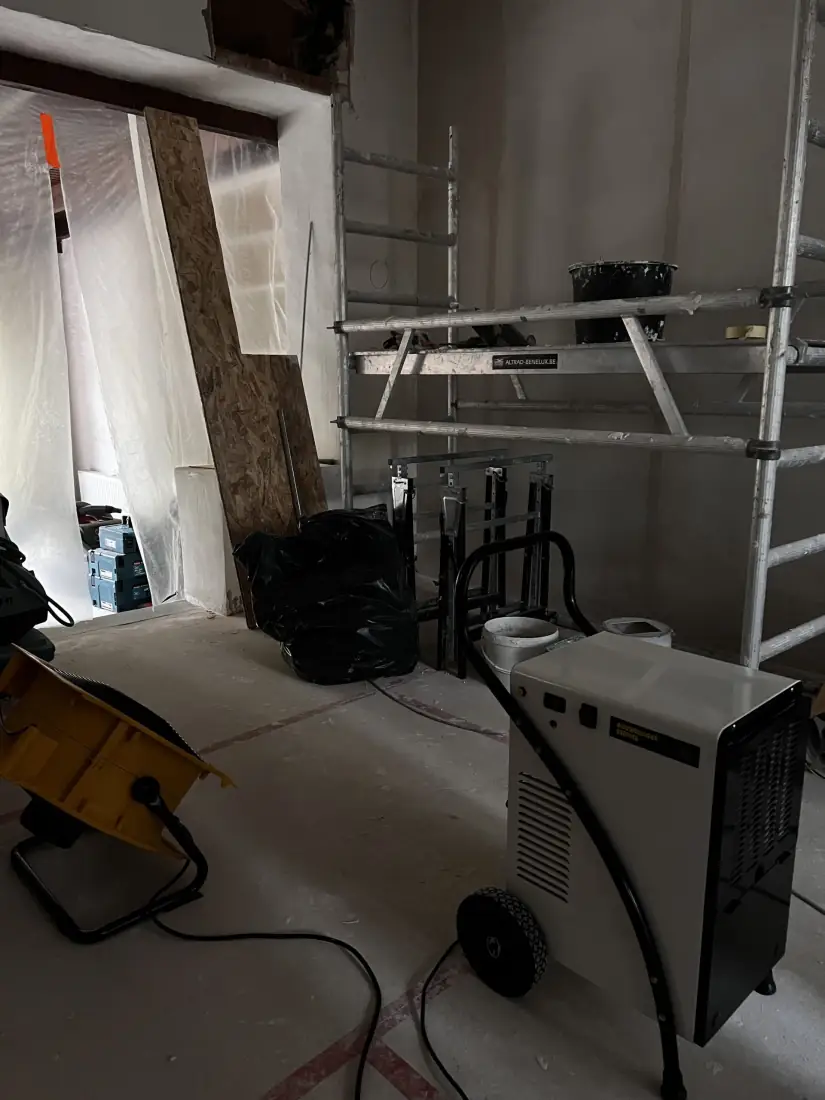
From over-damp plasterwork to a base ready for painting
Quick to act without letting quality slip
With our own construction dehumidifiers and measuring equipment, we could step in immediately and steer the drying process based on real figures. That way the schedule loses no time and the finishing only starts once the substrate is ready for it, all carried out by our own Vernast team.
Ready for a lasting finish
With the residual moisture gone and the moisture content brought back to a healthy level, the painting and flooring could start safely. This project in Woluwe-Saint-Pierre shows how targeted construction drying prevents cracks and moisture damage and delivers a stable end result.
Take a look at these projects too
Every home is different. See how we tackled damp in other Brussels properties.