
Drying a damp basement or wet walls, and keeping them dry.
A musty smell, dark patches at the bottom of the wall, mould in the corner: damp doesn't go away because you open the window. A construction dehumidifier takes it out of the air, and with it out of walls and floors. And if there is a lasting cause behind it, you can read below, honestly, which one it is and in what order to tackle it.
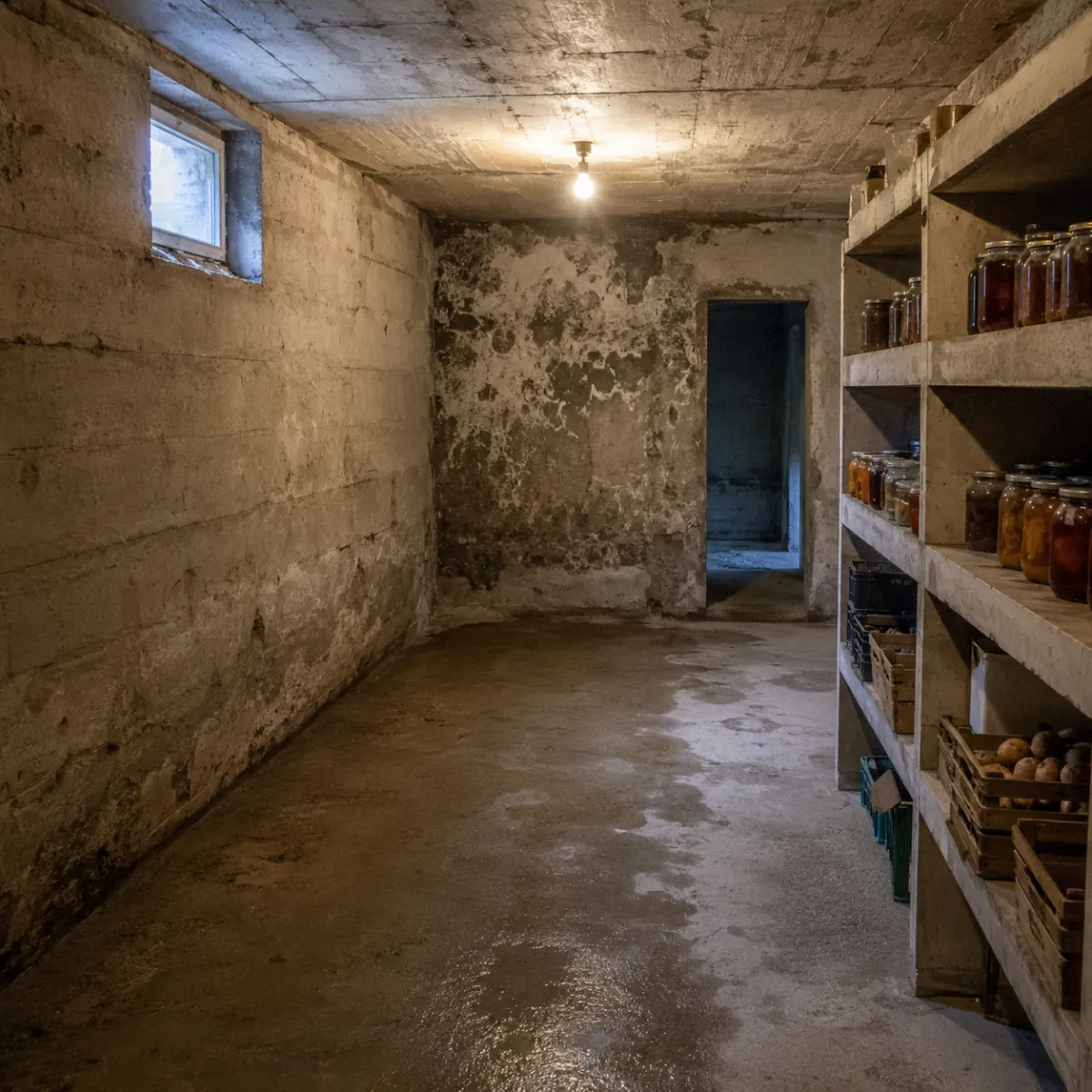
Damp doesn't wait until you have time.
A damp room doesn't slowly get a little worse. Mould doubles in days, wet timber and wet insulation are damaged beyond repair, and what starts as a smell ends up as an item in a deed of sale.
Mould spores in the air
The mould you can see is only part of it; the spores hang in the air you breathe. They cause respiratory complaints, headaches and allergic reactions, and are most troublesome for children, older people and people with asthma.
Damage to the structure
Damp attacks masonry, timber beams, skirting boards and insulation. Insulation that has been wet no longer insulates, and timber that stays damp for months rots from the inside, exactly where you can't get at it.
A home that's worth less
Visible damp patches, a musty basement or a damp survey that raises questions: every buyer knocks it off the price. Drying costs a fraction of what the price negotiation will cost you.
Five signs that drying makes sense.
One of these five is enough to have it measured. With two or more it's rarely a coincidence: there is moisture somewhere that can't get out. Call us and we'll go through your situation before you hire anything, even if the answer is that you don't need anything from us.
Not sure which machine suits your volume? The drying calculator works it out from floor area and ceiling height, and how drying works explains why the combination of heat, air movement and dehumidification does the job.
- A musty, cellar-like smell that won't go away
- Dark damp patches on walls or ceiling
- Black or green mould spots, often in corners
- Condensation on windows, cold walls or pipes
- Damp after building work, a leak or a flood
Recognise one or more of these? One phone call is all it takes for advice.
Call usA construction dehumidifier removes damp. Not always the reason it's there.
A construction dehumidifier takes moisture out of the air, and with it out of walls and floors. If that moisture keeps coming back in, you are drying against the tide: you're hiring a machine that works only while it's there. So first look at where it comes from. For three of these five causes, drying is the answer; for two, something else comes first.
Cross-section of a basement wall: the ground on the left, the room with the dehumidifier on the right. The numbered spots are the five places where moisture gets in, and match the five causes in the list.
Condensation
A dehumidifier helpsWarm, humid air condenses on cold walls, floors and windows. Typical in basements and poorly ventilated rooms, especially in winter. A construction dehumidifier brings the humidity down; a lasting fix needs better ventilation or insulation.
Construction moisture after renovation
A dehumidifier helpsNew plasterwork, screed or masonry brings hundreds of litres of water into a space that is often poorly ventilated. That is exactly what a construction dehumidifier is made for.
After a leak or water damage
A dehumidifier helpsOnce the leak is repaired, a construction dehumidifier with a fan dries out the walls and floor again. As long as the leak remains, the damp keeps coming back.
Rising damp
Cause firstGroundwater drawn up through the masonry: damp patches and salt deposits at the bottom of the wall, up to a metre high or more. A construction dehumidifier dries the surface, but the damp keeps rising as long as the wall isn't treated.
Penetrating damp
Cause firstRain or groundwater pushing through a façade or a basement wall, often visible after a spell of rain. Here too, drying is only temporary: the wall or basement wall has to be made watertight.
Aim for 40 to 60% relative humidity.
Relative humidity tells you how much moisture the air holds compared with the maximum it can carry at that temperature. For a home, 40 to 60% is the guideline. If it stays higher for long, mould gets a chance, especially on cold walls. Well below that, the air becomes unpleasantly dry.
In a basement, temperature plays a part: cold air becomes saturated sooner, and a cold wall draws moisture towards it. That's why a basement can smell musty while the rest of the house is fine. Our dehumidifiers have a built-in humidistat: they throttle back as soon as the set target is reached, instead of running on until the air is bone dry.
Below 40% the air becomes uncomfortable and wood shrinks. Above 60% mould starts on a cold wall. In between is the zone we dry a basement towards, and where you keep it afterwards.
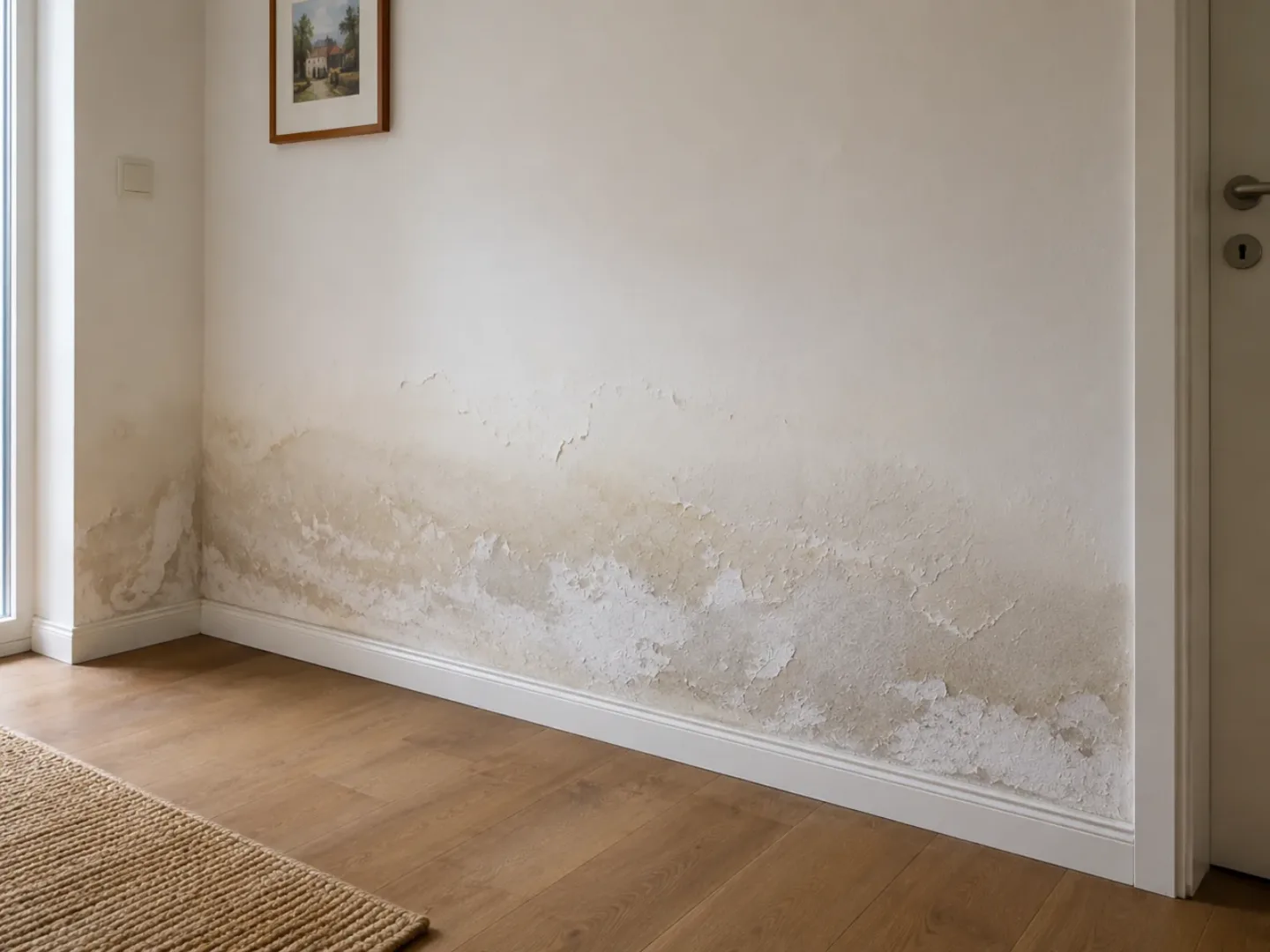
Dry first, then remove the mould.
Mould needs moisture. Drying takes away its breeding ground, so it stops growing. But the mould that is already there doesn't disappear with it. You need to remove it after drying, and for large areas it's better to have that done professionally.
Do it in that order. Treating mould on a wet wall makes little sense: the mould comes back as long as the damp remains, and you'll have paid twice for the same work. For a stubborn case or a musty smell that lingers after drying, there is one more step: an ozone treatment tackles the spores and the smell in the room itself.
Drying a damp basement: how to go about it.
Six steps, in this order. Skip step two and you'll be repeating step four every year.
Measure first
A simple hygrometer shows the relative humidity and the temperature. Note them down for a few days, so you know your starting point and can show afterwards that it worked.
Find the cause
Condensation, a leak, or moisture from outside? See the five causes above. With rising or penetrating damp, have the wall treated first.
Make space
Move boxes, cupboards and textiles away from the walls. Behind a cupboard against a cold wall is always the dampest spot, and that's where mould starts.
Place the dehumidifier centrally
In the middle of the room, doors and basement windows shut: you're drying the basement, not the garden. With a condensate hose to a drain, you don't have to empty a tank.
Heat below 15 °C
A cold basement dries slowly with a condensation dehumidifier: cold air simply holds less moisture. A site heater brings the temperature up, or you choose a desiccant dehumidifier.
Keep it dry afterwards
Once the room is dry, ventilate regularly and keep an eye on the humidity. Otherwise you'll be back where you started in a few months.
Three dehumidifiers, one for each volume.
Not the heaviest machine, but the one that suits your room. A dehumidifier that's too big for a small basement doesn't dry any faster; it just uses more electricity.
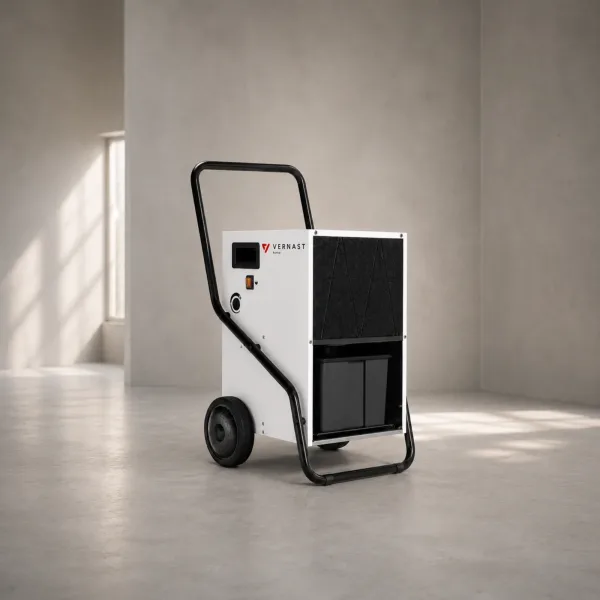
Boost
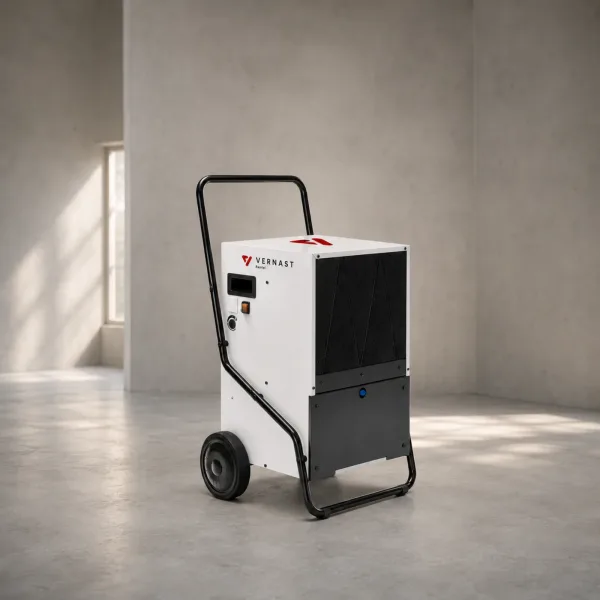
Up to 250 m³ · 50 L/dayOne room, a flat or a small renovation
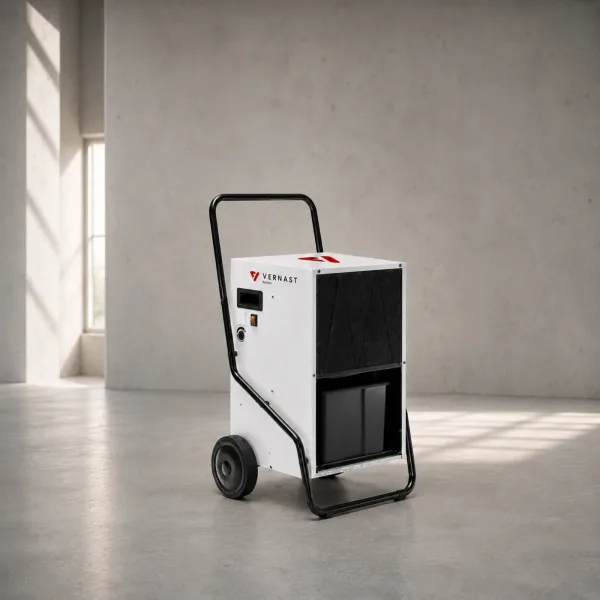
Performance
Up to 400 m³ · 70 L/dayA standard family home or a large renovation
Ultimate
Up to 600 m³ · 110 L/dayLarge sites, spacious cellars and urgent water damage
All three are eco condensation dryers, available by the day or by the week. Delivery, installation and the moisture reading are included in the price.
A package combines a dryer, a fan and if needed a site heater, calculated on your floor area and on what needs to dry. Our 100% drying guarantee only applies to a calculated package like that: with a single unit we cannot guarantee the result.
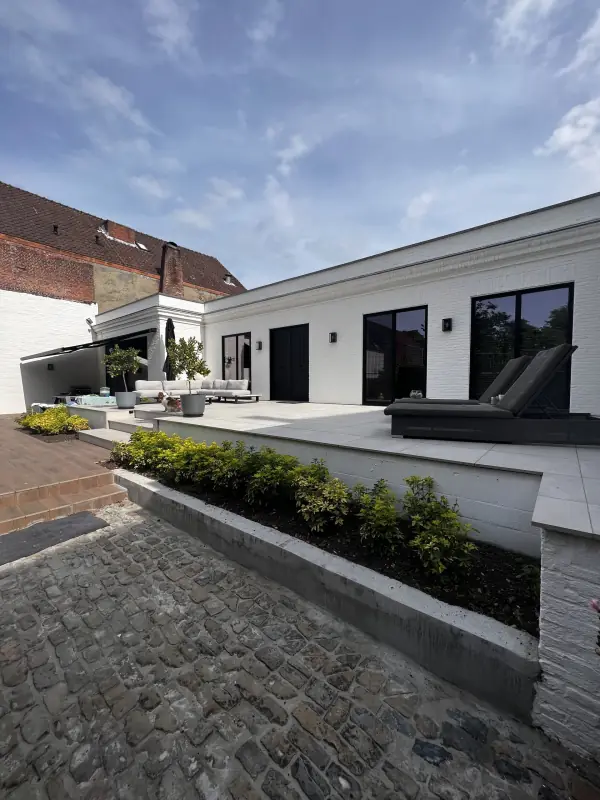
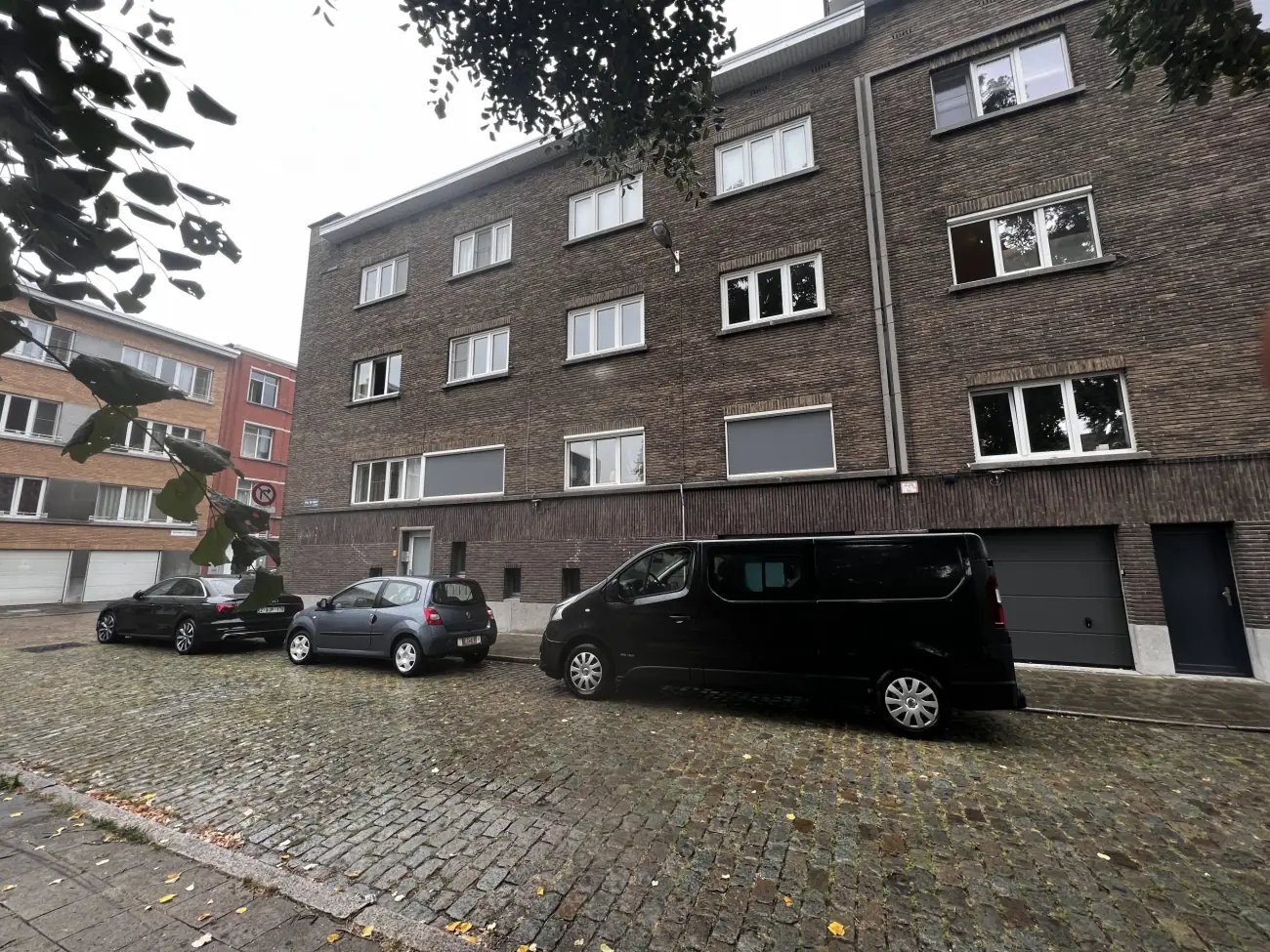
Basements we got dry.
Three sites with their readings, their duration and the machines that were there. If one looks like your situation, you'll know straight away what to expect.

Deal with damp for good, not again every year.
The dehumidifier goes back with us. What happens next decides whether you'll be calling us again in a year. Three things that make the difference.
Find the cause
A construction dehumidifier solves the symptom. Have the cause investigated, or you'll be drying the same wall every year.
Ventilate every day
Ten minutes of cross-ventilation does more than a window left ajar all day. Especially in a basement or storeroom.
Keep an eye on the hygrometer
If the humidity stays above 60%, the damp is coming back. You'll see it on the meter before you see it on the wall.
What customers with a damp basement ask us.
Is your question not listed?
Our drying experts will help you straight away, with advice tailored to your situation.
Depending on the situation, 2 to 6 weeks. Our moisture reading confirms when it's done.
Yes, especially combined with good ventilation.
Not permanently. A construction dehumidifier dries the air and the surface of the wall, but groundwater keeps rising through the masonry as long as the wall hasn't been treated. Have the cause dealt with first, for example with a damp-proof injection; after that, a construction dehumidifier dries the residual moisture out of the wall.
As a guideline, keep the relative humidity between 40 and 60%. If it stays above that for long, especially in a cold basement, mould gets a chance. Well below that, the air becomes unpleasantly dry. A simple hygrometer shows where you stand.
Condensation is mainly found in the coldest spots: corners, behind cupboards, around windows. It gets worse in winter and with little ventilation. Rising damp shows at the bottom of the wall, often with salt deposits. Penetrating damp appears after rain, on the façade or ground side. If in doubt, have it looked at on site.
No. Drying takes away the breeding ground so mould stops growing, but you still have to remove the mould itself. For large areas or mould that keeps coming back, professional mould removal is the safe choice.
Yes, completely safe. Keep an eye on the water container every day.
Further reading on damp basements
Machines for basements and damp rooms
- Boost
Compact, for one room or a small basement.
- Ultimate
For large basements and a lot of moisture.
- Site heater for a cold basement or garage
Brings the room up to working temperature.
Understand first, then hire
The longer the damp stays, the more there is to dry out.
Have your situation assessed before you hire anything. We measure, work out the package and deliver within 24 hours. And if drying isn't the answer, we'll tell you that too.

Not sure whether drying is the solution for you?
Describe what you see and smell, and we'll tell you what the likely cause is and whether a construction dehumidifier will help. Even if the answer is that you don't need anything from us.