
It is not the unit that dries your home, but the climate it creates.
During construction and renovation, hundreds of litres of water end up in your home: in plaster, screed, mortar and concrete. Professional construction drying is not "switching on a unit", but controlling the combination of temperature, humidity and air movement so that this moisture leaves the structure in a controlled way.

Your home temporarily becomes a controlled climate chamber.
A greenhouse changes the climate inside compared with outside. Construction drying does something similar: we temporarily create an indoor climate in which moisture moves more easily from plaster, screed and walls into the surrounding air, and is then actually removed from that air. Three factors work together to achieve this; none of them works optimally on its own.
1. Temperature
Sufficient warmth increases the evaporation potential and supports the transport of moisture out of the material. In cold rooms we therefore add a site heater.
2. Relative humidity
By actively removing water vapour from the air, room is created again and again for moisture evaporating from the materials. That is the job of the construction dehumidifier.
3. Air movement
Dry air has to reach every damp surface; still air along a wall or floor slows the process down. That is why many packages include fans.
Why "turning the heating up" is not construction drying.
With the same amount of water vapour, warm air has a much lower relative humidity than cold air. That sounds as if the air has become much drier, but not a single gram of water has been removed from the building yet. The water is still in the air and in the building materials.
Heating can support evaporation, but the water vapour released then has to be actively removed by dehumidification. Opening the windows is no guarantee either: natural ventilation depends entirely on the outdoor climate and on a warm, humid summer's day can even bring moisture in. Professional construction drying makes the process controllable instead of weather-dependent.
What does relative humidity mean?
Relative humidity (RH) tells you how close the air is to saturation at a given temperature. At 100% RH the air is saturated with water vapour; the lower the RH, the more moisture the air can still absorb.
For construction drying, that difference is crucial. Many building materials are porous and hygroscopic: water is not only at the surface but also deep in pores and capillaries. If we lower the moisture level of the surrounding air, a moisture gradient develops between the wet material and its surroundings, and the water gradually moves outwards, where it can evaporate. Drying is never a single process:
The warmer the air, the more water vapour it can carry. That is why a percentage only means something together with the temperature, and why the room to absorb moisture grows so much with every extra degree.
The temperature on your site decides which unit takes the water out.
Both take water out of the air, but not in the same way, and the difference shows as soon as the temperature drops. That is why the drying calculator also asks how cold your space is.
The standard on a housing site.
It cools the indoor air below its dew point and collects the water vapour as condensate. Above 15 °C that is the fastest and most economical way to take construction moisture out of a home, and it is what almost every package contains. How that cycle runs is shown in the next section.
For cold rooms and cellars.
It binds the water vapour to a desiccant instead of cooling it, and therefore keeps working at temperatures where condensation barely forms. On an unheated winter site or in a cellar it takes out water where a condensation unit stalls. The full difference is set out in condensation or desiccant dehumidifier.
How a condensation dehumidifier removes water from your home.
Inside, the humid air flows past a cold surface, cools below its dew point and gives up its water vapour as liquid water. The air leaves the machine slightly warmer and drier, and the cycle starts again: material → air → dehumidifier → condensate → drainage.
Moisture in the material
Water migrates through pores and capillaries to the surface and evaporates into the air.
Intake
The dehumidifier draws the humid indoor air through the unit with a powerful fan.
Condensing
The air cools below its dew point along a cold surface; water vapour turns into liquid water.
Draining
The condensate goes into a tank or is pumped away directly with a condensate pump.
Back into the room
Drier, slightly warmed air is distributed and picks up moisture from the materials again.
A wall can look dry and still contain a lot of water.
A building material does not dry equally fast everywhere. This explains why a construction dehumidifier sometimes produces large amounts of water at first and considerably less later on, without the machine performing any worse.
The surface dries.
The easily accessible moisture at and just below the surface evaporates first. After a few days a wall can already look much drier, and the dehumidifier produces a lot of water.
High water extraction per dayThe core still has to follow.
Water deeper down first has to migrate through the pores to the surface before it can evaporate. The surface looks dry, but there is still considerable moisture inside.
Moisture transport within the material is the limiting factorThat is why measuring matters more than looking.
A white coat of plaster can look dry and a screed can feel solid, but that says nothing about what is happening deeper in the material. Visual assessment is unreliable. The end goal is never "the dehumidifier has run for seven days", but: the material is ready for the next construction phase. That is why every package includes a moisture reading before and after, and you can optionally choose an official moisture report (€59.29 incl. VAT) for your insurer or landlord.

Plaster, screed and concrete do not dry in the same way.
Not every building material contains the same type of moisture. A professional drying strategy is therefore never "machine on as soon as the material has been laid"; the material, its age, technical specifications and the desired finish all help determine the approach. That is why the calculator also asks what you are drying.
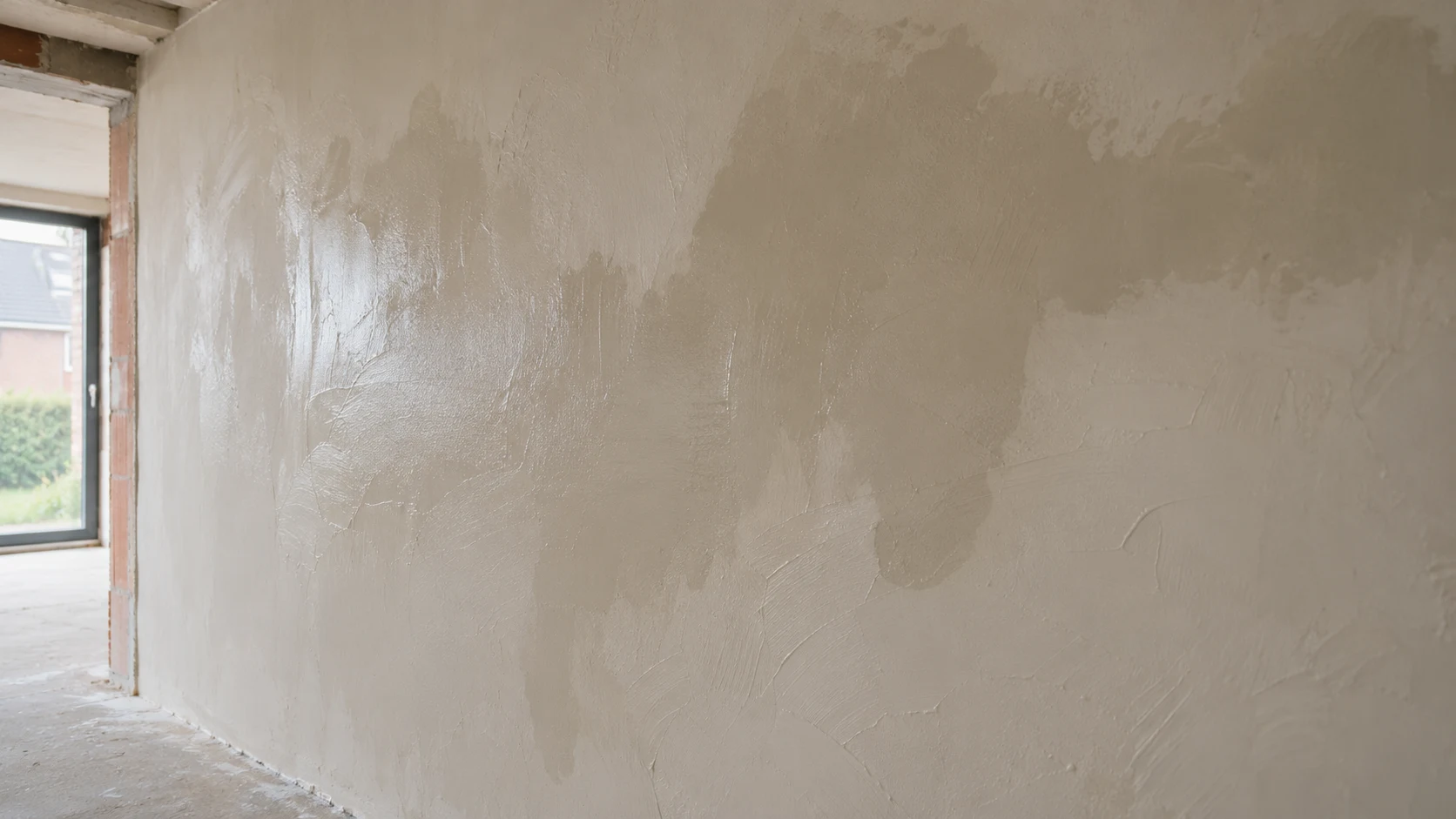
Gypsum plaster
Loses its excess water mainly through evaporation. Layer thickness, temperature, humidity, ventilation and the suction of the substrate determine the drying time when drying plasterwork.
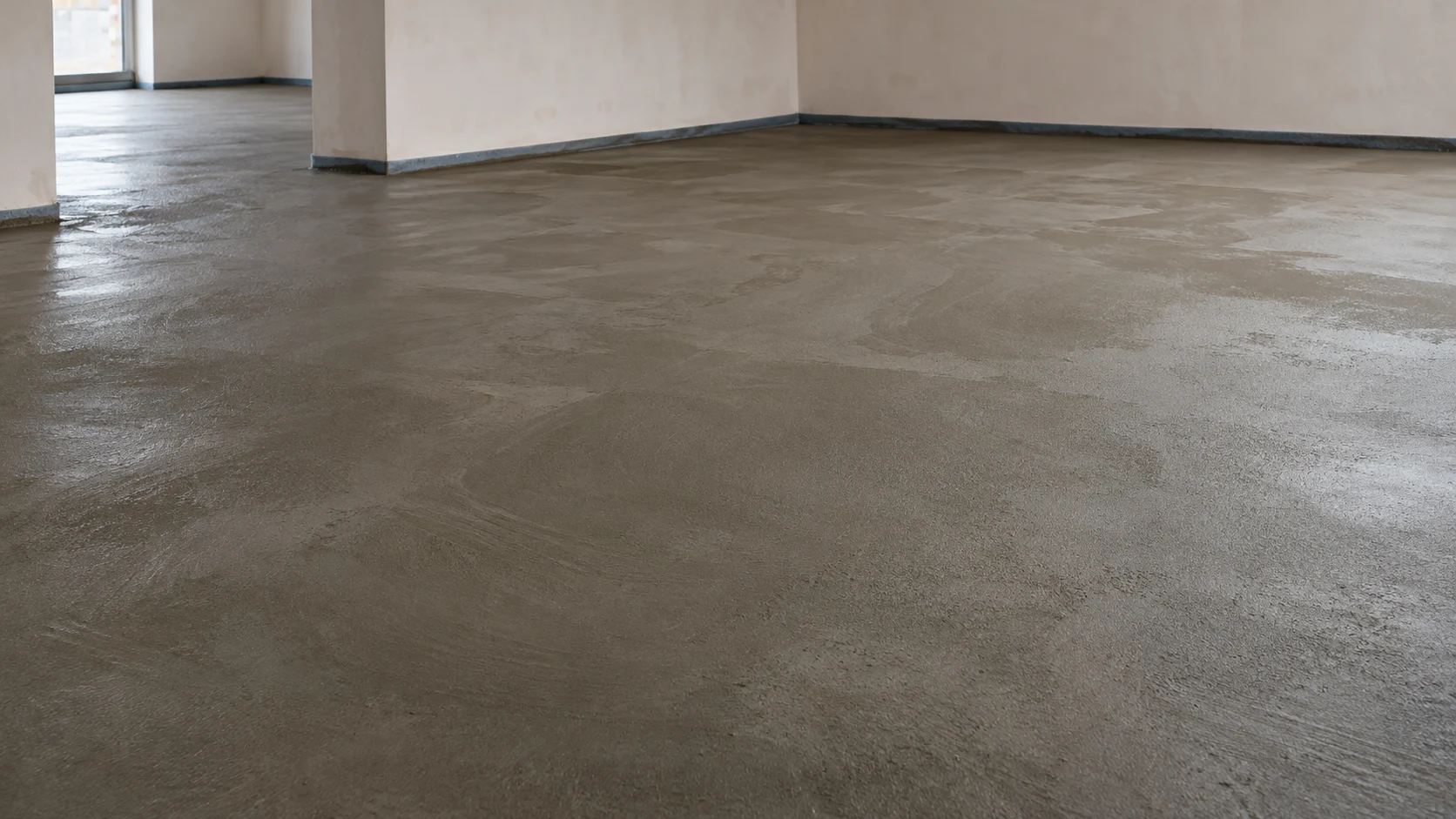
Screed & concrete
Cement needs water for the hydration reaction through which it hardens. Drying aggressively too early disrupts this; when drying screed we only start after the necessary curing phase.
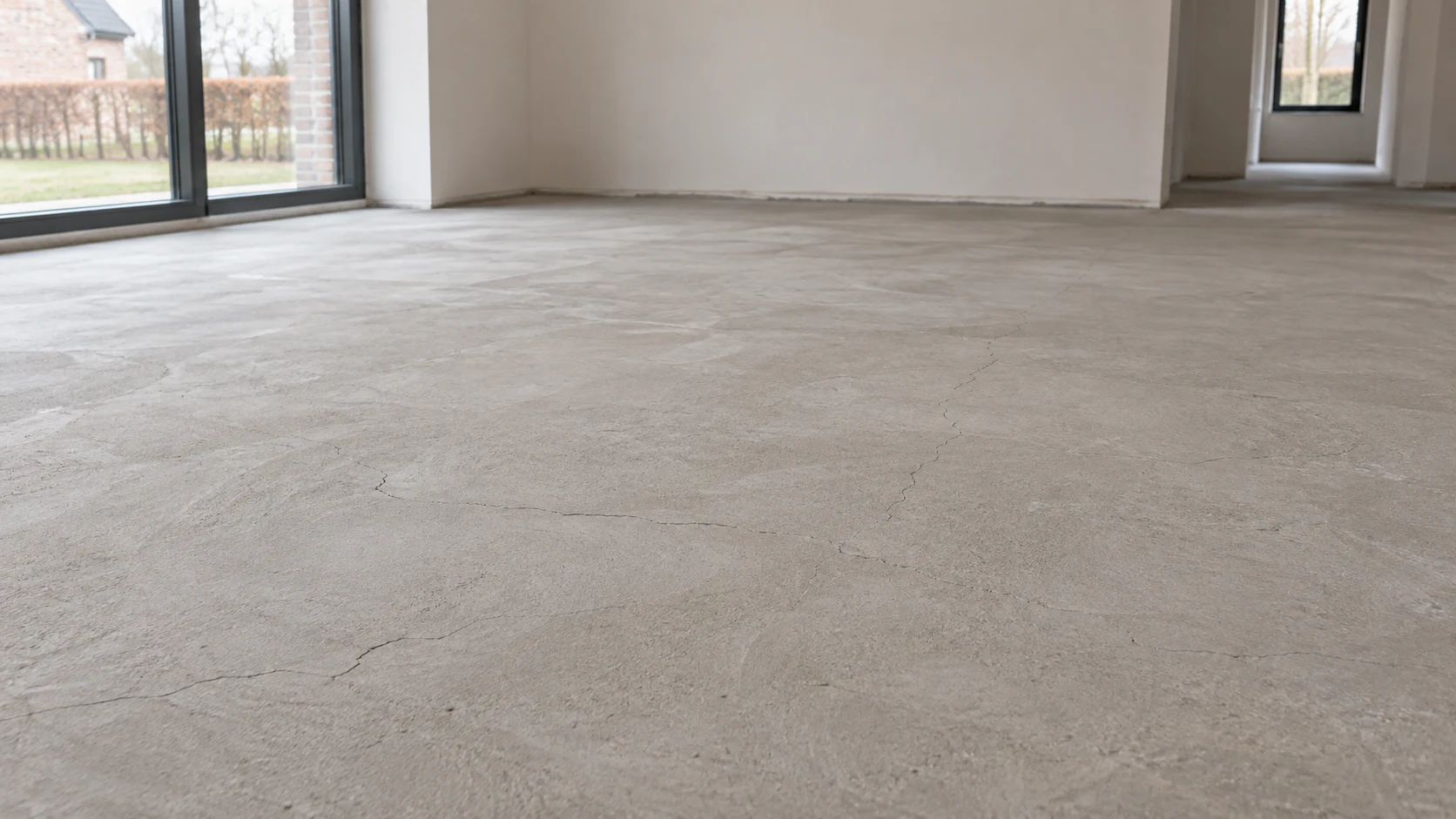
Drying too aggressively
Large moisture gradients between the surface and the core can encourage shrinkage and cracking. That is why we control the RH and do not let it drop below ±30% for long periods.
Not maximum drying. Optimal drying.
Overcapacity is not a mark of quality; the right capacity is. Too much power on a fresh layer pulls the surface dry while the core is still wet, and that is exactly how shrinkage and cracks appear. Why we control the climate rather than the number of units, you can read under why construction drying.

From wet material to a dry structure, in eight steps.
From theory to your site.
At Vernast you do not hire a standalone machine, but a calculated drying climate. Based on your volume and situation, our drying calculator determines which package you need, for plasterwork, screed, water damage or a cold cellar. Every package is delivered and installed within 24 hours, including moisture readings before and after. Prefer to do it yourself? You can collect individual construction dehumidifiers, fans and site heaters at a good price from our collection point along the A12 in Aartselaar. And if you have questions during the hire, our customer service is always there for you.
Not a machine because it happens to be available. A set-up because it suits your building.
That is how we control the climate around your building materials, and how the moisture leaves the structure in a controlled way, with a 100% dry guarantee.*
Calculate your drying package
Our drying specialists are happy to help.
Not sure about the right approach for your project? Ask your question and you will get an answer from a specialist within one working day.