Drying plasterwork in Ostend
Construction drying · Ostend · Construction dehumidifier hire in West FlandersIn this spacious villa on the coast, raised construction moisture remained in the walls after the plasterwork. Vernast dealt with it quickly and in a controlled way: thanks to precise moisture readings and professional drying equipment, the finishing could continue without delay and without risk.
The situation on arrival
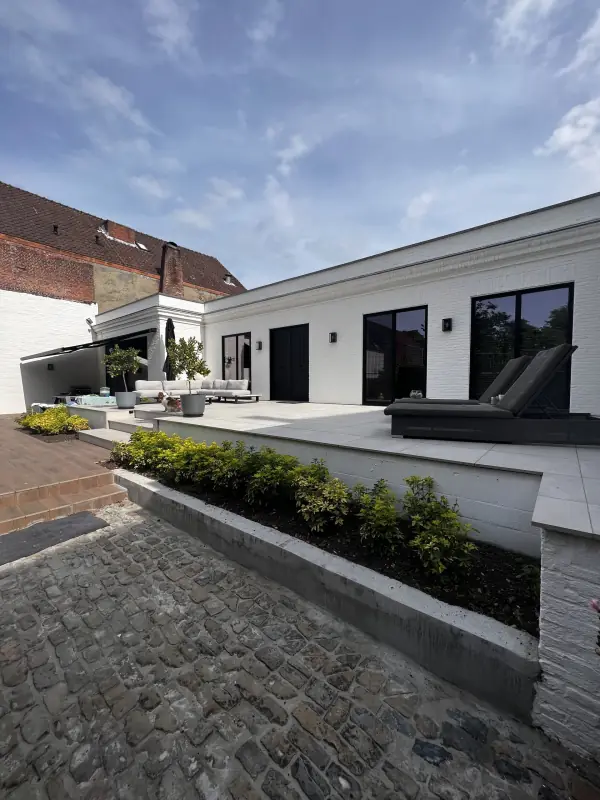
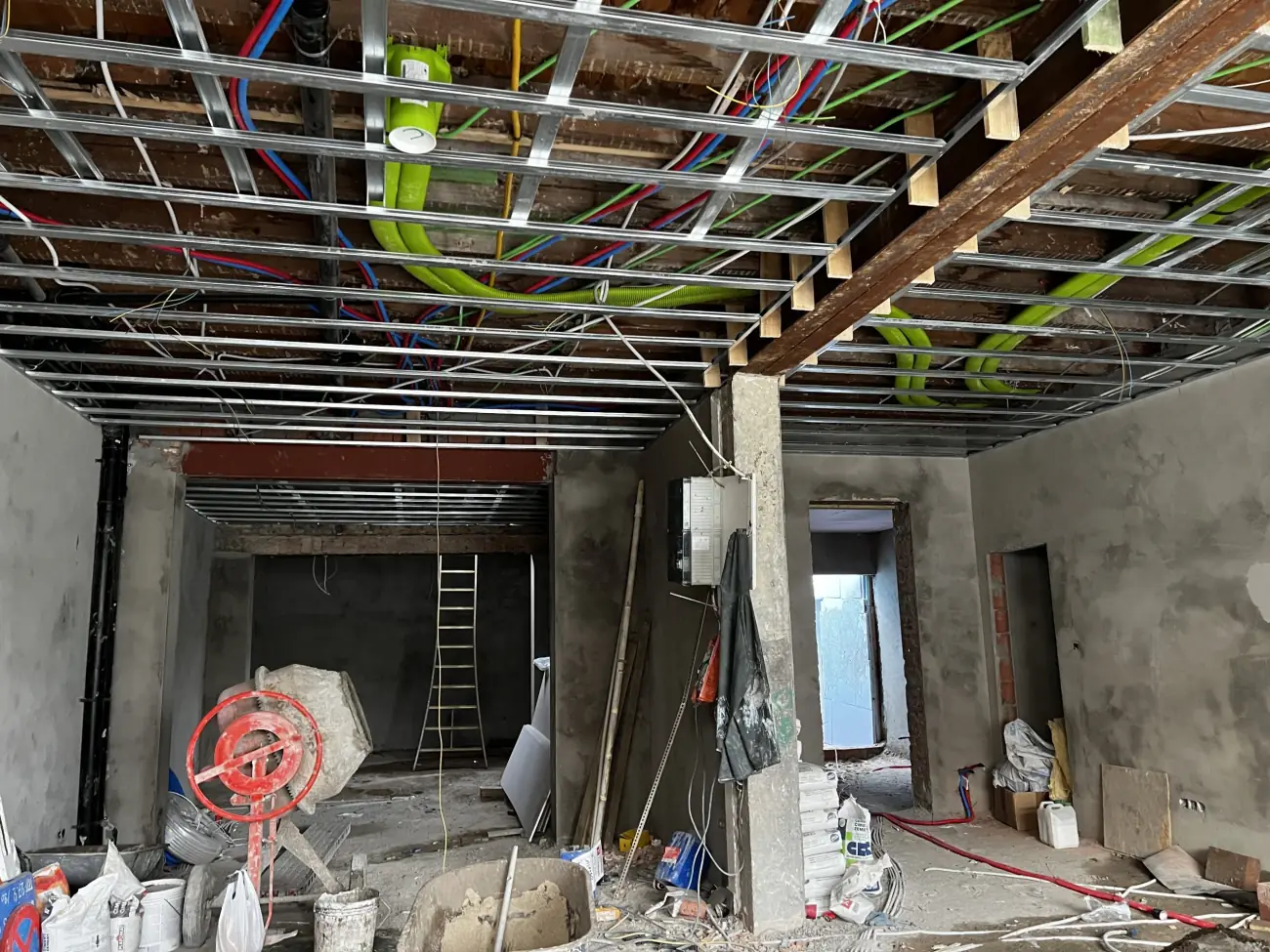
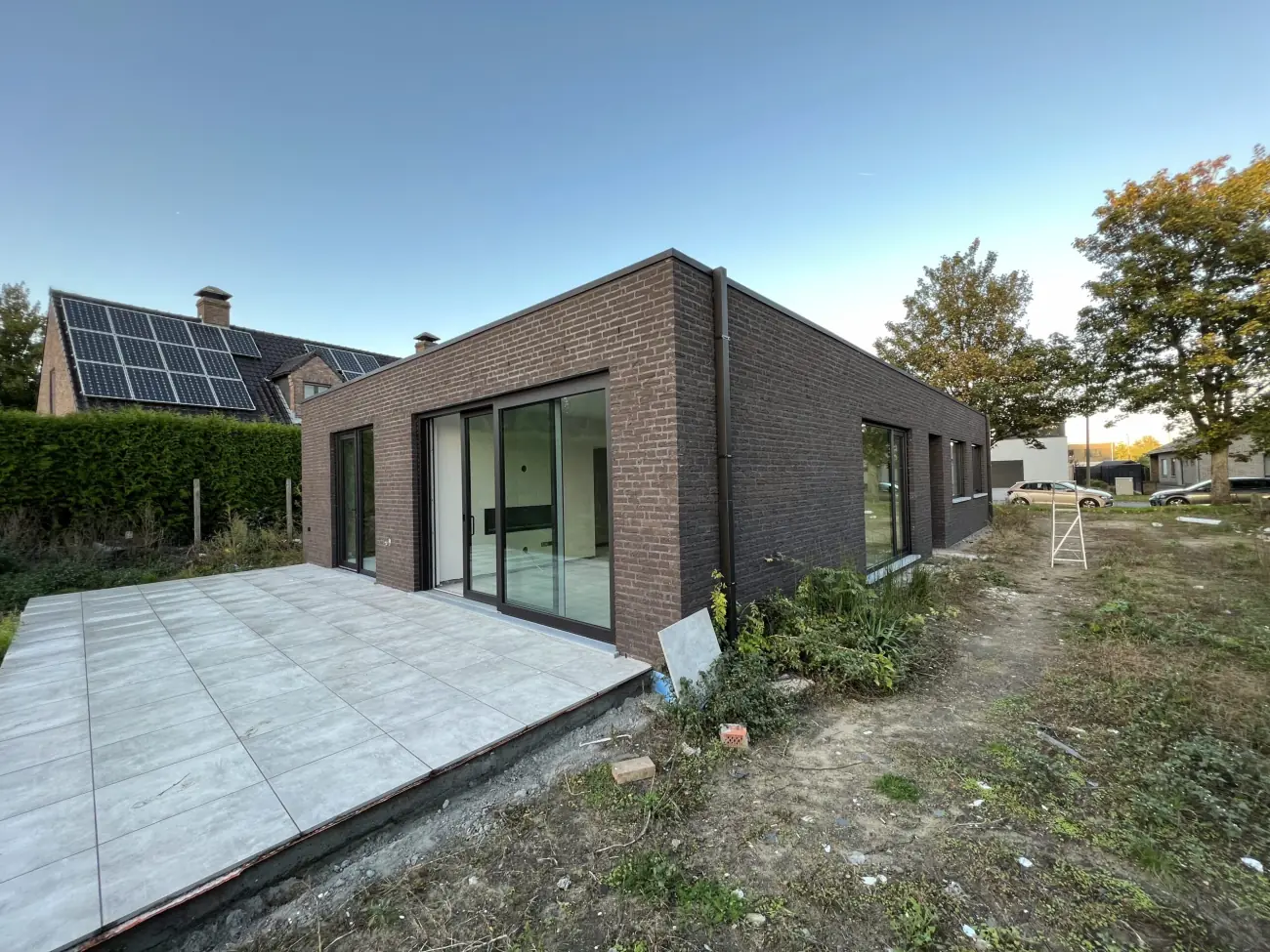
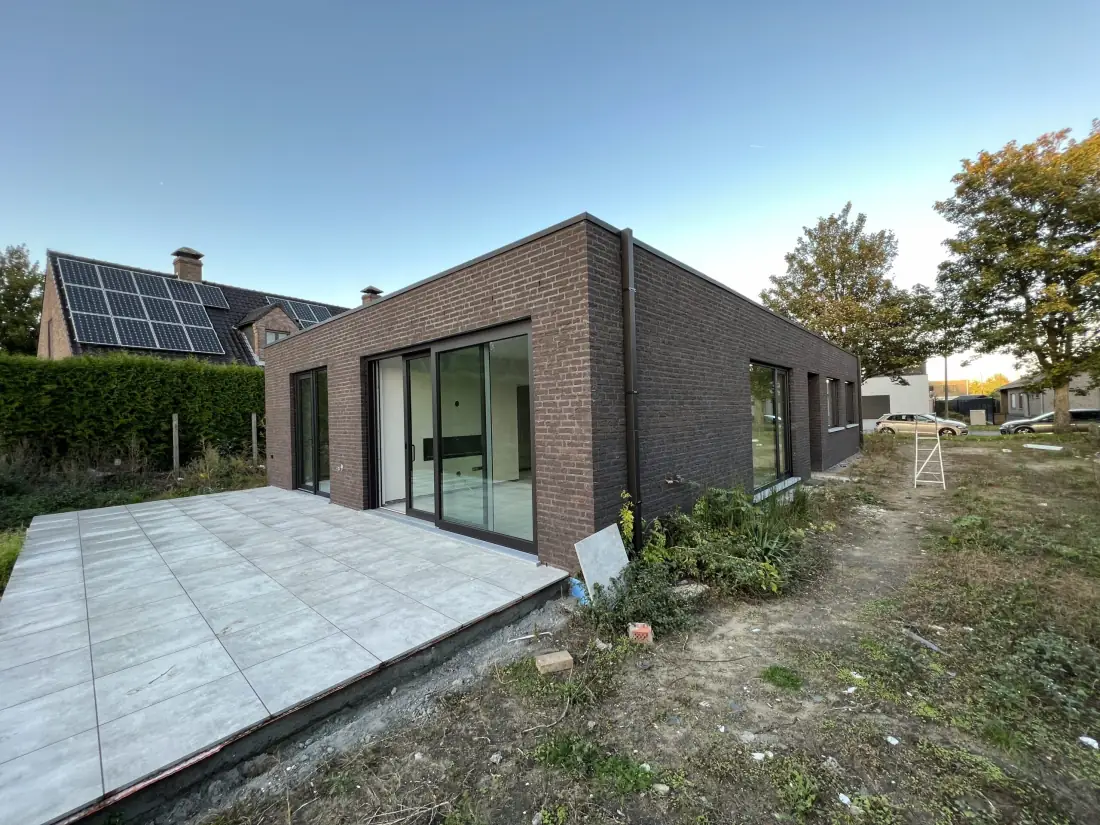
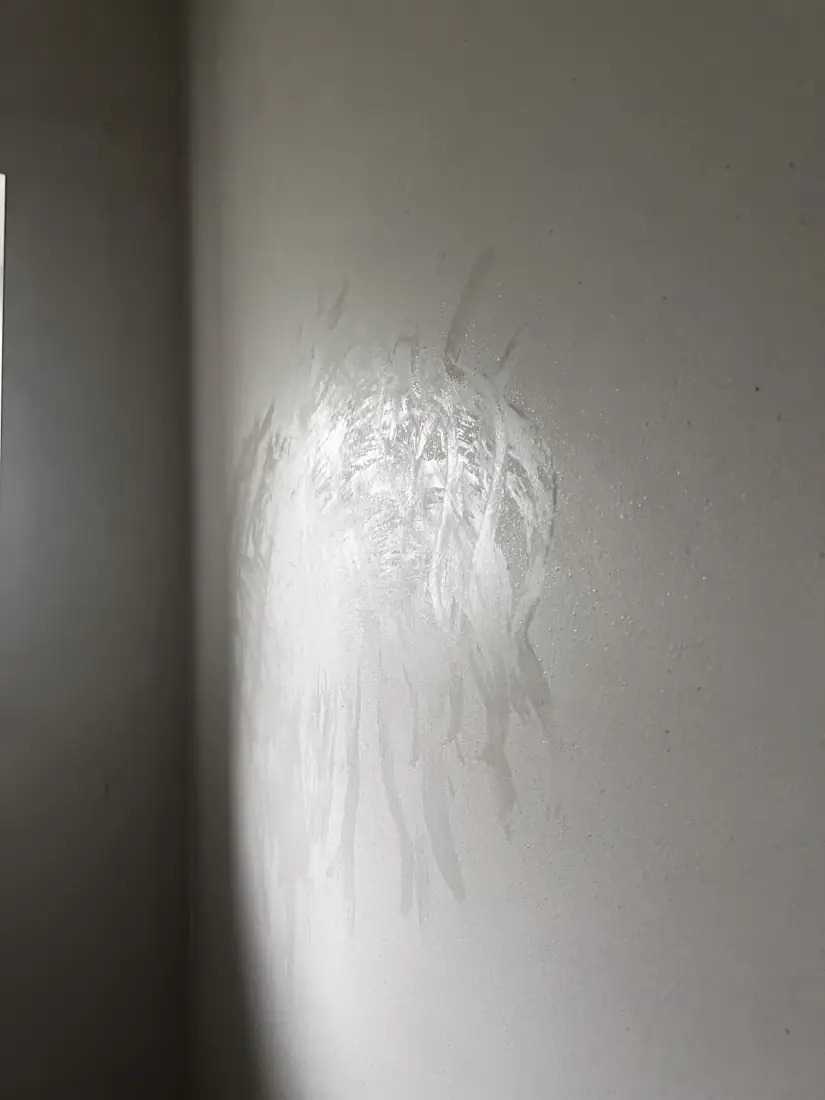
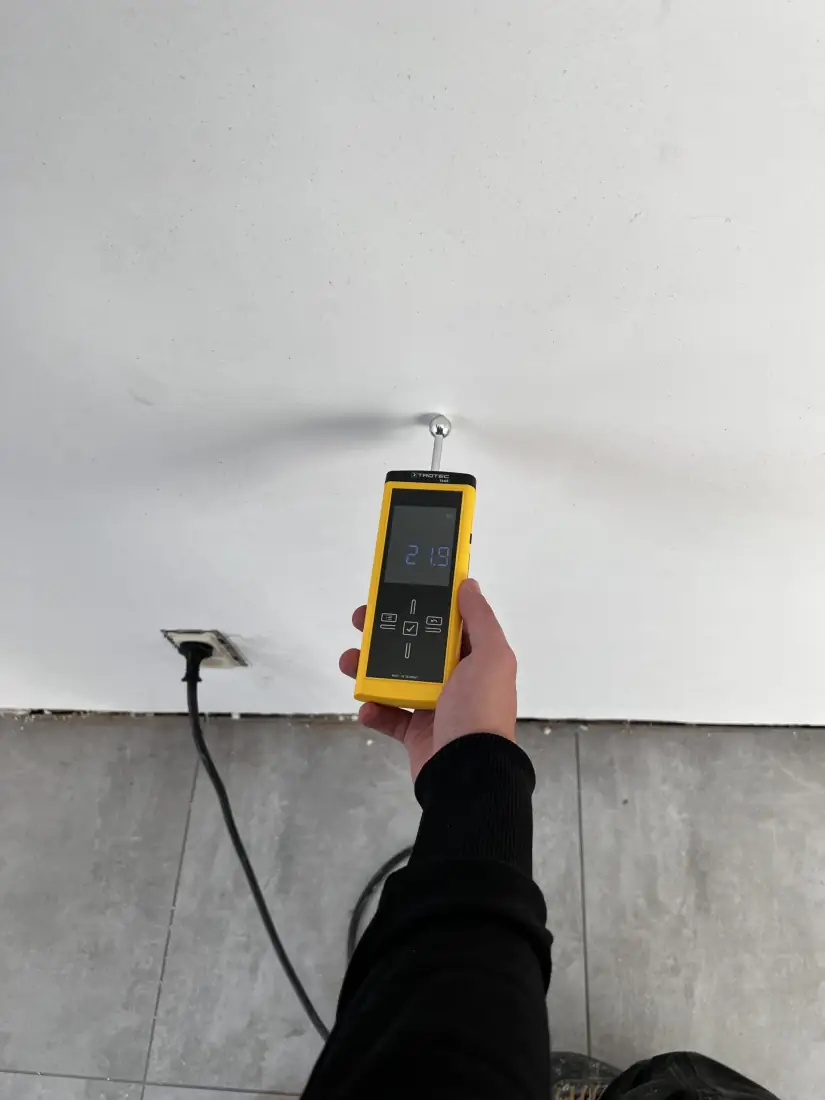
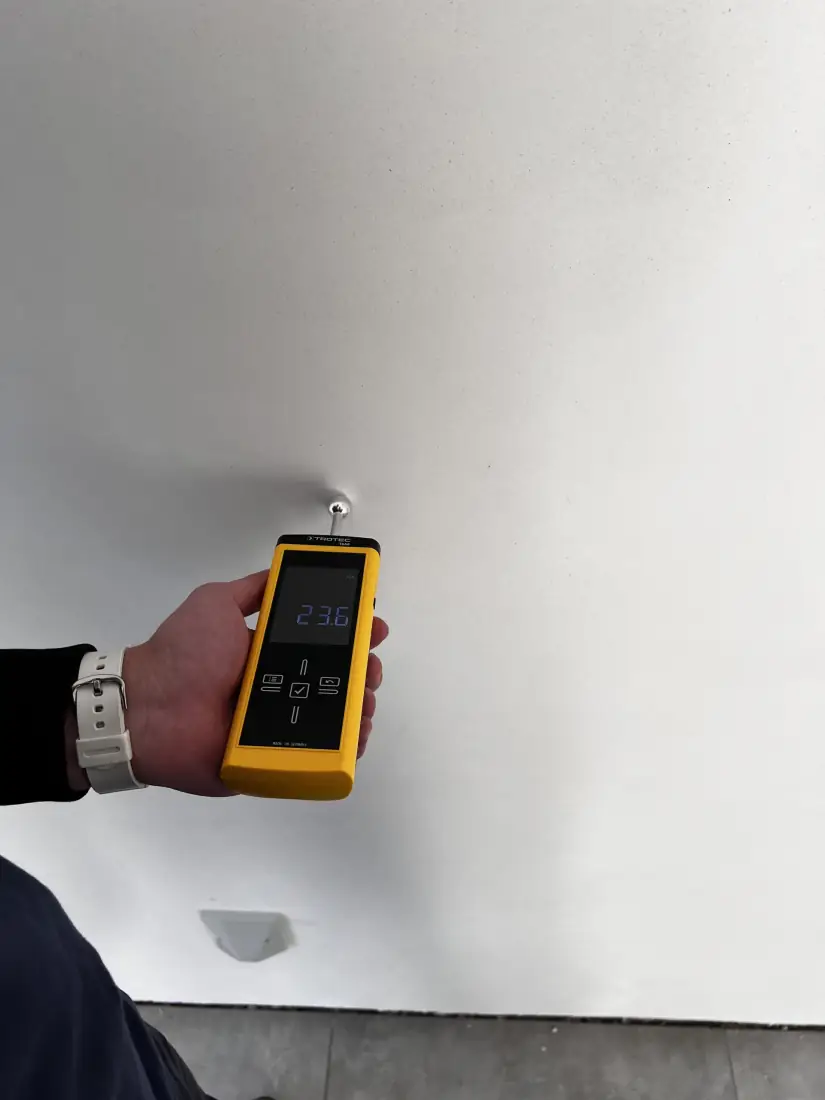
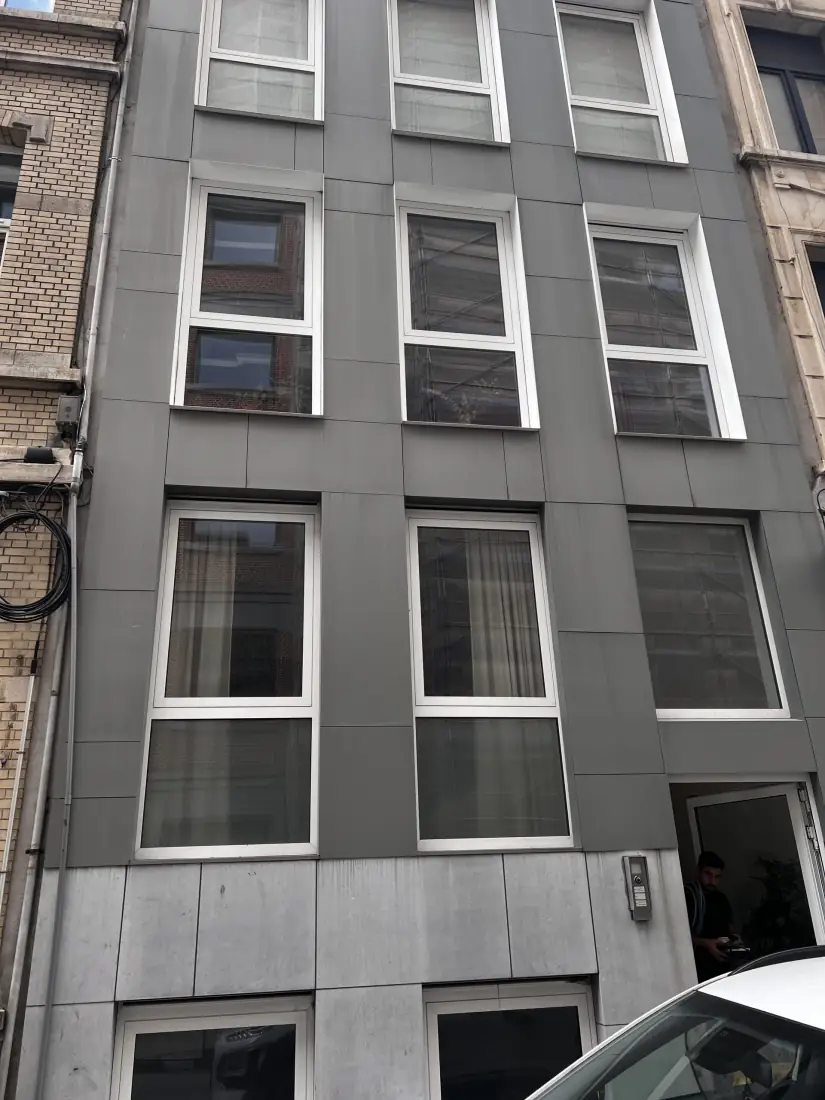
In this contemporary villa in Ostend, the shell was complete and the plasterwork had just been applied. When that phase was handed over, a sharply raised moisture content was measured in the walls. Fresh plasterwork brings a lot of water into the house, and on the coast the humidity is naturally higher, so the rooms were drying too slowly on their own for the finishing to start safely.
- Sharply raised construction moisture in the fresh plasterwork
- High humidity due to Ostend's coastal climate
- Natural drying too slow for the planned finishing phase
- Risk of mould and stress cracks if finished too soon on a damp substrate
Our diagnosis
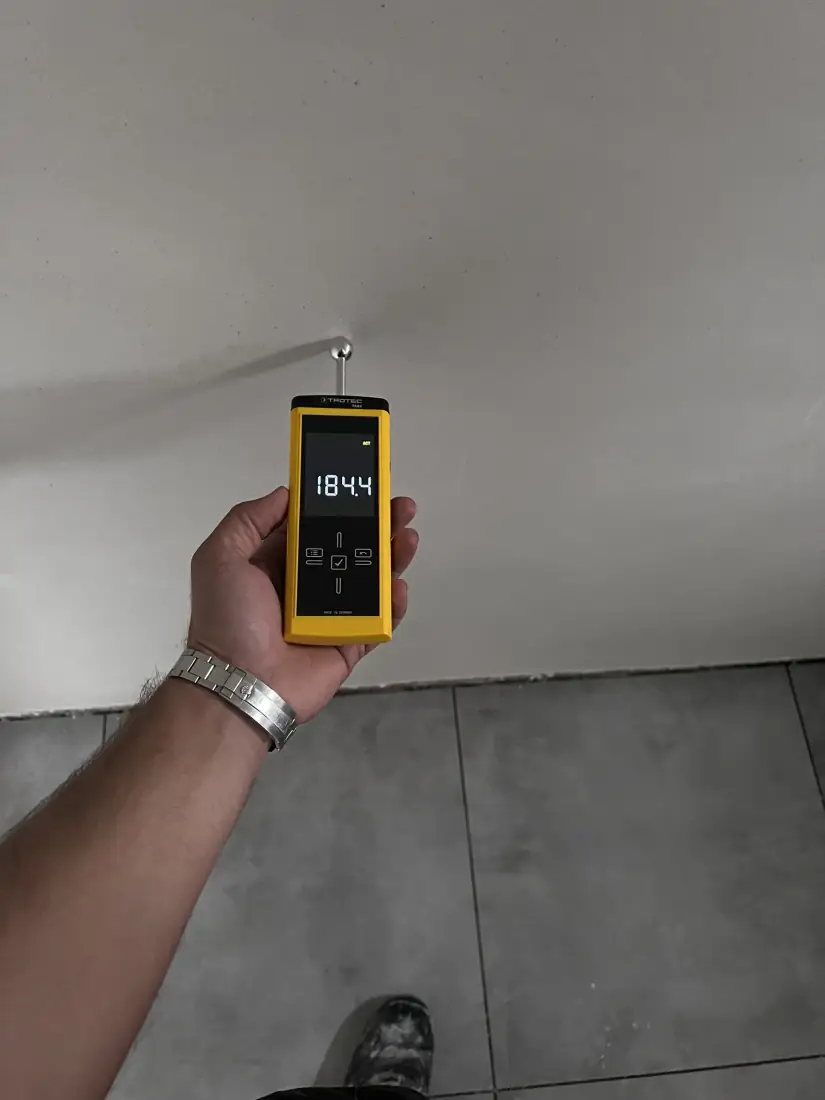
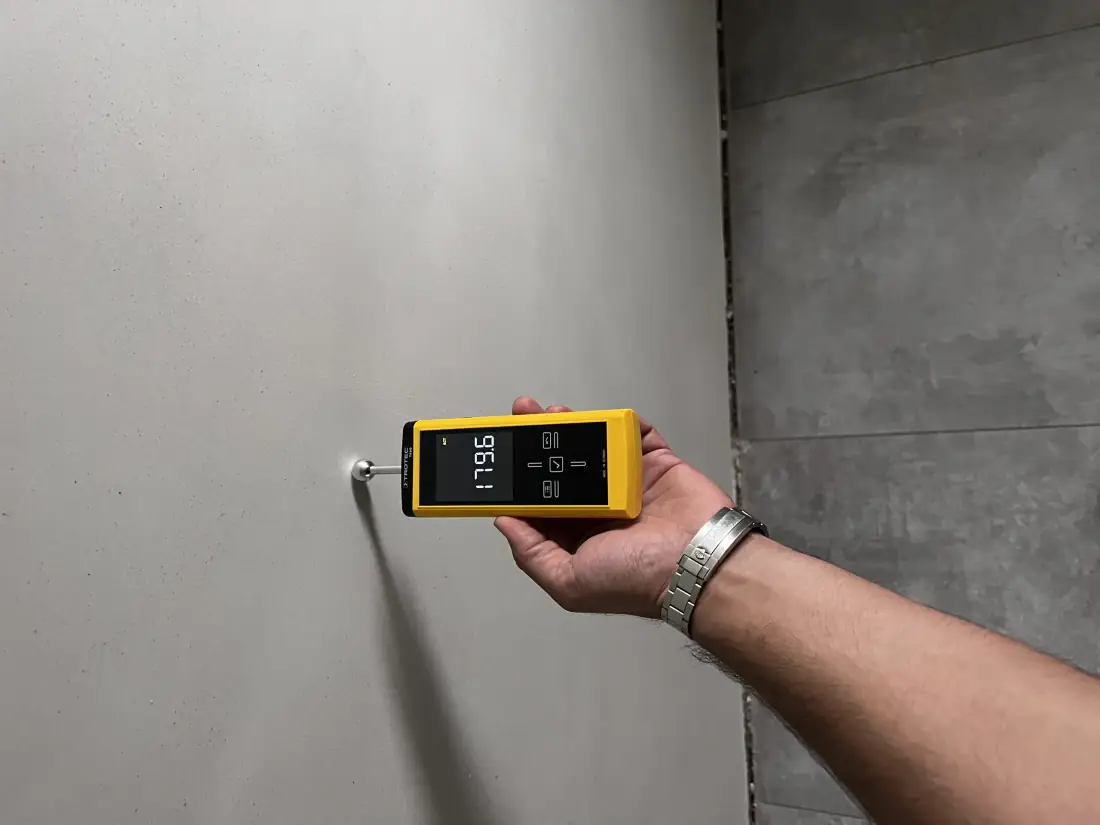
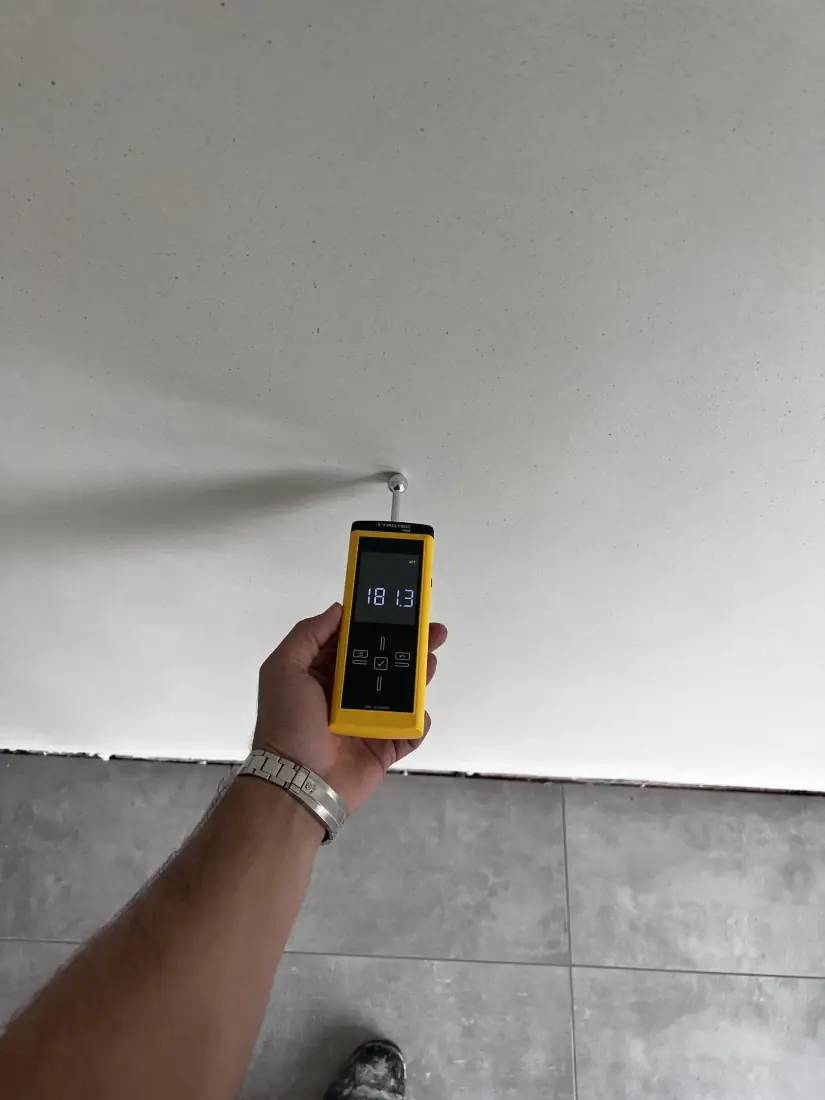
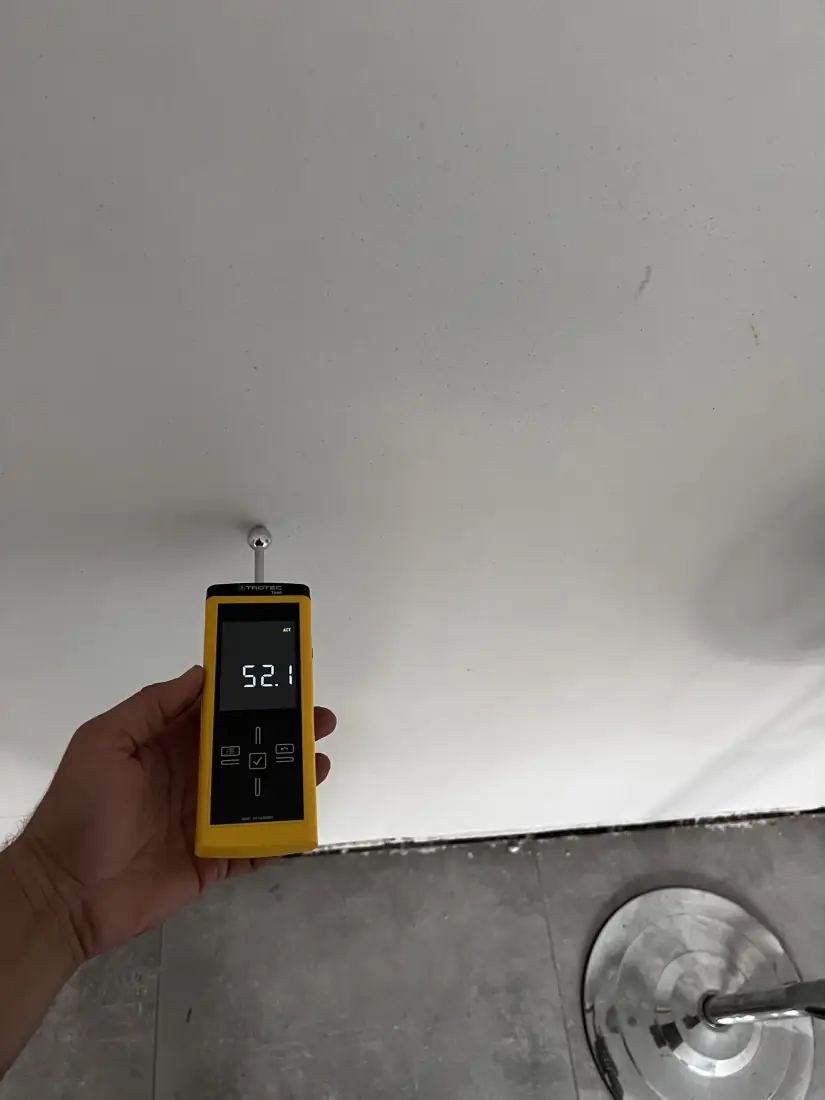
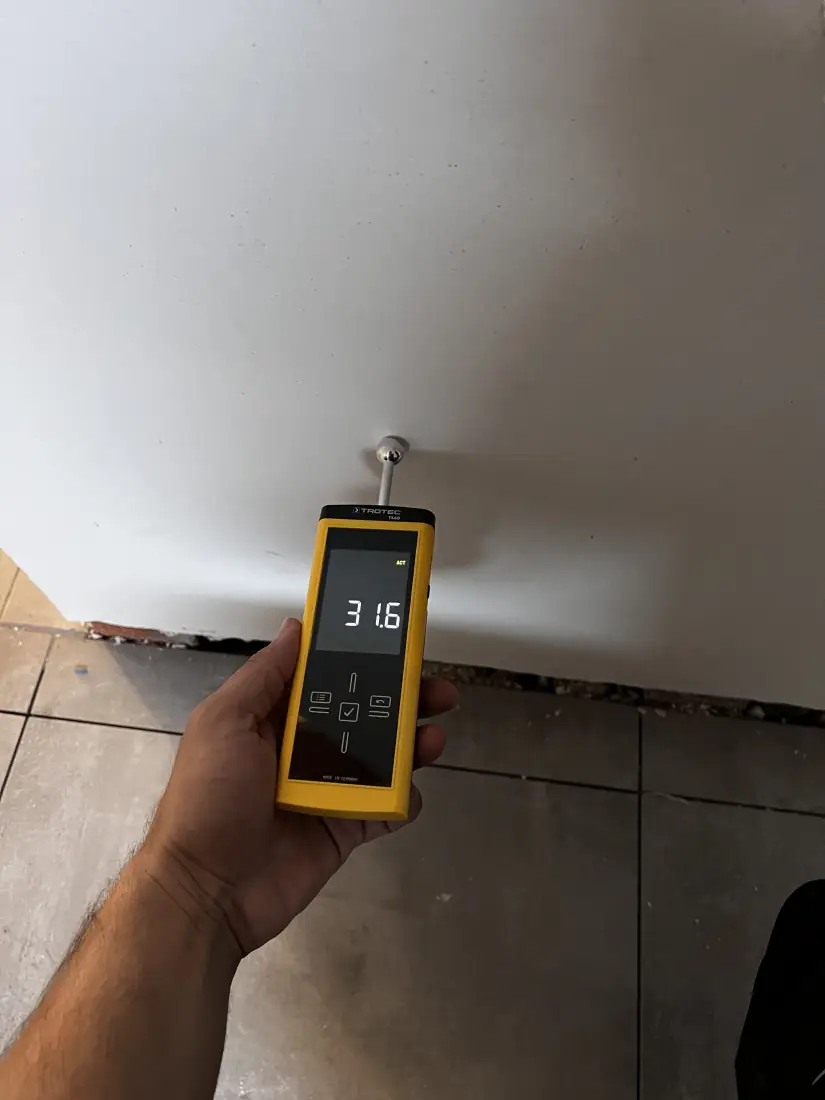
Using moisture readings at various heights, Vernast mapped the moisture content. The conclusion was clear: this was construction moisture from the plastering and shell phase, not a structural moisture problem. Without targeted drying, the residual moisture would stay in the walls for months, with a risk of mould growth, odours and damage to paint and floors. The solution was therefore a controlled drying process rather than a structural intervention.
The work, step by step
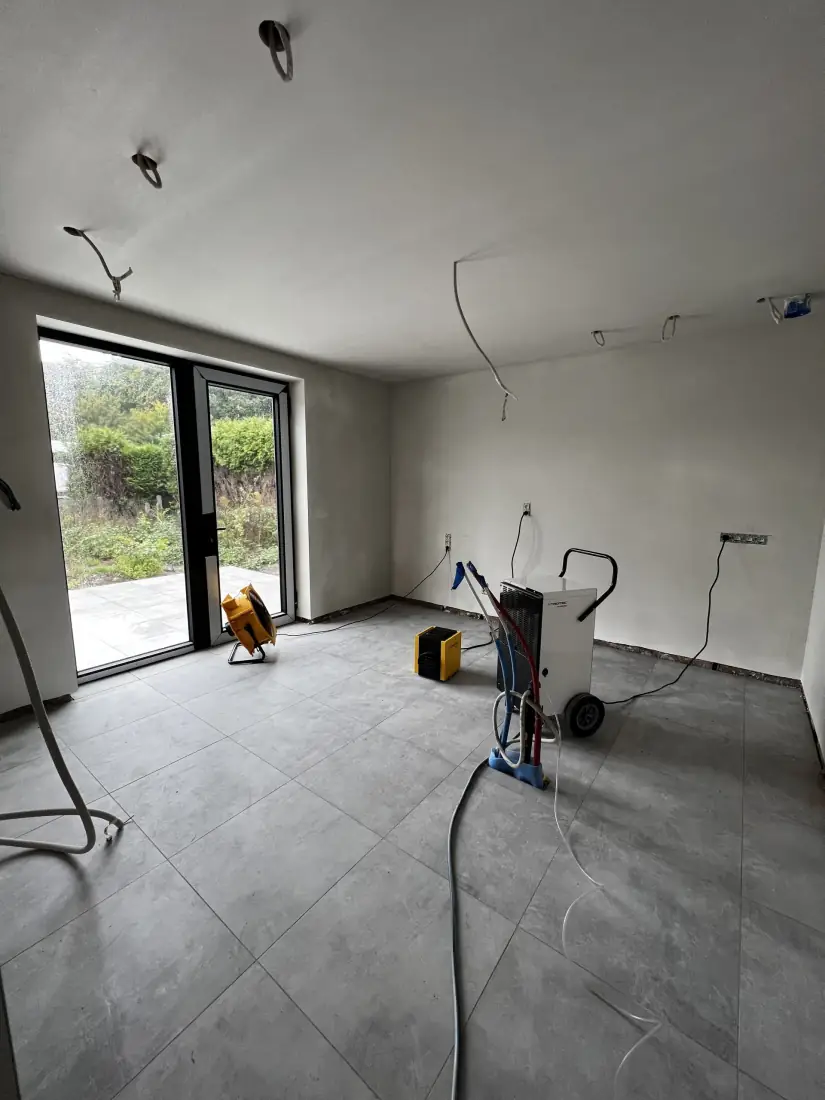
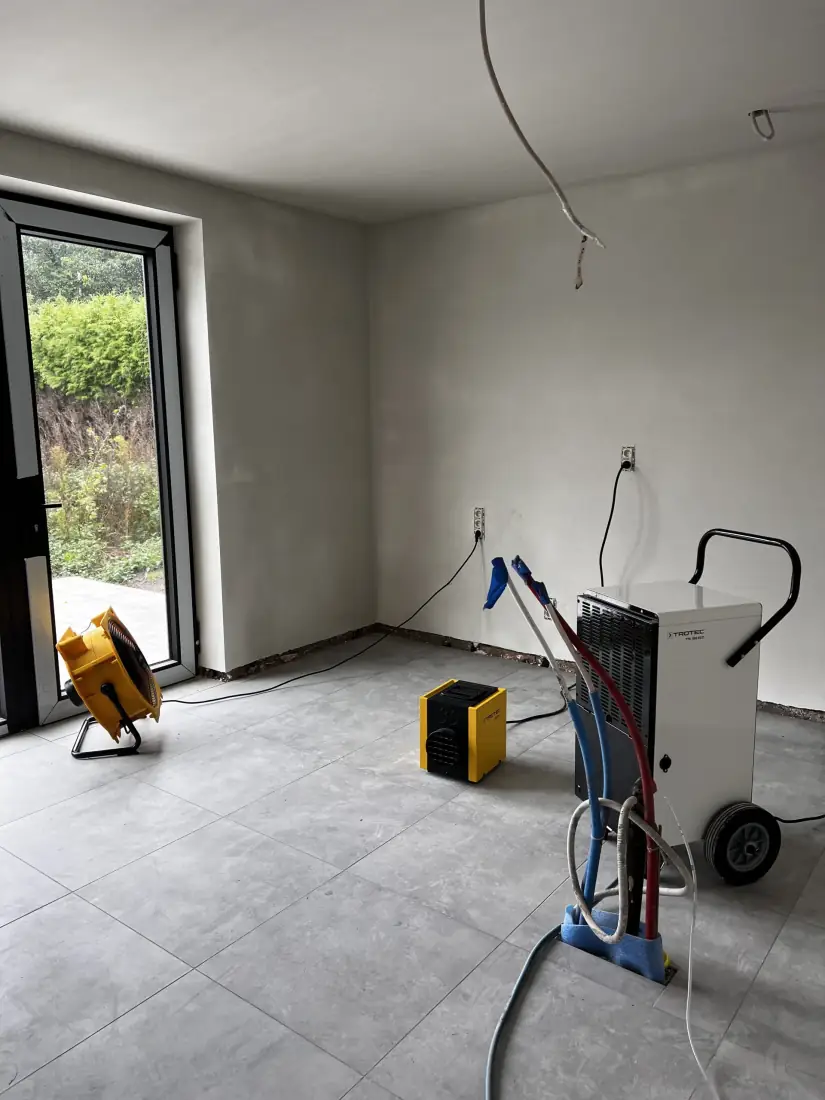
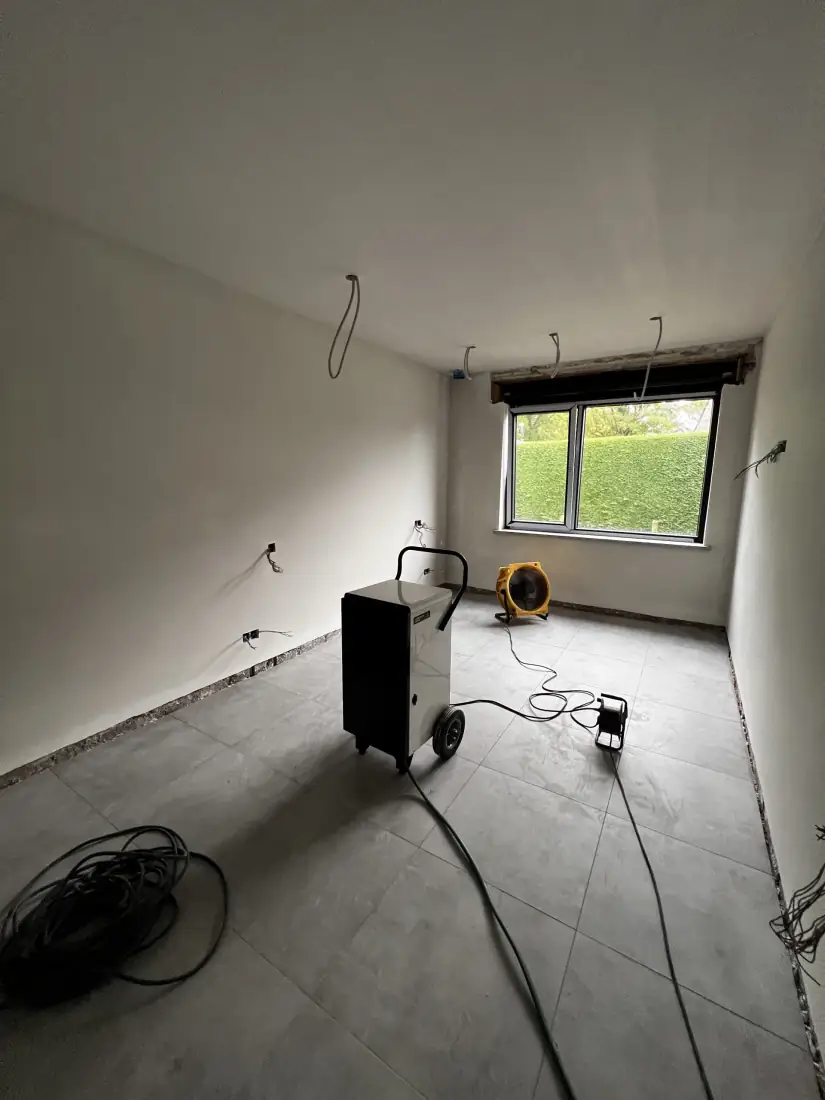
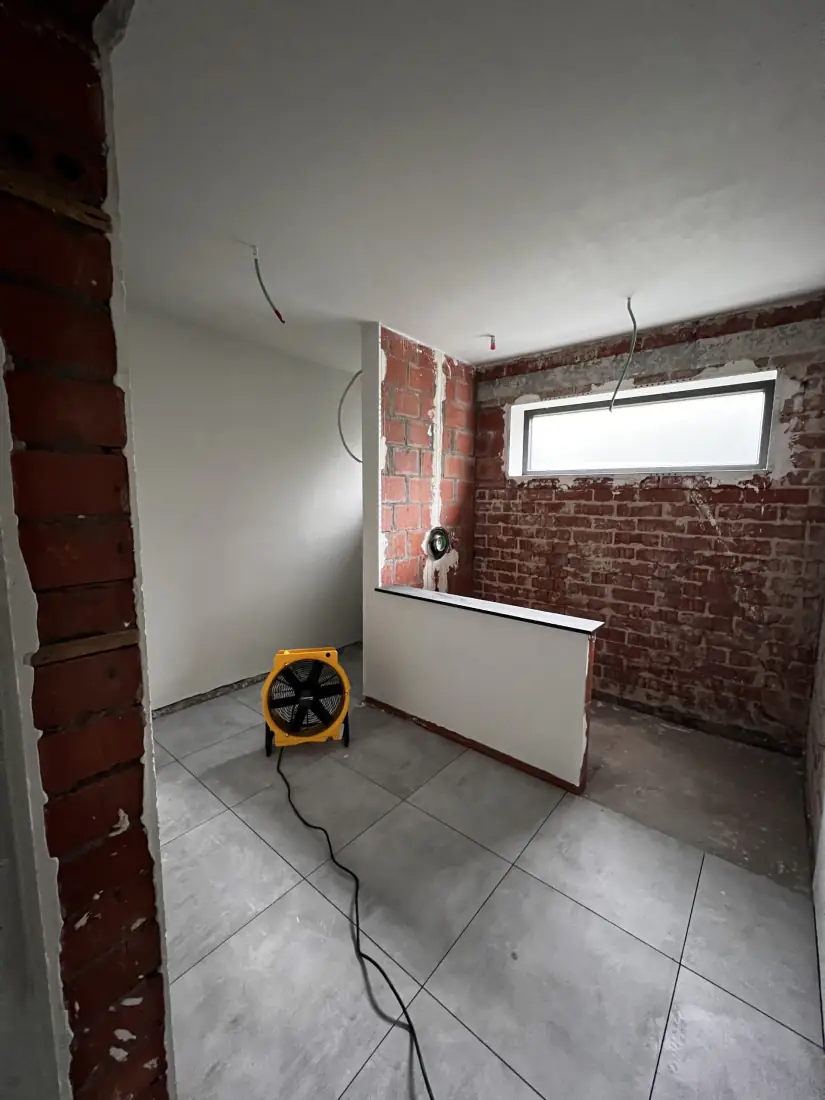
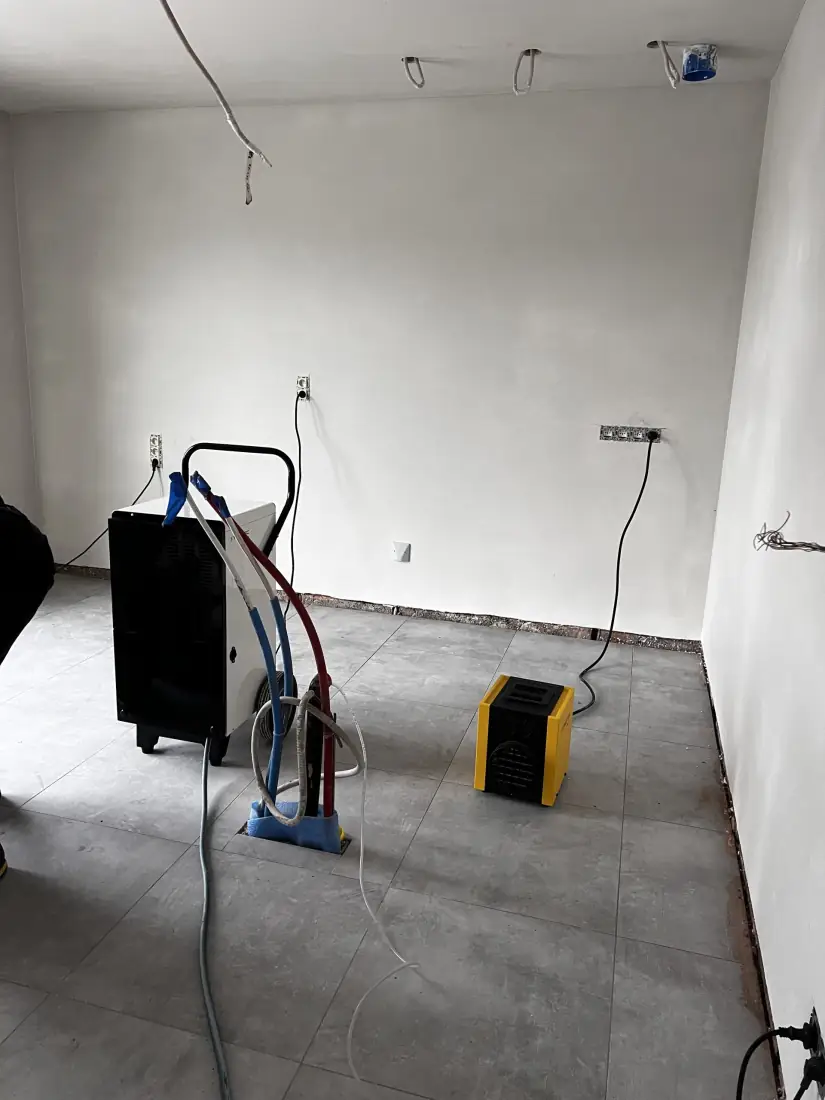
Analysis and action plan. Within the first 24 hours every room was measured and the drying equipment was positioned strategically, matched to the volume and moisture load of the villa.
Professional construction drying. Construction dehumidifiers and fans kept the air circulating continuously, while dehumidifiers removed the released moisture from the air. That brought the moisture content down quickly and evenly, without putting stress on the fresh plasterwork.
Preventive mould treatment. To keep the temporarily high humidity from triggering mould, a preventive treatment was carried out over about three days.
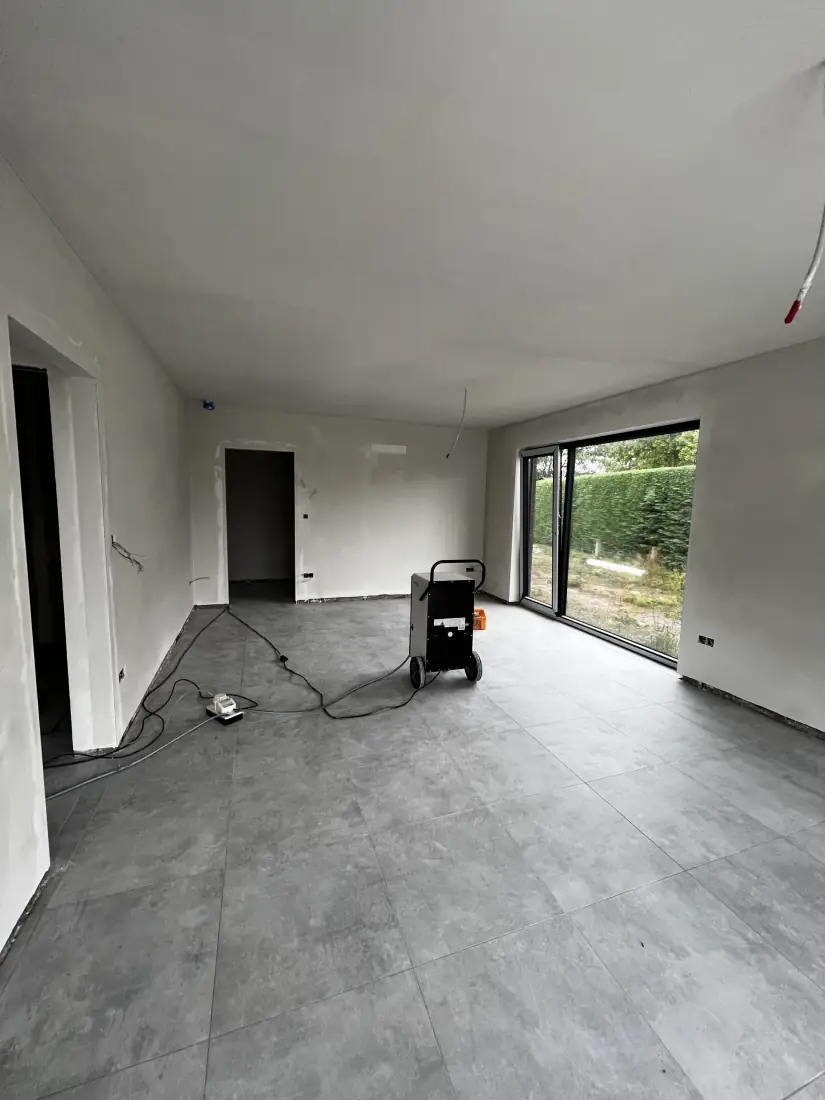
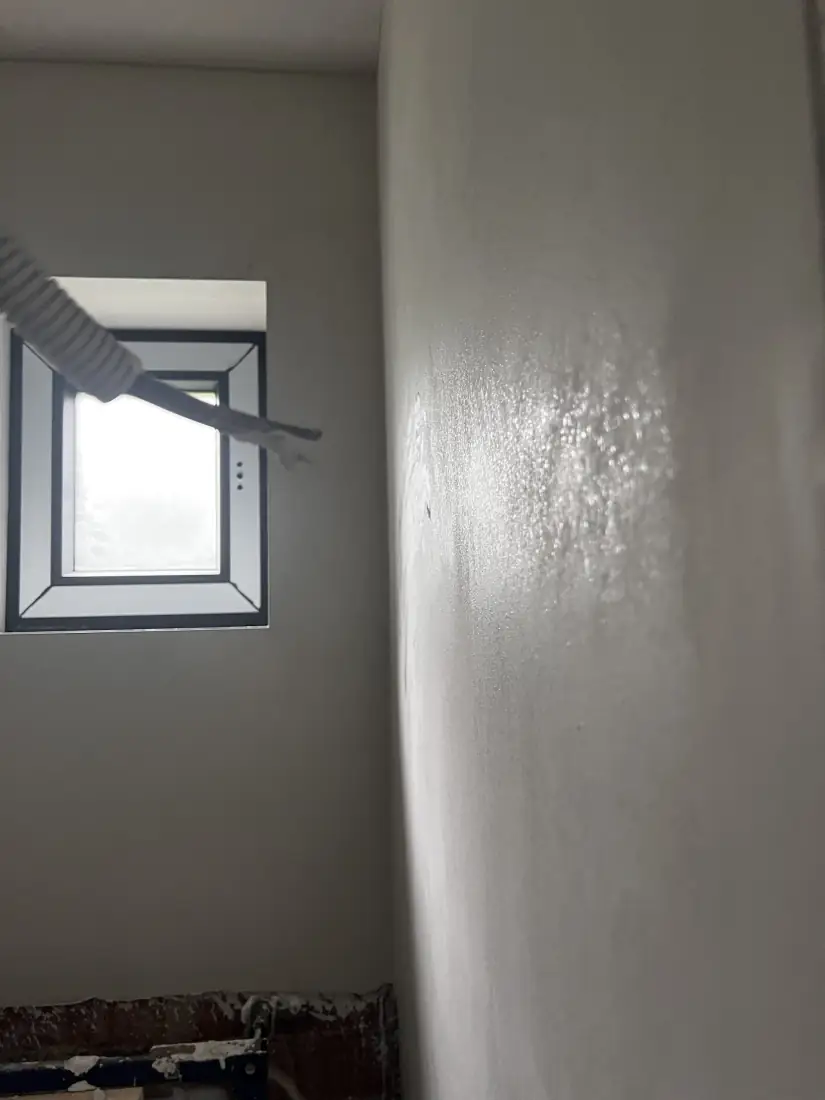
Climate recovery and monitoring. With daily climate and air measurements, the indoor climate was brought to a stable, dry level in about four days. After that, the painting and floor finishing could start safely.
The project in pictures
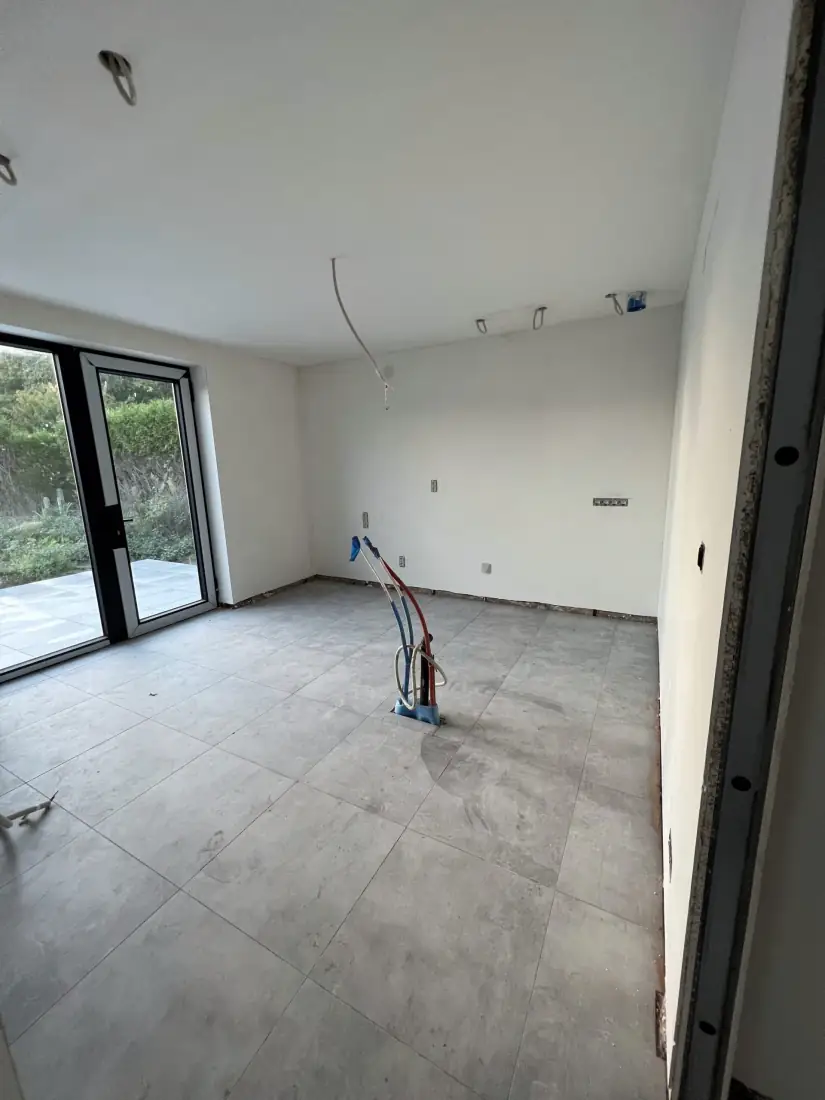
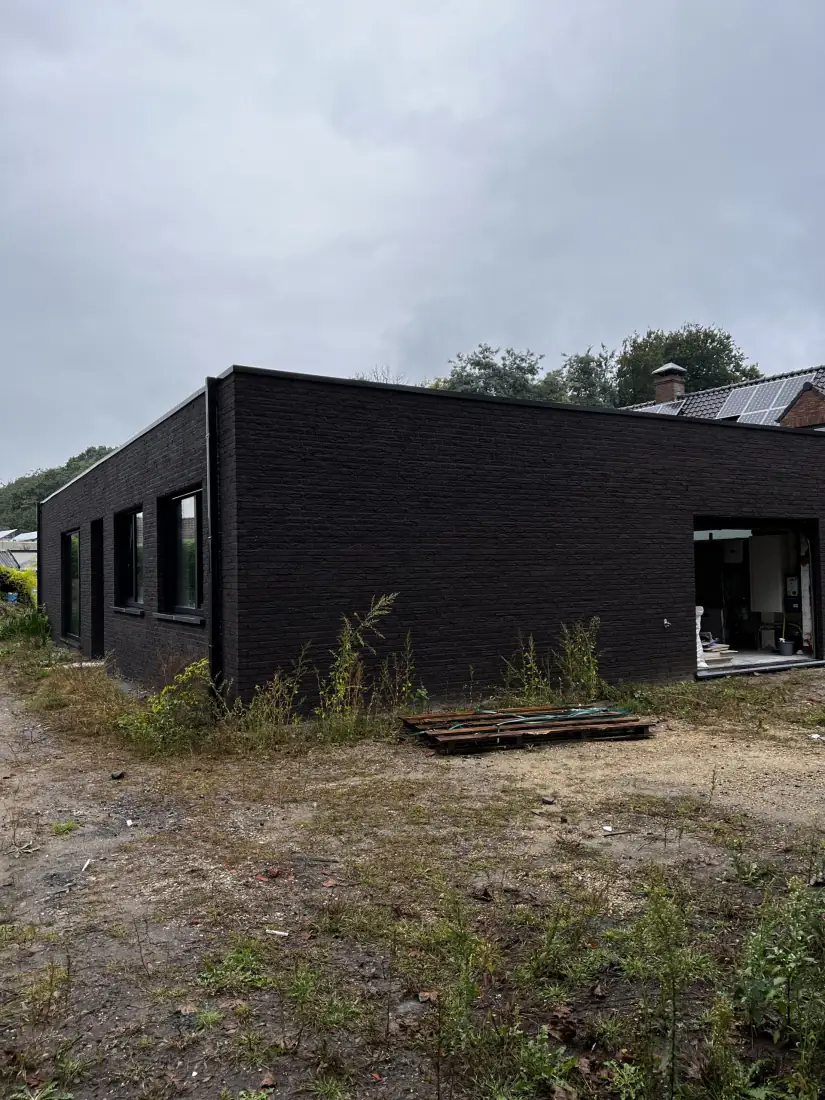
From setting up the drying equipment to the stable final climate in the villa in Ostend. Browse with the arrows or pick an image below.
From construction moisture to a dry, healthy base
Speed without compromising on quality
With our own drying equipment and Vernast-certified moisture experts, we bring construction moisture down in a controlled way. You don't lose weeks waiting, and the finishing starts on a substrate that is genuinely dry, with no risk of mould or recurring problems afterwards.
A stable indoor climate, ready for finishing
After four days, the moisture content in the villa in Ostend was back to a stable, dry level. The painting and floor finishing could go ahead safely straight away. This project shows how a correct diagnosis and targeted construction drying lay the foundation for a healthy, comfortable home on the coast.
See these projects too
Every building is different. See how we tackled construction moisture and damp problems elsewhere.